Yes. Selling food from home is legal in Texas under the state’s cottage food laws, but the rules depend on what food is sold, how it is prepared, and how it reaches customers. Texas expanded its cottage food law effective September 1, 2025, allowing qualifying home-based operations to sell a broader range of foods without an ordinary food-establishment permit. Important exclusions, registration, labeling, and food-safety requirements still apply.
What Is a Cottage Food Production Operation?
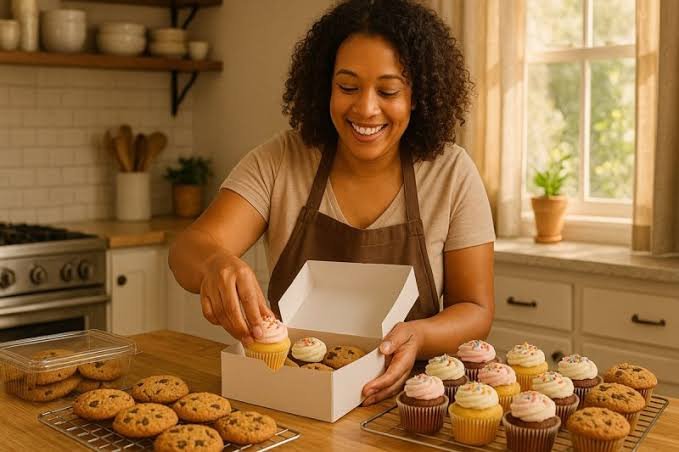
A cottage food production operation is a qualifying home-based business that prepares and sells eligible food products. Texas law generally exempts qualifying cottage food operations from being treated as food service establishments. Local governments generally may not require a qualifying operation to obtain a food permit or pay a fee to produce or sell eligible cottage foods directly to consumers or qualifying cottage food vendors.
The current law also permits qualifying cottage food operations to have annual gross income of up to $150,000.
What Foods Can Be Sold From Home?
Texas permits cottage food operations to sell many foods, but several categories remain excluded. DSHS states that cottage food operations may not sell meat, meat products, poultry or poultry products; seafood; ice and ice products such as ice cream and gelato; low-acid canned goods; products containing cannabidiol (CBD) or tetrahydrocannabinol (THC); or raw milk and raw milk products.
Certain time- and temperature-control-for-safety (TCS) foods can now be sold by cottage food operations, subject to additional requirements. These foods require temperature control to limit bacterial growth and therefore have stricter handling, labeling, storage, and delivery rules.
Do Home Food Businesses Need a Permit?
Generally, qualifying cottage food operations do not need a traditional food-establishment license or permit. Texas DSHS states that local public-health authorities may not require a qualifying operation to obtain a license or permit merely to produce or sell eligible cottage food directly to consumers.
There is an important registration requirement. Cottage food operations that sell TCS foods must register with DSHS. Cottage food vendors who purchase cottage foods from producers for resale directly to consumers must also register.
Are Food Safety Training Requirements?
Yes. A person operating a cottage food production operation must complete an accredited basic food-safety education or food-handler training program. DSHS also recognizes an accredited food-manager certification in place of food-handler certification where applicable.
These requirements apply even though ordinary permitting and routine health-department inspection generally do not apply to qualifying cottage food operations.
What Are the Labeling Requirements?
Texas requires cottage foods to be packaged and labeled appropriately. Labels generally must identify the cottage food operation, provide its address or a DSHS registration identification number when applicable, state the common or usual name of the product, identify major allergens, and include the required disclosure that the product was produced in a private residence not subject to governmental licensing or inspection.
TCS foods have additional requirements, including the date the food was made and specified safe-handling instructions.
Can You Sell Homemade Food Online?
Yes, but Texas imposes specific conditions. A consumer may purchase cottage food online from the operator, and the operator, an employee, or a household member must personally deliver the food to the consumer. Before accepting payment, the operator must provide required labeling information through the website.
An online home-food business therefore cannot automatically assume that ordinary commercial shipping rules apply to every cottage food product.
Can You Sell Homemade Food at Farmers’ Markets?
Yes. Cottage food operations may sell eligible foods at farmers’ markets, subject to cottage-food requirements. Texas DSHS states that qualifying cottage foods generally do not require a temporary food-establishment permit when sold at farmers’ markets under DSHS jurisdiction.
However, markets operating under local health authorities can have different permitting requirements for foods outside the cottage-food category.
Can You Sell Homemade Meat or Ice Cream?
Generally, no under the cottage food law. Texas specifically excludes meat and poultry products, seafood, ice and ice products such as ice cream, low-acid canned goods, CBD or THC products, and raw milk products from the cottage-food category.
Meat and poultry sold to the public are subject to separate requirements, and DSHS states that meat or poultry products sold to the public cannot be produced in a residence.
Conclusion
Selling food from home is legal in Texas when the operation qualifies under the state’s cottage food laws and follows applicable requirements. Since September 1, 2025, Texas has expanded the foods that qualifying cottage food operations may sell, including certain TCS foods, while maintaining important exclusions and additional rules.
Before starting a home-based food business, an operator should determine whether the product is eligible, complete required food-safety training, satisfy labeling requirements, register with DSHS when required, and follow the rules governing online, direct, wholesale, or farmers’-market sales.