Yes. Living off-grid is generally legal in Texas, but there is no blanket right to live without public utilities or ignore local property regulations. An off-grid lifestyle may involve private wells, rainwater collection, solar power, and septic systems, but the legality depends on the property’s location, zoning, subdivision restrictions, building requirements, water rights, and wastewater rules.
Does Texas Allow Off-Grid Living?
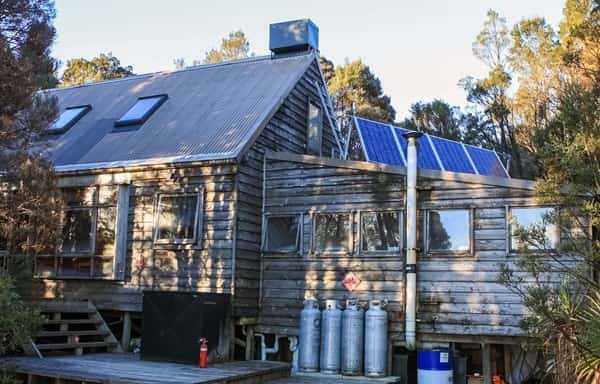
Texas does not generally prohibit residents from living independently of municipal electricity, water, or sewer services. However, being off-grid does not place a property outside laws governing residential construction and sanitation.
Texas Local Government Code Chapter 212 allows municipalities to regulate land use and property development, including residential uses, the number of residential units per acre, and certain water or wastewater facilities. An off-grid home can therefore remain subject to local requirements even when it is not connected to public utilities.
Can You Build an Off-Grid Home?
Potentially, yes. Whether you can build and occupy an off-grid residence depends on applicable building and land-use rules. Requirements can vary between cities and unincorporated areas.
A property owner may need permits or approvals for the residence, electrical systems, plumbing, septic installation, or other construction. Local rules can also address setbacks, floodplains, minimum dwelling standards, and the number or type of structures allowed. Owning rural land does not automatically mean that any structure can be used as a permanent home.
Can You Use a Private Well?
Private wells can be part of an off-grid system, but groundwater rights are subject to Texas law. Texas generally follows the rule of capture, subject to exceptions and regulation by groundwater conservation districts.
A groundwater conservation district may regulate well spacing, drilling, production, or permitting within its jurisdiction. Anyone planning an off-grid home that depends on a well should determine whether the property lies within such a district and review its rules.
Is Rainwater Collection Legal?
Yes. Texas law recognizes rainwater harvesting and regulates its use rather than generally prohibiting it. State law establishes requirements for certain systems, particularly when rainwater harvesting interacts with a public water supply.
Texas Health and Safety Code §341.042 addresses rainwater harvesting and cross-connection safeguards. Texas law also limits certain homeowners-association restrictions concerning rain barrels and rainwater harvesting systems.
Can You Use Solar Power?
Generally, yes. Texas does not generally prohibit homeowners from using solar energy to supply an off-grid residence. However, installation may still be subject to applicable electrical, building, fire-safety, zoning, or property restrictions.
Being disconnected from the electric grid does not necessarily eliminate inspection or code requirements. The applicable local authority should be consulted before installing a permanent electrical system.
What About Septic Systems?
This is one of the most important issues for off-grid living. If a residence is not connected to a municipal sewer, an on-site sewage facility (OSSF), such as a septic system, may be necessary.
The Texas Commission on Environmental Quality states that permits are generally required to construct, install, alter, repair, extend, or operate an OSSF, although limited exemptions can apply. TCEQ also explains that local permitting authorities may impose requirements more stringent than state minimums.
Texas Health and Safety Code Chapter 366 authorizes regulation of on-site sewage disposal systems to protect public health and prevent environmental hazards.
Can an HOA Prevent Off-Grid Living?
Potentially. Deed restrictions, restrictive covenants, or HOA rules may regulate structures, utilities, exterior equipment, water systems, or residential use. Some Texas laws limit how property owners’ associations can regulate certain water-conservation devices, but those protections do not create a general right to operate an entirely off-grid residence.
Anyone purchasing land for an off-grid home should review recorded restrictions before construction.
Can You Live Off-Grid in an RV or Tiny House?
This depends on the property and the legal classification of the structure. An RV, tiny house on wheels, manufactured home, and site-built dwelling can be governed by different rules. Long-term occupancy may be restricted by zoning, sanitation requirements, park rules, or deed restrictions.
Conclusion
Living off-grid is generally legal in Texas, but it is not a way to bypass land-use, building, water, or sanitation laws. Private wells, rainwater systems, solar power, and septic systems can support an off-grid lifestyle, but each may be subject to separate requirements.
Before moving onto rural property, an owner should check local zoning and building rules, groundwater regulations, septic requirements, utility rules, and recorded deed restrictions. The property’s location and the type of off-grid residence can make a significant difference.