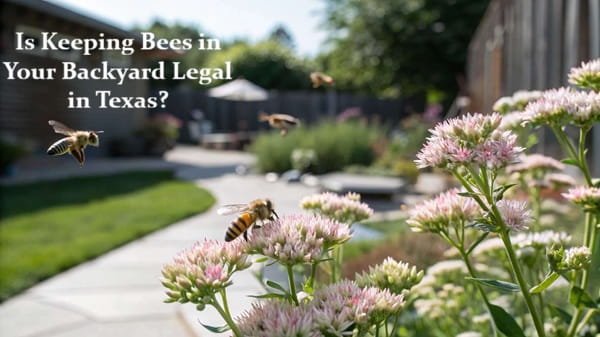
Yes, keeping bees in your backyard can be legal in Texas. State law recognizes beekeepers and apiaries and does not impose a blanket statewide prohibition on residential honeybee colonies. However, beekeepers must follow rules concerning bee diseases, pests, inspections, transportation, and abandoned colonies. Local property, zoning, nuisance, and homeowners’ association rules may also affect whether hives can be kept at a particular address.
Are Backyard Beekeepers Recognized Under Texas Law?
Texas Agriculture Code Chapter 131 defines a beekeeper as a person who owns, leases, possesses, controls, or manages one or more colonies of bees for a personal or commercial purpose. An apiary is a place where colonies or nuclei of bees are kept.
Do You Have to Register Your Hives?
Texas law currently allows each beekeeper to register annually with the chief apiary inspector. The registration expires on August 31 following the date it is issued. It must include information required by the inspector and the county or counties where the beekeeper operates.
Importantly, the statute says a beekeeper “may register,” rather than making annual registration universally mandatory. Therefore, backyard owners should not assume that state registration is required merely because they keep bees. Other state requirements can still apply.
Are Bee Diseases and Pests Regulated?
Yes. Texas has a regulatory system designed to identify, control, and suppress infectious diseases and pests affecting honeybees. The chief apiary inspector has authority to inspect bees, equipment, pollen, and honey under Chapter 131.
Beekeepers may have reporting obligations when they discover a reportable disease or pest. Texas law also establishes offenses involving disease-control requirements, inspections, quarantines, and unauthorized movement of bees.
Can You Keep Bees in a Residential Neighborhood?
Potentially, yes. State law does not create a general statewide residential ban on backyard beehives. However, the legality of a hive at a particular home can depend on local regulations and private property restrictions.
Cities and counties may have rules concerning nuisances, property conditions, animal keeping, or public health. A local ordinance may establish requirements affecting hive placement or management. Homeowners’ associations can also have restrictive covenants governing what residents may keep on their property.
Because these rules vary, homeowners should check the municipal code, county requirements, zoning rules, and HOA documents before installing hives.
What About Bees That Become a Nuisance?
A lawful hive does not give an owner unlimited freedom to allow bees to create unreasonable problems for neighbors. Texas Agriculture Code Chapter 131 specifically addresses abandoned apiaries, equipment, and colonies. An abandoned apiary includes a place where colonies are not regularly maintained or attended according to state law, rules, or quarantines.
Proper hive maintenance is therefore important for both bee health and regulatory compliance.
Can You Sell Honey From Backyard Bees?
Yes, Texas provides specific rules for small honey production operations. Under Health and Safety Code Chapter 437, a qualifying small honey production operation generally produces less than 2,500 pounds of honey annually and sells or distributes raw honey or honeycomb produced from the beekeeper’s own Texas hives directly to consumers through specified locations.
Texas law also states that a local government authority may not regulate production of honey or honeycomb at a qualifying small honey production operation. Labeling requirements still apply, and processing or packaging activities can trigger additional food-safety requirements.
Does Texas Treat Beekeeping as an Agricultural Activity?
Yes. The Texas Comptroller identifies beekeeping as an agricultural activity for certain agricultural and timber tax purposes. This does not automatically exempt every backyard beekeeper from local rules or qualify every property for an agricultural appraisal, but it confirms that Texas recognizes beekeeping as an agricultural activity under specified circumstances.
What Should a Backyard Beekeeper Check?
Before installing a hive, homeowners should check state apiary requirements, local ordinances, zoning restrictions, HOA or deed restrictions, and applicable nuisance or public-health requirements. They should also use appropriate hive-management practices and stay informed about disease and pest rules.
Conclusion
Keeping bees in your backyard can be legal in Texas, and state law expressly recognizes beekeepers and apiaries. Texas does not impose a blanket statewide ban on residential beekeeping. Nevertheless, beekeepers must comply with requirements involving diseases, pests, inspections, transportation, and colony maintenance, while local ordinances and private property restrictions may affect individual properties.
For a specific residence, verify the current rules before installing hives. This article provides general legal information and is not a substitute for advice from a Texas attorney or the appropriate local authority.