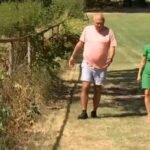
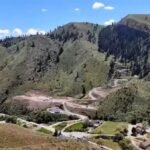
A small roadside store in far West Texas stood in the way of a national park. For decades, Walter and Bertha Glover ran a café, gas station and tourist stop at Pine Springs, welcoming travelers passing through the Guadalupe Mountains. When federal officials wanted part of their property for a proposed national park, the couple refused to sell. The dispute ended in a 1972 condemnation judgment, a $55,000 payment and a rare arrangement allowing them to remain at the store for life.
The Pine Springs conflict was a real federal land-acquisition dispute, not a newly filed Texas property lawsuit. Its importance lies in the tension between public conservation and the interests of families who already live and work on land chosen for a national park.
How the Glovers Built Their Pine Springs Business
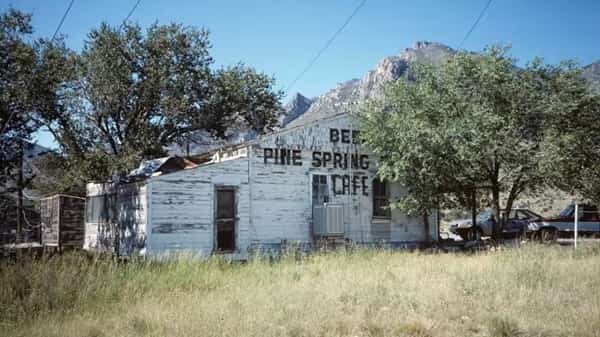
Walter Glover acquired land near Pine Springs in the early twentieth century. He married Bertha Miller in 1914, and the couple made their home in the area. As highway travel increased along what became U.S. Highway 62/180, they developed a roadside operation with a store, café, filling station and cabins.
The business served motorists crossing a sparsely populated region where a dependable stop for food, fuel and conversation could matter enormously. The property was more than a financial asset: it was their home, a long-running enterprise and part of the local identity.
Why the National Park Service Wanted Their Land
Proposals to create Guadalupe Mountains National Park brought the Glovers into conflict with federal planners during the 1960s. The Park Service considered approximately 80 acres of their much larger holding important for access to Pine Spring Canyon and preservation of the historic Butterfield stage station area.
The park’s enabling legislation passed in 1966 with the disputed tract inside its planned boundary. The Glovers strongly opposed the proposal and rejected efforts to negotiate a sale. National Park Service historical records describe difficult meetings in which the couple expressed distrust of government appraisals and questioned why they should surrender property they had long occupied.
Accounts of Bertha demanding $1 million appear in the agency’s history, but that figure was a negotiating position, not a court award or the amount ultimately paid.
From the $35,000 Offer to Condemnation Proceedings
In April 1970, federal officials offered the Glovers $35,000 along with a lifetime right to use the property and continue operating their business. They refused. The National Park Service then began condemnation proceedings, invoking the government’s authority to acquire land for an authorized public purpose upon payment of legally required compensation.
The condemnation judgment was filed on March 10, 1972. It awarded the Glovers $55,000 for the property. According to the National Park Service, the presence of water wells helped justify an increase of $20,000 above the earlier government offer.
The judgment also preserved their right to occupy and use the existing premises until the death of the last surviving spouse. That condition was crucial: it allowed the Glovers to remain connected to their business even though the land had been acquired for the park.
Their tract was the last acquired before Guadalupe Mountains National Park was formally established on September 30, 1972.
What Happened to the Store After the Settlement?
Walter Glover died in 1973. Bertha continued running the Pine Springs business for roughly another decade, until her death in August 1982. Park Service records note that relations between Bertha and park employees later became more civil than during the original acquisition battle.
The arrangement did not automatically give their daughter, Mary Glover Hinson, a permanent right to stay after both parents had died. Instead, Hinson’s continued occupancy became a separate administrative controversy, drawing attention from federal officials and elected representatives.
Extensions and special permits allowed operations to continue beyond the original life-estate period. The store finally closed at the end of 1992, and the deteriorating structures were cleared in 1994. The National Park Service records the site as no longer standing.
What the Pine Springs Case Shows About Property Rights
The federal government’s power to take property for a public purpose does not mean an owner has no rights. Compensation, valuation of improvements, permitted use and the language of any occupancy reservation can profoundly affect the outcome.
In Pine Springs, the Glovers were unable to exclude their tract from the future park. But they secured a higher payment than the 1970 offer and continued to live and work on the property. The arrangement did not eliminate the family’s opposition; it created a practical, time-limited compromise whose consequences lasted another twenty years.
Frequently Asked Questions
Q. Did the government take all of the Glovers’ land?
The National Park Service identifies approximately 80 acres for the park acquisition out of a holding of more than 4,000 acres.
Q. Was the $55,000 payment made in 1970 or 1972?
The 1970 offer was $35,000 plus occupancy rights. The condemnation judgment awarding $55,000 was filed on March 10, 1972.
Q. Can visitors still see the original Pine Springs café?
No. The store closed in 1992 and the structures were removed in 1994, according to the National Park Service.