Mitch McConnell has been one of the most influential figures in modern U.S. Senate history. The Kentucky Republican entered the Senate in January 1985 and went on to become the longest-serving party leader in Senate history, leading Senate Republicans for 18 years from 2007 through 2025.
McConnell stepped down as Republican leader when the new Congress began in January 2025, with Senator John Thune of South Dakota taking over as Senate majority leader. McConnell remains a U.S. senator from Kentucky in 2026 and currently chairs the Senate Committee on Rules and Administration. He announced in February 2025 that he would not seek another Senate term in the 2026 election.
His legacy is complicated. Supporters regard him as a skilled strategist who delivered long-lasting conservative victories. Critics argue that his tactics contributed to greater partisanship and weakened some long-standing Senate norms. Few, however, dispute the scale of his influence.
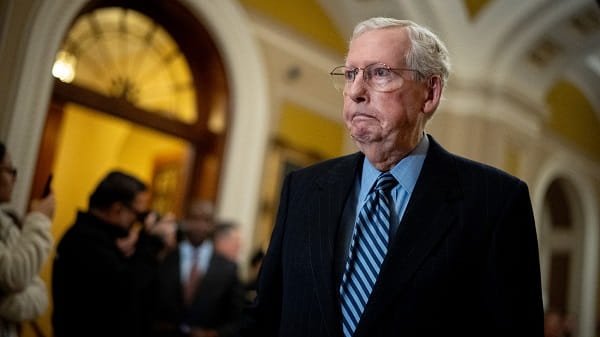
A Record-Setting Senate Leadership Career
McConnell became Senate Republican leader in 2007. He served as minority leader from 2007 through 2015, majority leader from 2015 through 2021, and minority leader again from 2021 until the beginning of 2025. His 18 years as party leader surpassed the previous Senate record held by Democrat Mike Mansfield.
Much of McConnell’s political reputation came from his detailed knowledge of Senate rules and his willingness to use procedural tools aggressively.
Rather than seeking a reputation primarily as the author of major legislation, McConnell often viewed control of the Senate calendar, nominations, voting procedures, and party unity as central sources of political power.
That approach made him highly effective from the Republican perspective but also made him one of the Democratic Party’s most persistent political opponents during the Obama and Biden eras.
Reshaping the Federal Judiciary
The federal courts are likely to be the most enduring part of McConnell’s legacy.
After Justice Antonin Scalia died in February 2016, President Barack Obama nominated Merrick Garland to the Supreme Court. McConnell and Senate Judiciary Committee Republicans refused to move forward with the nomination, arguing that voters should have a voice through the upcoming presidential election. Garland received no confirmation vote.
Donald Trump won the 2016 presidential election, and the vacancy was eventually filled by Neil Gorsuch. During Trump’s first presidency, the McConnell-led Senate also confirmed Brett Kavanaugh and Amy Coney Barrett to the Supreme Court.
The Republican Senate additionally confirmed more than 200 Trump-appointed federal judges. The result was a substantial conservative shift in the federal judiciary that continued to influence major decisions long after Trump and McConnell’s first period of unified Republican government ended.
The Garland and Barrett Decisions Defined His Approach
McConnell’s treatment of Supreme Court vacancies became one of the most controversial parts of his career.
In 2016, Republicans blocked Garland’s nomination during an election year. Four years later, after Justice Ruth Bader Ginsburg died shortly before the 2020 presidential election, McConnell moved ahead with Trump’s nomination of Amy Coney Barrett.
Barrett was nominated on September 29, 2020, and confirmed on October 26 by a 52-48 Senate vote.
McConnell defended the difference by arguing that in 2016 the presidency and Senate were controlled by opposing parties, whereas in 2020 Republicans controlled both.
Supporters viewed the strategy as legitimate use of the Senate majority’s constitutional authority. Critics saw the different treatment of the two vacancies as evidence that political advantage, rather than a consistent election-year principle, determined the outcome. The controversy remains central to assessments of his leadership.
Changing the Way the Senate Uses Its Power
McConnell frequently described himself as a defender of the Senate as an institution, particularly its ability to slow legislation and protect the political minority.
At the same time, his leadership demonstrated how aggressively a Senate majority could use procedure to achieve its objectives.
One major example came in 2017 during the Neil Gorsuch Supreme Court nomination. Democrats attempted to block the nomination under the Senate’s existing cloture threshold. McConnell raised a procedural point that ultimately resulted in a new precedent allowing Supreme Court nominations to advance with a simple majority.
The change followed Democrats’ 2013 decision to eliminate the 60-vote requirement for most executive-branch and lower federal court nominations. Together, these developments transformed the confirmation process and reduced the minority party’s ability to stop judicial nominations.
Legislative Victories and Bipartisan Deals
Although judicial confirmations became his signature achievement, McConnell also played major roles in legislation.
As majority leader, he helped advance the Republican tax overhaul enacted in 2017, one of the central domestic-policy accomplishments of Trump’s first term.
His leadership also showed a more pragmatic side during national emergencies and divided government.
During the COVID-19 crisis in 2020, McConnell participated in negotiations that produced the CARES Act and subsequent bipartisan agreements providing hundreds of billions of dollars in additional assistance to small businesses, hospitals, workers and other parts of the economy.
His record therefore combined strong partisan confrontation with periods in which he negotiated compromises when legislation required support from both parties.
McConnell, Donald Trump, and January 6
McConnell’s relationship with Donald Trump became another defining feature of his later career.
The two worked together effectively on taxes, deregulation and especially judicial appointments, but their relationship deteriorated after the 2020 presidential election.
On January 6, 2021, McConnell rejected efforts to overturn Joe Biden’s Electoral College victory. He told the Senate that courts had repeatedly rejected Trump’s claims and argued that Congress should respect the election results certified by the states.
After the attack on the U.S. Capitol, McConnell publicly blamed Trump for helping provoke the events. However, he later voted to acquit Trump during the former president’s second impeachment trial and subsequently supported Trump in the 2024 presidential election.
The relationship reflected a larger change inside the Republican Party. McConnell represented an older conservative tradition emphasizing alliances, defense spending, institutional power and conventional Republican economic policies, while Trump’s political movement increasingly pushed the party toward populism and an “America First” approach.
How History May Judge Mitch McConnell’s Senate Legacy
McConnell’s impact will probably be measured most clearly through the federal courts.
The three Supreme Court justices confirmed during Trump’s first presidency helped create a durable conservative majority on the Court. McConnell himself repeatedly emphasized that lifetime judicial appointments could have an impact far beyond an individual election or congressional session.
Supporters credit him with maintaining Republican unity, defending conservative priorities and understanding Senate power better than almost any political leader of his era. Current Majority Leader John Thune has praised McConnell’s mastery of Senate procedure and his influence on the judiciary.
Critics offer a very different assessment. They argue that the Garland blockade, changing judicial-confirmation rules and aggressive use of Senate procedure accelerated partisan escalation and damaged public confidence in congressional institutions and the Supreme Court.
Both interpretations point to the same underlying fact: McConnell changed how Senate power was exercised.
By the time he left Republican leadership in January 2025, he had spent 18 years directing his party in the chamber and four decades representing Kentucky. As he prepares to leave the Senate after his current term, his influence remains visible in the federal judiciary, Senate procedure and the political strategies used by both parties.
Whether history ultimately remembers Mitch McConnell primarily as a highly effective conservative strategist or as a leader who contributed to a more polarized Senate will remain debated. His place among the most consequential Senate leaders of the modern era, however, is difficult to dispute.