Generally, no. In Texas, a landlord cannot normally remove a residential tenant by changing the locks, removing belongings, or physically forcing the tenant out. A landlord generally must use the formal eviction process in Justice Court and obtain a court-authorized writ of possession before a tenant can be forcibly removed. Texas law does permit limited lockouts, but those are not substitutes for a court-ordered eviction.
What Is a Legal Eviction in Texas?
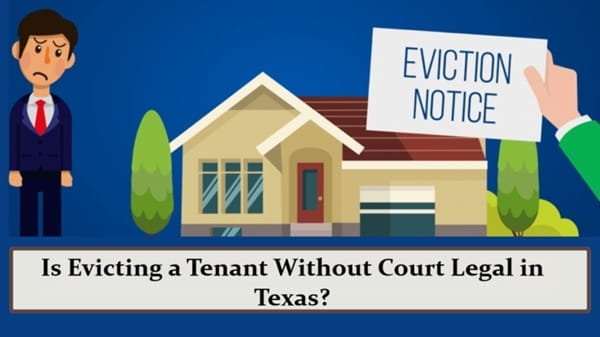
An eviction is a lawsuit used by a landlord to recover possession of rental property. TexasLawHelp explains that a landlord cannot evict a tenant without filing an eviction case in Justice Court. If the landlord wins, the court can issue a judgment for possession and, after the statutory requirements, a writ of possession.
Before filing an eviction lawsuit, the landlord generally must give the tenant written notice to vacate. Texas Property Code Section 24.005 generally requires at least three days’ written notice, unless the lease or applicable law provides a different period.
Can a Landlord Remove a Tenant Without Going to Court?
Normally, no. Self-help eviction is generally prohibited for residential tenants. A landlord cannot ordinarily decide that a tenant has violated the lease and then personally remove the tenant or have law enforcement remove the tenant without the required court process.
For example, if a tenant stops paying rent, the landlord generally must follow the applicable notice requirements and then file an eviction lawsuit if the tenant does not leave. The landlord cannot simply place the tenant’s belongings outside or permanently lock the tenant out instead of going to court.
What About Changing the Locks?
Texas law permits limited lock changes in specific circumstances, including certain situations involving unpaid rent. However, these provisions have detailed requirements and do not give landlords a general right to evict tenants without a court order.
For example, Texas Property Code Section 92.0081 allows a landlord to change locks for delinquent rent only when statutory conditions are satisfied, including applicable lease and notice requirements. The tenant must generally be given a key upon request. A lawful lockout under these provisions is different from permanently removing a tenant.
What Happens After the Notice to Vacate?
If the tenant does not leave by the deadline, the landlord may file an eviction lawsuit in the Justice Court serving the property. The tenant should receive court papers explaining the lawsuit and hearing.
The tenant has an opportunity to appear in court and present defenses or evidence. Issues may include whether rent was owed, whether the landlord gave proper notice, whether the lease was properly terminated, or whether another law protects the tenant.
When Can the Tenant Actually Be Removed?
If the landlord wins the eviction case, the court can award possession. Under Texas Property Code Chapter 24, a landlord who prevails is entitled to a judgment for possession and a writ of possession. The writ authorizes the appropriate law enforcement officer to carry out the physical removal.
TexasLawHelp explains that after a writ is issued, the constable or sheriff provides the required notice before physically removing the tenant.
What If a Landlord Locks Out a Tenant Illegally?
A tenant who is unlawfully locked out may have legal remedies. Texas Property Code Section 92.009 provides a procedure for seeking a writ of reentry through the Justice Court. A writ of reentry can allow a tenant to regain possession after an improper lockout.
Depending on the circumstances, an unlawful lockout can also expose a landlord to damages, court costs, and attorney’s fees. Tenants should document the lockout and preserve the lease and rent records.
Are There Exceptions?
Certain occupants may have different legal relationships or protections. For example, hotel guests may be treated differently from residential tenants depending on the arrangement. Subsidized or federally assisted housing can also involve additional notice requirements.
There are also specific procedures involving abandonment and certain lockouts. These exceptions should not be confused with a general right to remove an ordinary residential tenant without court involvement.
Conclusion
Evicting a residential tenant without court involvement is generally not legal in Texas. A landlord normally must provide the required notice, file an eviction case, obtain a judgment for possession, and use a writ of possession for a forced removal. Self-help measures such as physically removing a tenant or permanently locking the tenant out generally cannot replace this process.
Because Texas law contains specific rules for notices, lockouts, appeals, and writs of possession, landlords and tenants should review the lease and applicable statutes carefully when an eviction dispute arises.