One accident in Texas can give rise to a premises claim, a product claim, or both. Hurt at a store? At an apartment complex? The address alone won’t sort out the claim, even when the business or landlord owned the equipment that injured you.
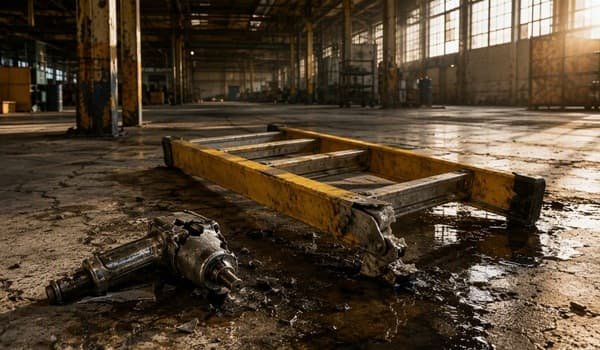
Premises liability aims at a dangerous condition on property controlled by someone else. Product liability goes after the product itself and claims it was defective. Early facts can leave both theories alive. Picture a ladder collapsing inside a store.
What Laws Govern Premises and Product Liability in Texas?
Court decisions supply most of Texas premises liability law, and the duty owed shifts with the injured person’s legal status. A customer is typically an invitee. Under CMH Homes, Inc. v. Daenen, 15 S.W.3d 97, 99–102 (Tex. 2000), an invitee must prove an unreasonably dangerous condition plus the defendant’s actual or constructive knowledge; constructive knowledge just means the defendant reasonably should have known. The claim requires a failure to exercise reasonable care, either to warn of the hazard or make it safe, and proof that this failure proximately caused the injury.
That list of elements shapes the customer’s case, and waiting is not an option. Store surveillance overwrites itself on its own cycle. Nobody hands you the incident report. In Premises & Product Liability in Texas matters, lawyers sort this question early, because the classification sets what evidence to preserve and whom to pursue.
What Does Premises Liability Cover, and What Are Common Examples?
Premises liability covers property conditions. It does not cover every mishap on someone else’s land. A spill left on a grocery-store floor can support a claim if notice and the remaining elements line up. A cracked apartment stair tread is another candidate. Ownership alone won’t carry a premises claim; an injured invitee must prove the owner knew or reasonably should have known of the dangerous condition, failed to exercise reasonable care, and thereby proximately caused the injury. An earlier repair complaint about that damaged step can supply the awareness piece.
What Are the Three Types of Product Liability?
Texas courts recognize three defect theories: manufacturing, design, and warning or marketing. A manufacturing defect exists when a unit departs from its intended design. Design claims attack the blueprint itself. Warning or marketing defects involve inadequate instructions or warnings about a risk. American Tobacco Co. v. Grinnell, 951 S.W.2d 420, 426–37 (Tex. 1997), lays out the categories.
Chapter 82 of the Texas Civil Practice and Remedies Code defines a products-liability action in broad terms, but each theory keeps its own proof requirements. For a design claim, Section 82.005 generally demands proof of a safer alternative design, plus that the defect was a producing cause of the injury.
How to Tell Premises Liability From Product Liability in Texas
Look first at what created the danger and who controlled it. A landlord’s skipped inspection points one direction; a product’s departure from its specifications points another. This is how to tell premises liability from product liability in Texas: identify whether the injury-producing danger was an unsafe property condition or a defect in the product itself. The comparison below works through the details, but no chart can conclusively classify an accident involving business equipment.
Texas law on unsafe property conditions vs defective products applies different proof requirements, especially as to control, notice, the existence of a defect, and causation.
| Question | Premises Liability | Product Liability |
|---|---|---|
| Main source of danger | A condition associated with property | An allegedly defective product |
| Typical focus | Control and notice; adequacy of warnings or repairs | Manufacture or design; adequacy of warnings |
| Potential defendants | Property possessor or another party controlling the condition | Manufacturer or a seller meeting applicable liability requirements |
| Central evidence | Inspection and maintenance records; surveillance footage and notice | Product condition and model data; warnings; design evidence and alteration history |
Can Defective Equipment on Business Property Create Both Claims?
Yes, when the facts support each theory on its own. Equipment sitting on business property doesn’t create both claims by itself. Can a defective product on business property be premises liability in Texas? It may support that theory if the property possessor controlled the dangerous condition and the other premises-liability elements are met. A ladder weld outside specification might support a manufacturing-defect theory. If store personnel saw that the same ladder was visibly damaged but kept handing it to customers, their conduct may raise separate questions about premises duties or ordinary negligence, on the particular facts.
With a forklift, bad brakes suggest a product issue; a damaged loading surface suggests a property hazard. Two theories, one machine. Sloppy repairs can implicate a maintenance contractor. Under United Scaffolding, Inc. v. Levine, 537 S.W.3d 463, 471–80 (Tex. 2017), classification follows the duty allegedly breached and the injury-producing condition or activity, not whatever label a complaint uses.
What Evidence Matters in a Texas Premises or Product Claim?
Speed decides what survives.
On the premises side, preserve photographs taken close to the event and request the surveillance footage. Incident reports and witness accounts pin down what happened. Inspection records and repair history can establish notice under CMH Homes; so can earlier complaints. Contracts can establish control.
Keep the product itself unchanged. Don’t repair or discard it. Write down the model and serial numbers. Keep the packaging and purchase records too, plus the manual and any warnings. Maintenance history matters because alterations can obscure the defect’s timing, including whether it was present when the product entered commerce or developed later through wear or repair.
Medical records document the injury and its timing. They can’t, on their own, establish that the hazard was a damaged floor versus defective equipment.
Who May Be Liable When a Product Is Used at Work?
Who can be liable for injuries from a product used at work in Texas depends on the source of the hazard and each party’s role. A manufacturer may face a defect claim; Section 82.003 generally shields a nonmanufacturing seller unless a statutory exception applies. A property possessor’s responsibilities may still matter, and negligent setup or repair can implicate a maintenance contractor under the United Scaffolding duty analysis.
Workers’ compensation coverage and the employer’s status can determine if an employee may sue the employer directly. A third-party claim, such as one against the manufacturer or the property owner, requires a separate analysis even when the accident occurred at work.
Are Texas Premises Liability Cases Hard to Win?
No fixed difficulty rating exists. Claims fail for want of proof on control, notice, or causation. In Austin v. Kroger Texas, L.P., 465 S.W.3d 193, 203–10 (Tex. 2015), the Texas Supreme Court explained how known or open-and-obvious hazards can eliminate an invitee duty, subject to limited exceptions. One involves necessary use: the owner should anticipate that an invitee cannot avoid the risk despite awareness and reasonable care. An injury by itself proves no negligence.
How Long Can a Premises Liability Lawsuit Take?
The Texas Rules of Civil Procedure govern the procedural stages; they promise no completion date. Service and discovery take time, and expert disputes and motions can stretch proceedings or slow settlement talks. Trial calendars matter too. A claim with clear facts may resolve sooner than one fought over notice or causation. The clock on filing is separate, and it follows the claim type and any applicable exceptions.
Key Distinctions to Remember
Four points carry the load:
- A dangerous property condition generally points toward premises liability.
- Product claims target defects in manufacture or design and inadequate warnings.
- Business equipment can demand investigation under more than one theory.
- Early preservation of the scene and the product shapes what proof survives.
The claim follows the hazard’s source and the defendant’s relationship to it. The evidence then has to connect that condition or defect to the injury. No street address can do that work.
This article provides general information and does not constitute legal advice.