While you’re still arguing over what damaged the roof, look at what your policy covers. Your denial letter doesn’t have the last word.
Yes. When insurers blame faulty installation or design, or defective materials for roof damage, they can deny claims attributed to improper home construction if the policy excludes that cause. You’ll need more than policy wording: evidence that separates covered events such as wind or hail from an excluded defect or deterioration.
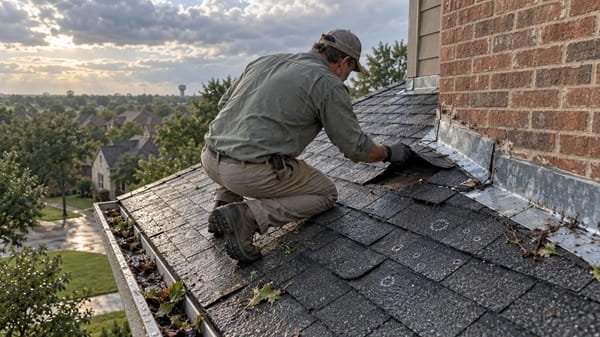
You can’t always tell what damaged the roof from its appearance alone.
Why denials blamed on improper home construction happen
By blaming faulty construction rather than the wind or hail you reported, the insurer makes your roof claim a construction-defect dispute. You need to check the policy’s exclusions. Use your storm records to check the cause the insurer gives against any construction defect exclusion in your roof claim paperwork, because a construction problem alone doesn’t show that the policy excludes the damage. Incorrect flashing may admit water, while inadequate fastening concerns how securely shingles are attached to the roof.
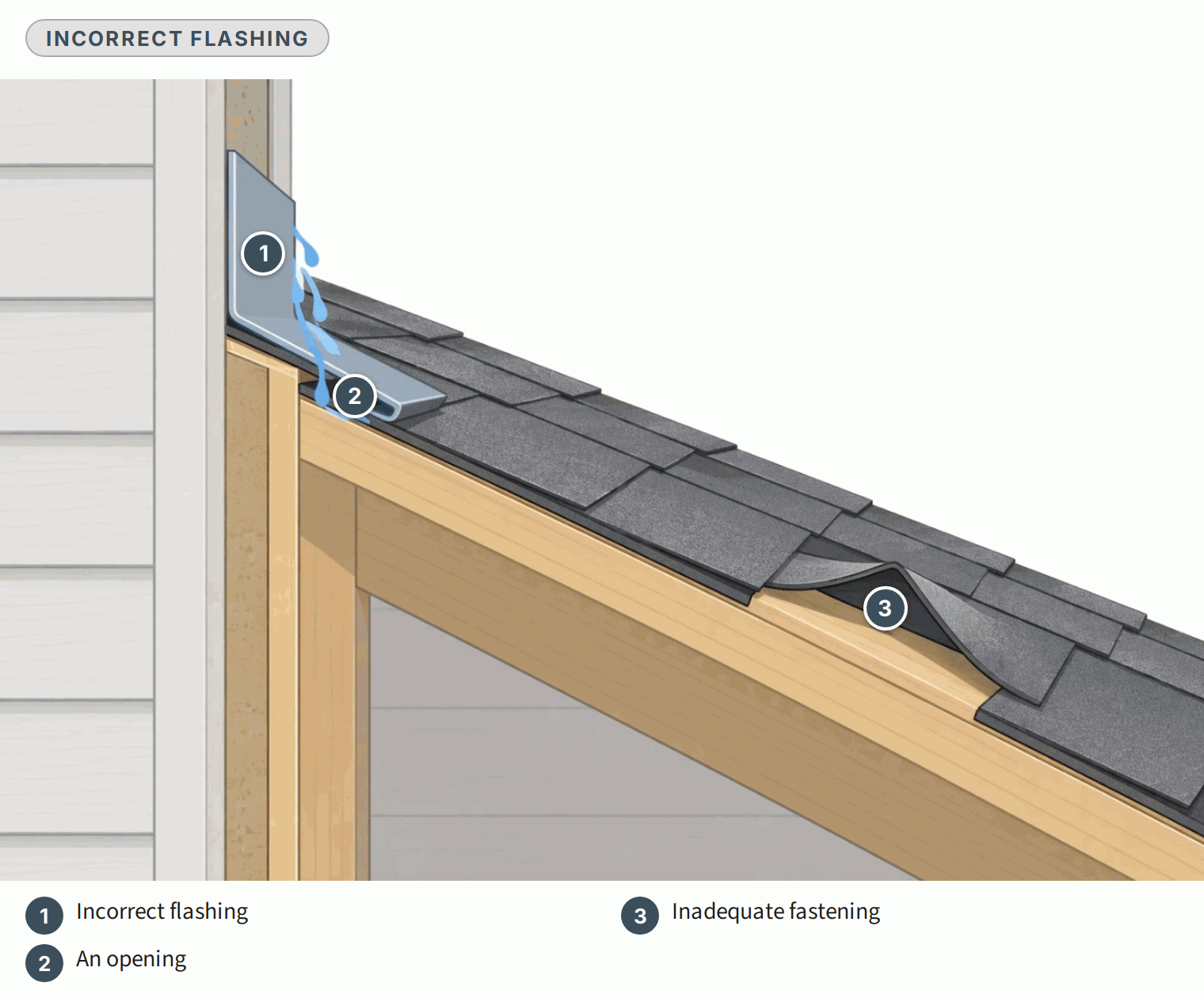
With a faulty roofing product, the materials themselves are defective; that doesn’t mean the roof has deteriorated with age. Water can keep entering through an opening that’s already there, not through damage from the storm you reported.
When assessing denials blamed on improper home construction, compare the denial letter’s stated reason with the exclusion language, inspection report, and evidence tied to the reported storm.
According to the Texas Department of Insurance, insurers closed 34.2% of Texas homeowners’ claims without payment in 2024. If a claim closes unpaid, that doesn’t mean the insurer wrongfully denied it. Insurers also close covered claims without payment when the loss falls below the deductible, not just claims for excluded damage.
What evidence helps challenge a roof denial?
Evidence is most useful when it connects the roof’s condition to a specific wind or hail event and addresses the defect theory stated in the denial.
Time-stamped photographs can document the roof’s condition before and after the storm. Local weather records can confirm a relevant event without proving that your house was damaged. Although those records won’t tell you what damaged the roof, start there.
Your maintenance and repair records can help answer claims of roof neglect. Look closely at the engineer’s observations and assumptions in the report before comparing the inspection’s scope with how the report handles storm evidence.
Look in a contractor’s estimate for the repairs needed and what they’ll cost. Repair costs don’t explain what caused the roof’s damage. Ask for physical findings that support the proposed cause, like displaced shingles or fastening problems.
| Evidence | What it may clarify | Important limitation |
|---|---|---|
| Denial letter and policy | The insurer’s stated cause and cited exclusion | Policy language must be read in context |
| Before-and-after photographs | Changes associated with the reported event | Dates and locations should be verifiable |
| Engineer or contractor findings | Damage patterns and repair scope; findings about possible cause | Repair cost and causation are different questions |
| Maintenance and repair records | Prior roof condition and previous problems | Incomplete records may leave factual gaps |
How to seek a second inspection after roof claim denial
Write to request another inspection, telling the insurer exactly which findings you disagree with. Ask the insurer to address the wind or hail damage evidence you’ve already sent.
- Find exactly which exclusion or cause the insurer cites by checking the denial letter.
- To see what the insurer relied on, request its estimates and inspection report, photographs included.
- Send the contractor’s or engineer’s assessment with relevant photographs, weather information and your repair records.
- Ask about bringing your contractor along when requesting another roof inspection.
- Confirm the request and subsequent communications in writing.
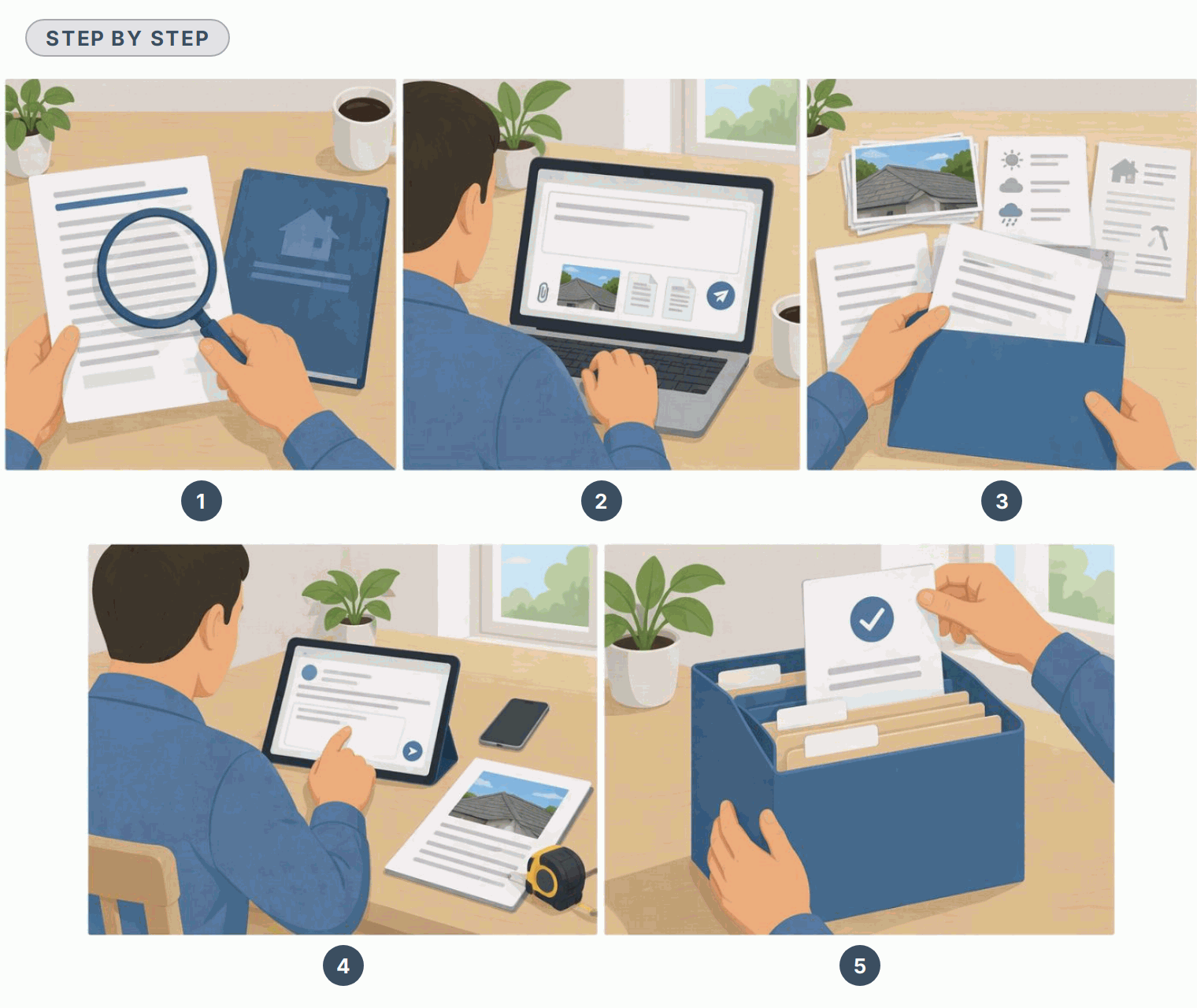
Your policy and claim circumstances may affect the insurer’s response to your written request.
Before you arrange non-emergency permanent repairs, record what the roof looks like now. You may still need to take reasonable temporary measures to prevent further damage, such as having a professional safely install a tarp. Keep photographs and emergency repair receipts.
Is the dispute about coverage or repair cost?
If the insurer says there wasn’t a covered loss, a construction-defect denial is generally about coverage. It is an amount dispute when the insurer accepts coverage but disagrees about the cost or extent of repairs.
Take a case where the insurer accepts hail damage, pricing roof repairs below your contractor’s estimate. Here, it’s the repair cost they’re stuck on. Coverage or the cause of the roof damage is at issue when the insurer blames the whole condition on faulty installation and cites an exclusion.
Appraisal usually addresses the amount of a covered loss. Check your policy against what you’re disputing to see whether appraisal is available and what it can address. Some causation questions may arise during appraisal, but that doesn’t mean an appraisal award settles every coverage question. Read your appraisal clause before you put in a demand.
Build the record before choosing the remedy
Save your policy and denial letter with the inspection materials and photographs. Keep repair history and estimates with your written communications. This isn’t tailored legal advice for your own claim. Before waiting for another inspection or estimate, check notice and proof-of-loss requirements, along with any appraisal or legal deadlines that may affect your options while the insurer considers your request for another assessment. Get advice using your policy and claim file if you’re still disputing what damaged the roof; sort your documents by date.