In the summer of 2026, California farmer Cesar Mora made headlines for handing out roughly 182,000 pounds of nectarines instead of selling them. The giveaway at his Reedley farm was not a publicity stunt detached from business realities. It followed years of litigation with Giumarra Brothers Fruit Co., a major produce company that claimed Mora had violated agreements governing a specially marketed white nectarine.
What began as a dispute over who could pack and sell the fruit developed into a legal fight over the future of Mora’s Monalise orchard. By August 2026, a jury had found that he breached his contract, yet awarded Giumarra no damages. Separately, a judge had ordered the removal of the trees. Mora’s attorneys were fighting that order and pursuing appellate relief.
How the Monalise Nectarine Agreement Began
Mora grew Monalise white-flesh nectarines near Reedley in Fresno County. The disputed planting covered about 7.5 acres, even though his broader ranch was larger. Court materials and local reporting describe grower, sublicensing and marketing agreements beginning in 2017, with a separate marketing arrangement following in 2019.
Those documents were central to Giumarra’s position that the variety could be marketed only through authorized channels. The company maintained that Mora was bound by restrictions on handling the crop. Mora questioned elements of the arrangement, including the company’s asserted rights and whether the terms were enforceable as Giumarra claimed.
Why Mora Stopped Using Giumarra’s Marketing Channel
Mora said that the arrangement produced disappointing financial returns. He alleged that an unusually large share of his fruit was rejected or culled after delivery, reducing the amount for which he was paid. He also questioned what happened to discarded fruit. Those are Mora’s allegations, not findings that the company was proved to have mishandled the crop.
In 2023, Mora sent fruit to a different packing and marketing channel. Giumarra argued that this violated the parties’ exclusive arrangements, and filed a breach-of-contract case in Fresno County Superior Court that year. The lawsuit was docketed as Giumarra Brothers Fruit Co. v. Mora, No. 23CECG03466. Mora responded with his own claims challenging aspects of the business relationship.
The central legal issue was not whether Mora had grown the fruit. It was whether agreements concerning the specialty variety gave Giumarra enforceable control over how those nectarines were marketed and what remedies a breach could justify.
The Free Nectarine Giveaway
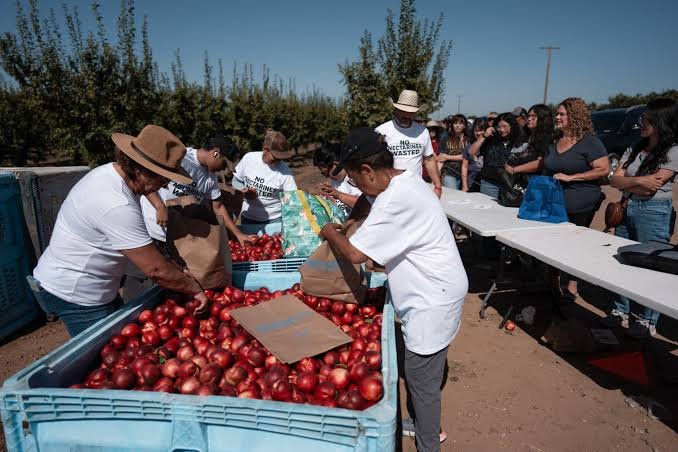
Rather than let his 2026 harvest spoil, Mora opened his farm to the public under a “No Nectarines Wasted” campaign. Volunteers helped visitors carry home bags and boxes of fruit. The widely reported total was approximately 182,000 pounds over several days.
The giveaway turned a contract dispute into a public conversation about the bargaining power of growers, restrictions on specialty varieties and food waste. Public sympathy, however, could not decide whether the written agreements were legally binding. That question was for the court and jury.
What the Court and Jury Decided in August 2026
In early August, a Fresno County judge ordered Mora to remove the disputed nectarine trees. His lawyers sought to prevent that order from taking effect while they challenged the ruling.
A separate jury verdict followed in mid-August after a trial lasting approximately two weeks. The jury concluded that Mora had breached his agreement with Giumarra. It also rejected his claims that the company failed to honor promised benefits associated with the crop. Importantly, the jury did not award Giumarra monetary damages despite finding a contractual breach.
These outcomes should not be confused. A finding of breach and a zero-dollar damages award can coexist; an order affecting the continued use of the trees raises a separate and unusually consequential remedy for the farmer.
Where the Legal Fight Stood in October 2026
As of October 23, the latest reliable reports reviewed here show Mora’s lawyers contesting the tree-removal order and planning or pursuing an appeal. Reporting in August said he faced an end-of-October deadline to remove the affected trees. A final appellate disposition or confirmed later stay was not established by the sources reviewed.
The case illustrates how a crop-marketing contract can threaten an agricultural investment far beyond a single season’s sales. For Mora, the stakes include years of orchard development, not simply the price of one harvest.
Frequently Asked Questions
Q. Did Cesar Mora have to pay Giumarra damages?
The August 2026 jury found a contractual breach but did not award Giumarra monetary damages, according to KFSN’s report on the verdict.
Q. Did the court order every tree on Mora’s entire farm destroyed?
The reported removal order concerned the disputed Monalise nectarine trees, not every crop or planting on his wider property.
Q. Why was Mora giving away fruit if it could have been sold?
Mora said the litigation and marketing restrictions prevented him from selling the affected harvest through his preferred channels, so he chose to distribute the fruit rather than allow it to spoil.