The growing number of car accidents in the US has long-term financial implications in terms of compensation. Claims Journal cites a CCC survey stating that bodily injury claims have been on the rise in the US. In 2025, these claims hit a rate of one-in-four auto damage claims. That was an increase from a historical rate of one-fifth of the frequency of auto damage claims.
Notably, a car accident claim is not determined solely by the size of the dent, the repair bill, or the apparent severity of injuries. The driver’s choices before, during, and after the collision can help explain what happened and whether another person acted negligently. Factors such as speeding, distracted driving, impairment, and leaving the scene may all affect the outcome.
In this article, we will highlight the potential impact of driver conduct on car accident claims.
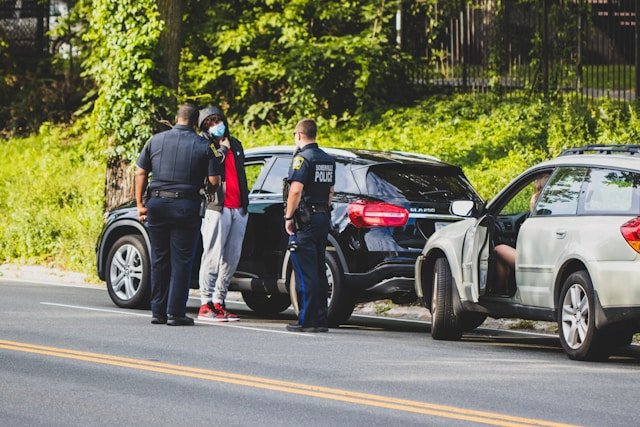
Speeding Can Influence Fault
Speeding can contribute to a collision in several ways, and the numbers are scary. Sophie Shulman, NHTSA’s deputy administrator, said in a Forbes feature, “Speeding accounts for nearly a third of all fatalities on American roads.” She also explained that speeding may seem like a quick and easy option to save time when you’re running late. However, it puts you, your loved ones, and others on the road in danger.
A driver traveling too fast may have less time to react to stopped traffic, pedestrians, road hazards, or a vehicle changing lanes. Excessive speed can also make it harder to maintain control, stop safely, or negotiate a curve. Even driving below the posted limit can be unsafe if congestion, construction, weather, or visibility requires a slower speed.
While speeding does not automatically make a driver legally responsible, it often worsens the damage. Investigators ask whether the speed violated a traffic rule and, importantly, whether it contributed to the collision.
For example, a speeding driver may be liable if excessive speed prevented timely braking. However, if another driver suddenly crossed into traffic and the speed did not cause or worsen the crash, liability may be assessed differently.
Distracted Driving Can Strengthen Negligence Evidence
The danger of distracted driving cannot be underestimated, with the NHTSA reporting that it claimed 3,208 lives in the US in 2024. Also, a whopping 315,167 people were injured during such accidents.
Distracted driving occurs when a driver’s attention is diverted from safe vehicle operation. Texting, making or receiving phone calls, reading messages, eating, drinking, and entering navigation instructions are common distracted driving actions. Similarly, adjusting the radio, changing climate controls, or reaching for an object can affect a driver’s attention.
Distraction evidence can be particularly useful because a driver may claim that the collision was unavoidable or caused by someone else. Phone records may show calls, texts, or data use near the time of the crash. A lawyer may seek additional phone information through formal requests or litigation. Eyewitnesses may report seeing the driver looking down, holding a phone, eating, or reaching inside the vehicle.
Dashcams, traffic cameras, and security footage may provide independent confirmation. Showing distraction is not always enough, and evidence is needed to connect the conduct to the accident. For example, proof that a driver was texting is stronger when it also shows that the driver failed to brake, drifted across a lane, or struck a vehicle while looking away.
DUI Can Have Significant Consequences
Alcohol- or drug-impaired driving can affect both the crash investigation and the injured person’s claim. Impairment may explain delayed reactions, excessive speed, poor lane control, missed traffic signals, or an inability to avoid a hazard. It may also support an argument that the driver breached the duty to operate a vehicle reasonably safely. The consequences for getting a DUI can vary according to the location.
According to The Moorhead Law Group, C.R.S. § 42‑4‑1301, which is the impaired driving statute of Colorado, sets several offense categories. The penalty for DUI in the state may involve a combination of fines, probation, jail, community service, license revocation, and mandatory alcohol or drug education and treatment.
A DUI or DWI charge leading to these penalties is a criminal matter brought by the government. On the other hand, a victim’s claim for compensation is separate. The victim may pursue an insurance claim or civil action for medical expenses, lost income, property damage, and pain and suffering.
Reckless and Aggressive Driving Can Affect Liability
Reckless and aggressive driving is more common than you can imagine. A 2024 survey by the Pew Research Center found that 49% of Americans said that drivers in their area were driving more dangerously than before the pandemic. Conversely, only 9% said people were practicing safe driving. The concerns are the same in 2026, and things may not get much better over time.
Some conduct, such as tailgating, dangerous passing, racing, road rage, running a red light or stop sign, and making unsafe lane changes, can cause danger on the road. Documentation can help establish a pattern or show what happened immediately before impact.
Witnesses may describe an aggressive driver following too closely or passing several vehicles. Similarly, dashcam and surveillance footage may show a red-light violation, unsafe merge, or dangerous maneuver.
Evidence of particularly dangerous behavior may help establish negligence or, in some circumstances, a more serious theory recognized by state law. Some jurisdictions permit enhanced damages for conduct that is willful or reckless, although the standards and availability of such damages vary.
FAQs
Q: Can DUI/DWI affect a driver’s record?
A: Yes. A DUI or DWI arrest, charge, or conviction may appear on a driver’s record, depending on state rules and the outcome. Evidence of alcohol or drug impairment may support a negligence claim and lead to separate criminal penalties, license suspension, increased insurance premiums, probation, fines, or other legal consequences.
Q: Does speeding automatically create liability?
A: No. A driver may violate a speed limit without being solely responsible for a collision. Investigators examine road, weather, traffic, visibility, and timing, then ask whether the excessive speed prevented braking, caused loss of control, or increased the severity of injuries. Liability depends on the facts and applicable state law.
Q: What evidence shows negligence in a car accident?
A: Potential evidence includes police reports, photographs, dashcam or surveillance footage, eyewitness statements, vehicle event data, phone records, medical records, repair estimates, and communications with insurers. Together, these materials may show what the driver did, how the collision occurred, the injuries sustained, and the financial losses.
Key Takeaways
| Car Accident Data Point | Figure | Source |
| Bodily injury claims as a share of auto damage claims in 2025 | 1 in 4 (25%) | Claims Journal / CCC survey |
| Historical bodily injury claim rate | 1 in 5 (20%) | Claims Journal / CCC survey |
| U.S. traffic fatalities linked to speeding | Nearly 1 in 3 | NHTSA, cited by Forbes |
| People killed in distracted-driving crashes in 2024 | 3,208 | NHTSA |
| People injured in distracted-driving crashes in 2024 | 315,167 | NHTSA |
| Americans saying drivers are more dangerous than before the pandemic | 49% | Pew Research Center, 2024 |
Documenting driver behavior helps transform a disputed accident into a clearer account of cause, responsibility, and loss. Speed, distraction, impairment, and aggressive maneuvers conduct may each provide evidence. The key issue, however, is usually whether the behavior contributed to the collision and resulting harm.
Since liability standards, comparative-fault rules, and available damages differ by state, a qualified local attorney can offer guidance and help victims maximize their compensation.