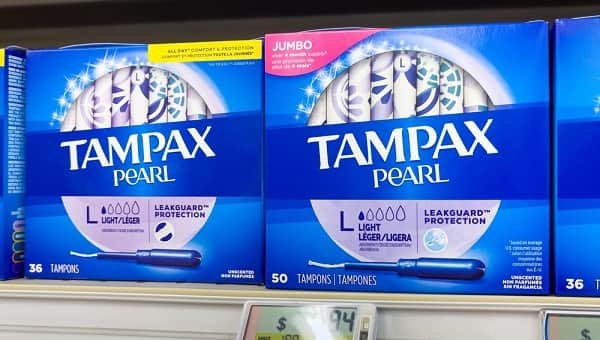
Procter & Gamble is facing proposed class-action lawsuits alleging that certain Tampax tampons contain undisclosed lead or other substances despite being marketed as safe and gentle. The main active cases concern Tampax Pearl and Tampax Radiant products, while a separate lawsuit challenged the marketing of Tampax Pure Cotton tampons over alleged PFAS content.
These lawsuits remain disputed. No court has ruled that Tampax products caused an injury, and no consumer settlement or claim form is currently available.
What Does the Lead Lawsuit Allege?
The main California case is Barton v. The Procter & Gamble Company, filed in the U.S. District Court for the Southern District of California.
Plaintiffs Allison Barton and Jana Moreno allege that independent laboratory testing detected lead in certain Tampax Pearl and Tampax Radiant tampons. They claim the product packaging led consumers to believe the tampons were free from potentially harmful substances.
The challenged statements include:
- “#1 U.S. Gynecologist Recommended Tampon Brand”
- “Clinically Tested Gentle to Skin”
- “Free of Perfume”
- “Tampon Free of Dyes”
- “Free of Elemental Chlorine Bleaching”
The plaintiffs argue that consumers would consider the alleged presence of lead important when choosing an intimate-care product. They say they would not have bought the tampons, or would have paid less, had the alleged test results been disclosed.
The lawsuit primarily seeks recovery for economic loss. It is not currently a certified personal-injury class action compensating users for cancer, reproductive problems or another diagnosed condition.
What Did the Laboratory Testing Allegedly Find?
The California complaint alleged that testing of super-size Tampax Pearl and Tampax Radiant products detected lead. The plaintiffs then used the results to estimate exposure associated with other sizes and ordinary tampon use.
Procter & Gamble challenged this approach, arguing that testing one size could not automatically establish what was present in every product purchased by the plaintiffs. In February 2025, the court dismissed part of the complaint but permitted the plaintiffs to correct deficiencies and submit an amended version.
An amended complaint followed. In August 2025, the court again granted part of P&G’s dismissal request while allowing other claims to continue. The company subsequently answered the complaint. A December 11, 2025 order rejected P&G’s attempt to transfer the case to an Ohio federal court.
The Consolidated Illinois Class Action
Related claims are being pursued in Foster v. The Procter & Gamble Company in the Northern District of Illinois.
The consolidated complaint includes consumers from several states who purchased Tampax Pearl or Tampax Radiant products. They allege that P&G failed to disclose lead while using safety-related statements that encouraged customers to trust the products.
On July 15, 2026, the court granted P&G’s dismissal request only as to the negligent-misrepresentation claim. The judge allowed the plaintiffs’ other principal claims to proceed and directed P&G to answer the complaint by July 31, 2026.
That decision was not a finding that P&G is liable. At the dismissal stage, a court generally determines whether the allegations are legally sufficient to continue, not whether the plaintiffs have proved them.
What Does Procter & Gamble Argue?
P&G disputes the allegations and has challenged the plaintiffs’ testing, exposure calculations and interpretation of its packaging.
The company argues that statements about dyes, perfume, bleaching and skin gentleness do not promise that a tampon is completely free of every naturally occurring trace substance. It has also questioned whether the alleged testing shows that users receive a harmful level of lead during normal use.
These questions may require laboratory evidence, toxicology opinions and expert testimony if the cases proceed toward class certification or trial.
What Did the FDA Find About Metals in Tampons?
In July 2026, the FDA published results from testing 11 types of tampons produced by six brands and five manufacturers.
The agency confirmed that lead and other trace metals could be detected. However, its simulated-use testing found that the amounts released were far below levels expected to cause harm, even under conservative lifetime-exposure assumptions. The FDA continued to describe tampons as a safe menstrual-product option.
The FDA did not publicly identify individual tested brands in that summary. Its findings therefore should not be presented as either proving or disproving the allegations about a specific Tampax product.
The Separate Tampax PFAS Lawsuit
In Bounthon v. The Procter & Gamble Company, consumers alleged that Tampax Pure Cotton packaging was misleading because testing supposedly detected organic fluorine associated with PFAS.
The district court eventually dismissed the case with prejudice after finding that the testing allegations did not adequately establish that the products contained PFAS. The plaintiffs appealed, and the Ninth Circuit docket remained active in 2026.
Is There a Tampax Settlement Claim?
No Tampax settlement claim is currently open.
As of August 3, 2026, there is no court-approved:
- Settlement fund
- Claim form
- Payment estimate
- Settlement administrator
- Filing deadline
- Certified nationwide consumer class
The lead-related cases are still being litigated, while the PFAS case is involved in an appeal. Websites promising guaranteed Tampax payments should not be trusted unless they identify an official court notice and settlement administrator.