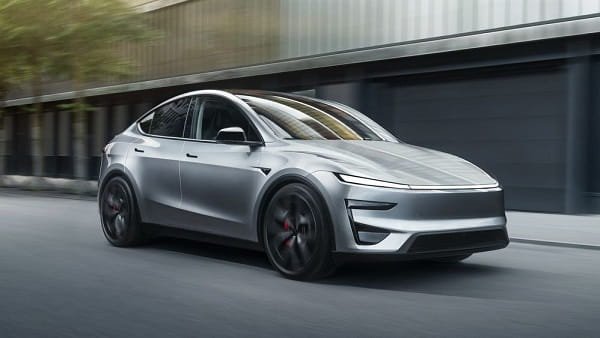
Tesla is facing a personal-injury lawsuit after a Virginia woman crashed a Model Y into a hair salon during a test drive. Plaintiff Alemzewd Lawgalet claims Tesla and two unidentified company representatives failed to explain important differences between an electric vehicle and a gasoline-powered car before allowing her to drive the vehicle alone.
The case, Lawgalet v. Tesla, Inc., et al., is pending in the U.S. District Court for the Eastern District of Virginia. It reached federal court on July 22, 2026, after the defendants removed it from Virginia state court. Lawgalet seeks at least $10 million in compensatory damages and $350,000 in punitive damages. Tesla disputes responsibility, and no court has ruled that the company or its employees caused the crash.
What Is the Tesla Model Y Test-Drive Lawsuit About?
The lawsuit concerns a test drive that took place on September 21, 2024, in Arlington, Virginia. According to the complaint, Lawgalet arranged to test-drive a Tesla Model Y and told the company representatives that she had never driven an electric vehicle before.
She alleges that she asked whether a Tesla employee could accompany her. The representatives allegedly told her that an escort was unnecessary and that the Model Y operated like a conventional gasoline vehicle. She was then permitted to begin the test drive alone.
The central allegation is that Tesla personnel failed to explain the vehicle’s regenerative braking and acceleration settings, identify which setting was active or show her how to change it.
What Happened During the Test Drive?
Lawgalet says she drove onto Interstate 395 and reached approximately 55 mph. When she lifted her foot from the accelerator, the Model Y slowed more abruptly than she expected. She allegedly believed that the brakes had unexpectedly engaged and became frightened because no one had explained regenerative braking to her.
She decided to leave the highway and return to the Tesla location. The complaint alleges that, while starting from a traffic light, the vehicle accelerated with much greater force than she expected from the pressure applied to the pedal. She lost control, crossed toward the storefront and crashed into Posh Salon in the 400 block of 12th Street South.
The impact caused a fire and forced the building to close for a structural inspection. Customers and employees were inside, but local reporting said they were not physically injured. Lawgalet was hospitalized with serious injuries and claims continuing medical expenses, pain, lost earnings and reduced enjoyment of ordinary activities.
Was the Tesla in ‘Insane’ Acceleration Mode?
Much of the attention surrounding the case has focused on Tesla’s high-performance “Insane” acceleration setting. Tesla’s Model Y manual describes Insane mode, where available on Performance vehicles, as providing the maximum level of acceleration immediately available. The manual describes Chill mode as a smoother and gentler setting and identifies other modes depending on vehicle configuration and software.
Reports differ slightly on this point. Some say the vehicle had been placed in Insane mode, while others note that the complaint’s quoted allegations do not clearly identify the active setting. The evidence must therefore establish which mode was selected and who selected it.
The lawsuit does not allege that Autopilot or Full Self-Driving controlled the vehicle. It concerns instructions, warnings and the decision to permit an unaccompanied test drive.
What Is Regenerative Braking?
Regenerative braking is a normal feature of electric and hybrid vehicles. When the driver reduces pressure on the accelerator, the electric motor can slow the vehicle while returning some energy to the battery. As a result, an EV may begin slowing noticeably before the driver presses the brake pedal.
Tesla’s Model Y guidance explains that regenerative braking slows the vehicle when the accelerator is released. Lawgalet says the unexpected slowing made her think something was wrong and contributed to her fear during the test drive.
Tesla may argue that regenerative braking is a normal, controllable EV characteristic. Lawgalet frames the issue as a failure to instruct and warn her.
What Legal Claims Has Lawgalet Made?
The complaint accuses Tesla and the two unidentified representatives of negligence. In a negligence case, a plaintiff generally must establish that the defendants owed a duty of reasonable care, breached that duty and caused injuries and losses as a result.
Lawgalet alleges that reasonable care required Tesla personnel to explain the Model Y’s basic operating characteristics, identify or select an appropriate acceleration setting, warn her about regenerative braking and accompany her after she disclosed that she had no previous EV-driving experience.
The two representatives are identified as John Doe defendants while their full identities are determined through the litigation process.
How Has Tesla Responded?
Tesla has not accepted the plaintiff’s version of events. According to reporting on the state-court filings, the company denied responsibility and asserted that Lawgalet failed to use reasonable care and failed to take reasonable steps to limit her alleged damages.
Tesla may rely on vehicle data, camera footage, pedal inputs, speed information, test-drive documents and employee testimony. It may argue that Lawgalet retained control of the accelerator and brake and that the crash resulted from driver error.
Lawgalet must prove that the alleged lack of instruction legally caused the accident, not merely that it occurred before the crash.
What Damages Is the Plaintiff Seeking?
Lawgalet is asking for at least $10 million in compensatory damages. Compensatory damages can cover proven losses such as medical care, pain and suffering, lost wages and reduced earning ability.
She also seeks $350,000 in punitive damages, alleging reckless, willful or wanton conduct and a conscious disregard for safety. Punitive damages seek to punish especially serious conduct. Virginia law caps the total punitive-damages award in a civil action at $350,000, explaining the amount requested.
The amounts stated in a complaint are demands, not findings. Lawgalet must support her claimed losses with evidence, and Tesla can challenge the nature, cause and value of those losses.
What Must the Court Decide?
The case may turn on several factual questions: what Tesla employees were told about Lawgalet’s experience, what instructions they provided, whether she requested an escort, which acceleration mode was active, who selected it and whether a different warning or setting would probably have prevented the crash.
Vehicle telemetry could show accelerator position, braking, speed and other events before impact. Witness and expert testimony may also help determine whether the crash resulted from driver error, inadequate training or a combination of factors.
The court has not resolved these issues, and none of the parties’ allegations should be treated as established facts.
What Is the Current Status of the Lawsuit?
The federal docket identifies the matter as Lawgalet v. Tesla, Inc., et al., case number 1:26-cv-02208. Tesla and the two John Doe defendants filed a notice removing the case to the Eastern District of Virginia on July 22, 2026. The docket also records Tesla’s corporate and citizenship disclosure filings.
The lawsuit remains at an early stage. There has been no trial, liability ruling, damages award or publicly announced settlement. Future proceedings may involve vehicle records, depositions and expert evidence.
The Tesla Model Y test-drive lawsuit has attracted attention because it raises a practical question for electric-vehicle sellers: how much instruction should be provided before a first-time EV driver takes a high-performance vehicle onto public roads? The final answer will depend on evidence that has not yet been tested in court. Until a judge or jury rules, Lawgalet’s claims and Tesla’s defenses remain competing allegations.