Fault gets decided on the shoulder of the road, long before anyone reads a statute. A trooper walks the scene, draws a little box diagram, checks a box that says “contributing factor,” and hands you a thin carbon copy. Most drivers treat that paper like a verdict.
It isn’t one. And here’s the part that costs people money: the gap between what that form actually says and what everyone assumes it says is where claims quietly fall apart. Texas has more than 250 counties, dozens of police agencies, and no single statewide traffic crash report layout, so the box you got checked in Harris County might not even exist on the form used in Lubbock.
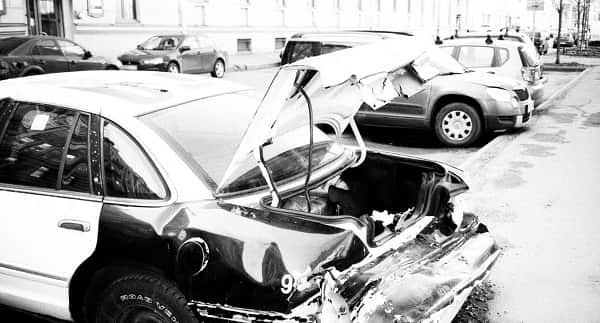
You’re about to learn what a crash report really is, how crash data gets collected, what evidence actually moves a claim, and a five-step routine you can run in the first 48 hours. That last part matters more than anything else here.
Who decides fault after a crash, anyway?
Not the officer. This surprises people, and it’s the single most useful thing you can internalize.
A police report in Texas is a record of observations. It documents positions, statements, weather, citations, and physical evidence. It does not bind an insurance adjuster, an arbitrator, or a jury. Insurers lean on it because it’s convenient, and they push back on it when it suits them. If the report blames you and the physical evidence doesn’t, you have room.
I’d rather have three photos of skid marks than a favorable report paragraph. Reports are someone’s summary of a chaotic fifteen minutes. Photos are the fifteen minutes.
Here’s the other piece most people never hear: Texas follows a modified comparative fault rule. If you’re found 51 percent or more at fault, you recover nothing. Below that threshold, your recovery gets reduced by your share. One percent under the line is the whole ballgame, and that’s why the details in the next few sections matter.
What the data actually says about why crashes happen
Crash causes get studied seriously by researchers, and the findings don’t flatter any of us. Behavioral factors, meaning driver choices like speed, distraction, and impairment, sit at the center of the overwhelming majority of incidents. That’s a stable finding across decades and datasets, and it’s worth knowing before you assume your crash was some freak mechanical event.
If you want the raw modeling side of this, the crash prediction literature is public and fairly readable. Researchers have spent years building statistical models from historical collision records to forecast which road segments and conditions produce the most incidents, and the methods they use are openly published. A good entry point is the preprint repository at arXiv, where traffic safety modeling papers appear regularly. It won’t help you with your claim, but it will recalibrate how you think about “it came out of nowhere.”
Mechanical failure, weather, and road defects are real contributors. They just don’t dominate the way people assume when they’re looking for an explanation that isn’t “I looked down.”
Why “it was an accident” is a useless phrase
Every crash has a cause chain. Someone chose a speed. Someone chose a gap. Someone chose to reach for a phone. The word “accident” flattens that chain into nothing, and when you flatten it, you can’t prove anything. Your job in the first week is to keep the chain intact: who, doing what, at what second, under what conditions. That’s it. That’s the whole game.
The evidence stack that actually builds a claim
Adjusters work from documents. Give them documents, and you’re speaking their language. Here’s the order I’d build it in.
- The report itself, in full. Request the complete version, not the driver exchange slip. Diagrams, narratives, and witness names live in the full document.
- Scene photos, taken at the same time of day if you can. Lighting and sun angle change everything about what a photo proves.
- Vehicle damage from multiple angles, including the other car. Impact direction is physical evidence, and it doesn’t argue with anybody.
- Medical records from the first visit. These anchor the timeline. Gaps in treatment become arguments against you later.
- Witness statements, written down early. Memories degrade fast, and a written statement from a bystander carries weight.
Two things people skip: the traffic signal timing record, which some Texas municipalities retain only briefly, and any nearby business camera footage. Both have short retention windows. Ask within days or lose them permanently.
When the stakes are real, meaning injuries, disputed fault, or a commercial vehicle, this is the work a car accident lawyer does behind the scenes: preservation letters, subpoenas for footage, reconstruction experts. You can absolutely run the early steps yourself. The preservation clock, though, doesn’t wait for you to decide.
A five-step routine for the first 48 hours
Print this. Do it in order.
- Step 1. Call 911 and request a report even for a minor hit. No report means no independent record.
- Step 2. Photograph everything before vehicles move, including license plates and the position of both cars relative to lane markings.
- Step 3. Get names and phone numbers from every witness on scene. Not statements. Just contact info.
- Step 4. See a doctor within 24 hours. Adrenaline masks a lot, and a delayed visit creates an unnecessary fight.
- Step 5. Notify your insurer with facts only. No speculation about fault, no apologies, no “I think I might have.”
Number five is where people hurt themselves. “I’m so sorry, I didn’t see you” is a recorded sentence that an adjuster will quote back to you. Be polite. Be brief. Save the analysis for your own notes.
The paper trail nobody expects to matter
The federal government keeps public data resources that show how crashes distribute across the country by region, road type, vehicle class, and time of day. It’s population-level information, not a lookup for your specific case, but it’s genuinely useful for understanding whether your crash pattern is common or unusual. The U.S. Census Bureau publishes much of the underlying transportation and commuting data that safety researchers rely on, and it’s free to browse.
Why care? Because if you’re arguing that a specific intersection, a specific vehicle type, or a specific hour is a known hazard, pattern data backs that up. Adjusters respond to context. They dismiss isolated complaints.
What Texas drivers get wrong about comparative fault
The 51 percent line isn’t intuitive, and it’s the rule that quietly ends claims. Two drivers can both be partly responsible, and only one of them recovers anything. Here’s how that plays out in practice.
| Your assigned fault share | What you recover
|
| 0 to 50 percent | Your damages, reduced by your percentage |
| 51 percent or more | Nothing |
That table is why a rear-end collision with a sudden stop in front of you is more contested than people assume. The other driver will argue you were following too closely. You’ll argue they braked without cause. Both arguments can be partially true, and the split determines whether you get paid at all.
I’ve watched people accept a 60 percent fault assignment from an adjuster’s first phone call because it sounded reasonable. It wasn’t a finding. It was an opening offer dressed up as a conclusion.
One more sourced fact worth keeping in your pocket: the academic publishing side of this field is enormous, and behavior-based crash causation is one of its most consistent themes. Peer-reviewed work on the subject sits behind DOI-registered journals indexed at doi.org, and the abstracts are usually free. If you want to understand how causation arguments get built and dismantled, that’s a legitimate place to start reading.
Frequently asked, honestly answered
1. Does the police report determine who pays?
No. It’s evidence, and evidence gets weighed. It’s persuasive evidence, but persuasive isn’t binding.
2. Should I give a recorded statement?
You’re generally not required to give one to the other driver’s insurer. Ask what it’s for and consider talking to someone before you agree.
3. How long do I have in Texas?
There’s a filing deadline for personal injury claims, and it’s shorter than most people guess. Missing it can end your case outright, so verify the current limit for your situation rather than trusting a number you heard.
4. What if the other driver has no insurance?
Your own uninsured motorist coverage may respond. Check your declarations page before you assume there’s no path.
Where to put your energy this week
Documents beat arguments. Every single time. The driver with photos, a complete report, and an early medical record is in a stronger position than the driver with a better story and nothing in a folder. Start with the report. Then the photos. Then the phone calls to witnesses, before their memories soften into vague versions of what they saw. By the time an adjuster calls you, you want to be the person reading from a file instead of the person trying to remember.
So which box did your report check, and do you actually know what it means?