At a San Antonio hospital, Elena learns that her father was scalded during a shower at his nursing home. He needs hands-on help with bathing because he cannot get out of his shower chair on his own. An aide tells Elena that staff reported unusually hot water in that shower earlier in the week.
In this fictional case, the nursing home could be liable if a lapse in bathing assistance or a failure to address unsafe water temperatures caused the burn. A plumbing contractor or equipment manufacturer could also share responsibility if faulty work or a defective part contributed to the injury.
What the Care Plan Says About the Shower
Elena’s father could tell an aide the water was too hot, but he needed help moving out of the spray. That distinction matters when investigating burn injuries in nursing homes. The care plan in effect that day can show whether he needed an aide to stay beside him throughout the shower or to help with specific tasks, such as transferring into and out of the chair.
Compare the plan with the shift assignment, bathing notes, and accounts from people who were there. An entry saying the aide completed the shower may not include details about where the aide was when the resident called out. If the aide stepped away, the resident’s account can help establish when he asked for help and how long he stayed under the spray. Those details can show whether a lapse in supervision prolonged the exposure.
What the Work Order Says About the Facility
The maintenance request can show which shower staff reported and when the nursing home learned about the heat problem. If the repair was still pending, find out whether staff could use another shower and whether anyone took the affected one out of service.
A technician might mark a work order complete after adjusting a valve. A temperature log can show whether anyone tested the water at that shower before reopening it. A reading from another bathroom or a measurement taken after a later repair has limited value when reconstructing the conditions at the time of the burn.
The home may be responsible for its own maintenance, staffing, or training decisions. It may also be liable for an employee’s negligence within the scope of the job. For example, if the home assigned one aide to bathe two residents at the same time, the staffing decision could help explain why an aide was unavailable when Elena’s father needed help.
Which Safety Rules Apply to a Nursing Home Scald?
Under 42 C.F.R. § 483.25(d), federally certified nursing facilities must keep resident areas as free of accident hazards as possible and provide adequate supervision and assistive devices. Federal nursing home accident-prevention guidance under survey tag F689 identifies excessively hot water at showers, tubs, and sinks as a scald hazard. The guidance also explains why residents with reduced sensation or limited mobility may be especially vulnerable.
An inspection finding can help establish that a safety problem existed. Its value in a civil claim depends on what the inspectors observed and how closely those observations relate to the injury. For example, an earlier finding about high water temperatures in another wing may warrant checking whether both areas used the same hot-water system. The claim still needs evidence linking the alleged failure to the resident’s burn and losses.
What the Hospital Chart Can Establish
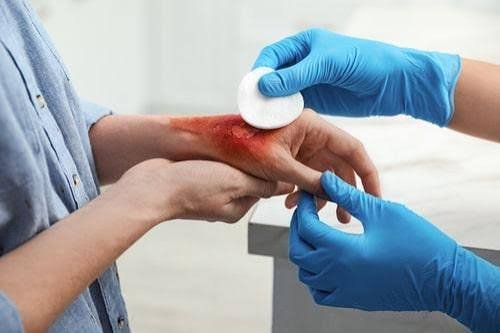
The emergency department chart can document the location and extent of the burns and the treatment the resident received. It may also record what the resident or staff told the hospital about the exposure. Compare that account with the nursing notes and transfer records to establish when staff first noticed the injury, when they arranged the transfer, and when the resident reached the hospital.
If staff documented redness soon after the shower but waited several hours to arrange an assessment, the timing may raise a separate question about delayed care. A claim for additional harm from that delay requires medical evidence that the wait worsened the outcome. Follow-up records can document the need for wound care or physical therapy, while billing records can help establish the costs. Lasting pain, scarring, or difficulty moving can also be part of the resident’s losses.
When a Contractor or Manufacturer Could Share Liability
If an outside plumber recently worked on the valve that mixes hot and cold water, the service order can show whether the job included installation, adjustment, or testing. Incorrect installation or adjustment could support a claim against the contractor if the work contributed to the scald.
An expert can compare the valve’s condition with the manufacturer’s installation instructions and check its service history. If a defect in the valve contributed to the injury, the manufacturer could face a product liability claim. The model and serial number can help identify whether the manufacturer issued a recall for that valve.
What Texas Families Can Document and Report
Once the resident’s immediate care needs are addressed, record their account in their own words. Note the date, location, and names of witnesses. Keep dated photos with the resident’s consent when possible. The resident or an authorized representative can request relevant clinical records. Ask the facility in writing to preserve the work order, temperature logs, and any valve removed from the shower. Obtaining internal maintenance records or a contractor’s files may require a formal request through the legal process.
Families can report suspected neglect to Texas Health and Human Services Complaint and Incident Intake at 800-458-9858. The agency can investigate care and safety complaints. A civil claim is a separate process for seeking compensation.
Chapter 74 of the Texas Civil Practice and Remedies Code may apply to claims involving resident care or safety tied to that care, such as bathing assistance. For covered claims, Chapter 74 generally requires written notice at least 60 days before filing suit and sets a two-year filing period, with the start date depending on the facts. An expert report generally must be served within 120 days after each defendant files an original answer, subject to statutory exceptions and extensions.
What It Takes to Establish Responsibility
Elena can ask the nursing home for a written account that identifies who made each decision and what was documented at the time. If accounts differ, she can note which details come from someone who was present and which were reported afterward. That distinction helps the family identify what the available records support and where evidence is still missing.