A workplace injury usually starts as a medical event and only becomes a legal one afterward, once questions get asked about what happened and whether it could have been handled differently. Whether a business ends up defending its safety practices or simply documenting that it met them often comes down to a detail that has nothing to do with the injury itself: whether anyone on-site had current industrial first aid training when it happened.
Why Does the Response to an Injury Matter Legally, Not Just Medically?
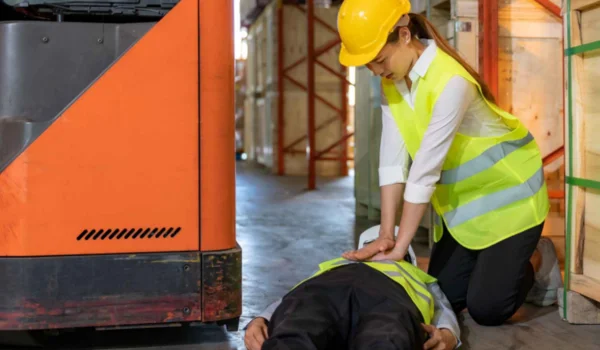
When a workplace injury leads to a claim or a lawsuit, the medical outcome isn’t the only thing scrutinized. How the situation was handled in the first few minutes, whether someone competent responded, whether basic first aid was administered correctly, and whether the response met the standard a reasonable employer should have had in place, all become part of the record.
An employer with properly certified staff on-site at the time of an incident is in a fundamentally different position than one without, regardless of how the injury itself occurred. The former can point to a genuine safety system; the latter is left explaining an absence. That difference shows up in insurance reviews, regulatory inspections, and, in the worst cases, in a courtroom, long after the actual injury has healed.
What Does “Industrial” First Aid Actually Cover That General Training Doesn’t?
Manufacturing floors, construction sites, and industrial facilities carry a wider range of injury types than a typical office: crush injuries, chemical exposure, lacerations from machinery, and falls from height, in addition to the cardiac emergencies and choking incidents that can happen anywhere. Industrial first aid training accounts for this broader range, rather than assuming a general course covers every scenario a specific facility might actually face.
This distinction matters in a legal context too. A business that can demonstrate its training was matched to its actual risk profile, not just a generic minimum, is in a stronger position if that training is ever scrutinized after an incident. Documentation showing that certification was chosen deliberately, rather than picked as the cheapest available option, tends to carry real weight in that kind of review.
How Do Workplace Injury Statistics Actually Break Down?
Falls, slips, and trips remain among the most common categories of workplace injury across manufacturing and industrial settings, and the numbers involved are not small. These aren’t rare, freak occurrences; they’re a predictable category of risk that comes with the physical nature of industrial work, which is exactly why preparation for them needs to be built into a facility’s standard operating procedure rather than treated as an edge case. Treating them as predictable, rather than unlucky, is what actually changes how a facility prepares for them.
Manufacturing and construction environments also see a meaningfully higher rate of injuries requiring immediate first aid response compared to office-based industries, simply because of the physical nature of the work being done. That gap alone justifies a different baseline for training coverage than a business would set for a comparable office-based operation.
What Does Ontario Law Actually Require Here?
Under Ontario’s OHSA, employers are required to maintain a specific number of certified first aiders based on workplace size and risk category, with WSIB overseeing compliance and enforcement. For manufacturing and industrial facilities specifically, this requirement exists precisely because the injury profile is different from a standard office environment, and the law reflects that distinction.
Meeting this requirement on paper and meeting it in practice aren’t always the same thing. A facility with the right number of certified staff on a day shift may still have a gap on nights or weekends if certification coverage wasn’t planned across all shifts. An incident that happens at two in the morning is covered by the same legal obligation as one that happens at two in the afternoon, even though staffing patterns rarely reflect that in practice.
Why Does Proactive Compliance Matter More Than Reactive Compliance?
Fixing a certification gap after an incident has already occurred addresses the wrong end of the problem. The value of industrial first aid training is entirely in having it in place before it’s needed, not in demonstrating good intentions afterward. A business that treats certification as an ongoing operational requirement, reviewed on a schedule, is in a fundamentally stronger position than one that treats it as a box checked once and forgotten.
This is also simply better for the people actually working on the floor, independent of any legal consideration. A workplace that takes its certification requirements seriously is one where an injured coworker is more likely to get a fast, competent response. The legal argument and the human one point in exactly the same direction here, which is unusual enough in workplace compliance to be worth noting.
How Should a Facility Actually Approach This?
Start with an honest audit of what kinds of injuries the specific facility is actually exposed to, based on its equipment, layout, and operating hours, rather than defaulting to a generic minimum. From there, matching certification levels and shift coverage to that real risk profile, and reviewing it on a recurring schedule, closes most of the gap between technical compliance and genuine preparedness.
If your Hamilton facility is near Hughson Street, King Street, or the area close to First Ontario Centre downtown and it’s time to review your industrial first aid training coverage, Coast2Coast First Aid & Aquatics serves that part of Hamilton.
FAQs
Q: Does how a workplace responds to an injury actually matter legally?
A: Yes. If a claim or lawsuit follows, the quality of the response in the first few minutes, including whether certified first aid was administered, becomes part of what gets scrutinized.
Q: What does industrial first aid training cover that general courses don’t?
A: It accounts for crush injuries, chemical exposure, and machinery-related lacerations in addition to the cardiac and choking response covered in general first aid courses.
Q: Are Ontario employers legally required to have certified first aiders?
A: Yes. Ontario’s OHSA sets requirements based on workplace size and risk category, and WSIB oversees compliance and enforcement.
Q: Can a facility be compliant on paper but still have a coverage gap?
A: Yes. A facility with sufficient certified staff on a day shift may still have a gap on nights or weekends if coverage wasn’t planned across all shifts.
Q: Why does proactive certification matter more than fixing gaps after an incident?
A: The value of the training is entirely in having it in place before an emergency happens; addressing a gap only after an incident has already occurred is too late to change that outcome.