You step off the curb at a marked crosswalk on Culver Drive with the walk signal in your favor. The driver turning right is looking left, hunting a gap in traffic. He has not looked at you once.
There is real progress to report. California pedestrian deaths dropped 32% across a recent six-month stretch, Governors Highway Safety Association data shows. The number that remains is still counted in the hundreds, and nearly every one of those walks started out ordinary.
Most of that risk answers to habit. The pedestrian safety tips below take just a few seconds to follow, and they apply to the same Irvine streets you already walk and ride on.
In this post:
- Where pedestrians, cyclists, and cars actually meet in Irvine
- How to cross streets, stay visible, and ride to California bicycle law
- What causes most collisions between vehicles and people on foot
- What to do after a crash, and when an injury calls for a lawyer
- When to contact a personal injury lawyer
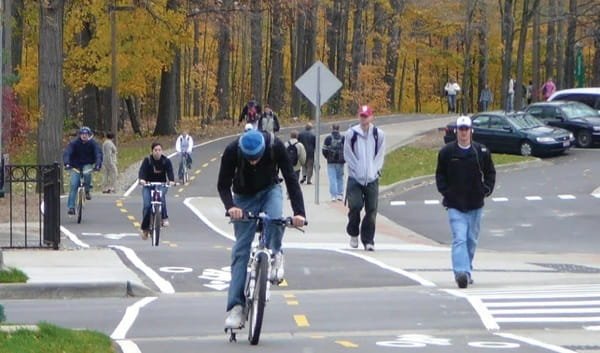
Why Pedestrian and Bicycle Safety Matters in Irvine
Irvine was drawn for this. Trails, bike lanes, wide sidewalks, and neighborhoods built around parks put more people on foot and on two wheels than most California cities manage. The tradeoff is contact, because all of it shares space with cars.
Where Pedestrians, Cyclists, and Cars Meet in Irvine
Risk concentrates where a person on foot and a person in a vehicle both expect to have the right of way. Drivers, cyclists, and pedestrians share the road, and the blame for what happens on it, and awareness moves in every direction.
| Where | What tends to go wrong | What keeps you safe |
| Crosswalks | Right-turning drivers watch for a gap in traffic, not for you | Make eye contact with drivers before you step off the curb |
| Bike lanes | Cars drift, merge, or park in the lane without looking | Ride predictably and stay out of blind spots |
| School zones | Kids move fast and low, below sightlines | Slow to a crawl at drop-off and dismissal |
| Parking lots | Cars entering and exiting spaces have almost no view | Walk the aisle center, watch reverse lights |
| Residential streets | Cars exiting driveways cross the sidewalk blind | Pause at every driveway apron |
| Trails and crossings | Cyclists and walkers meet at speed | Signal, call your pass, keep your ears open |
None of that requires a change to the streets. It requires two seconds of attention at the point where the two paths cross.
Top Pedestrian Safety Tips for Irvine Residents
The pedestrian safety tips that matter are boring, which is why people skip them. Every one of them buys you the same thing: another second before the car gets to where you are.
1. Cross Streets at Crosswalks and Follow Traffic Signals
Cross the street at marked crosswalks and intersections, and obey signs and pedestrian signals rather than the gap you think you see. Crossing between parked cars puts you in the street where no driver expects a person to be.
Wait for cars to stop, not slow. Make eye contact with drivers before you step out, and stay alert across the crossing even when the right of way is yours, because traffic signals govern cars, not the people driving them.
2. Stay Visible While Walking
If the driver sees you, most of this problem disappears. Wear reflective materials at night and in early morning, carry a flashlight in low light, and cross in a well-lit area rather than the dark stretch between two lights.
Parking lots need the same care in daylight. Reverse lights and a slow roll are the only warning you get, so walk where a driver’s mirrors reach.
3. Avoid Distractions While Walking
A cell phone takes your eyes and your ears at the same time. Headphones at volume erase the sound of a car entering the lane behind you, and a text erases everything else.
Put the devices away at the curb. Watch for approaching vehicles, cars turning across your path, and bikes or scooters coming up the trail quietly.
4. Walk Facing Traffic Where There Is No Sidewalk
Where a sidewalk exists, use it. Where none does, walk facing traffic on the left shoulder so you and the driver see each other, which is both California law and the only version of that walk where you have a say.
Move over on a private road or a narrow lane rather than assuming a car will. Give yourself room to step off the roadway entirely if a driver drifts.
Bike Safety Tips for California Cyclists
Irvine’s bike network is one of the best in the state, and it still puts you a few feet from moving cars for most of any ride. These habits carry the rest.
1. Wear a Properly Fitted Helmet
A helmet reduces the severity of a head injury, which is the one outcome you never recover from cleanly. Fit matters more than price. Level on the head, two fingers above the brow, straps snug under the chin.
Replace it after any crash, even one that left no mark. The foam compresses once and never returns to its original shape.
2. Follow California Bicycle Laws
Ride the same direction as traffic, obey traffic signals and signs, and use the bike lane where one exists. Signal your turns, keep lights and a rear reflector on the bike after dark, and stop at the stop sign the way a car does.
These rules exist to make you predictable. Every driver’s decision around you depends on correctly guessing your next move.
3. Make Yourself Visible to Drivers
Run a white front light and a red rear light, day or night, and wear something bright enough to read at distance. A driver sees motion and contrast long before shape.
Stay out of blind spots. Sitting beside a car at a light, in the lane next to a truck, or drifting through a mirror’s dead zone is where visibility disappears entirely.
4. Stay Alert Around Vehicles
Watch turning cars first, because a right hook from a driver who never checked the bike lane is the classic Irvine collision. Ride a door’s width out from parked cars, take the lane when it is too narrow to share, and give trucks the room their wheels need to track a corner.
Stay alert around distracted drivers, which is most of them. Assume the car will move before it moves, and leave yourself a line out.
Common Causes of Pedestrian and Bicycle Accidents in Irvine
The causes repeat, and they sit almost entirely on the driver’s side of the windshield. Pedestrians and cyclists absorb the result either way.
Distracted Driving
A cell phone in a moving car costs the driver the two seconds you needed. Texting, a call, a screen tap at a red light that runs long. Distracted drivers miss people in crosswalks who are standing exactly where the law requires.
Failure to Yield
Drivers looking for a gap in traffic scan for cars and find cars. A right turn on red, a left across an intersection, a driver exiting driveways at a roll, and the pedestrians in the crossing never register.
Speeding
Speed shortens reaction time and multiplies injury severity. A person struck at 20 mph usually walks away. The same person struck at 40 mph often does not survive it, and Irvine’s wide arterials invite the second number.
Poor Visibility
Night, rain, glare at dusk, a dark stretch of street between two lights. Drivers see far less than they believe they do after sundown, and pedestrians in dark clothing register at a distance too short to stop from.
Unsafe Road Behavior
Running signals, passing a stopped car at a crosswalk, drifting into the bike lane, blowing a stop sign on a residential street. Every one of them assumes nobody is where the driver has not looked.
How Drivers Help Improve Pedestrian and Bicycle Safety in Irvine
Most of this risk gets solved from the driver’s seat. Four habits carry the bulk of it.
Slow Down in Residential Areas
Kids move fast, low, and without warning near schools, parks, and neighborhood streets. Children misjudge speed and distance until they are well into their teens. Slow down and the physics stop being fatal.
Check Blind Spots
Look before you turn, before you change lanes, and before you open a door into the bike lane. A head check costs a second and catches what your mirrors structurally cannot.
Share the Road
Give cyclists real space when you pass, and wait for a full lane rather than squeezing by. Watch for pedestrians at every intersection and every driveway apron, whether or not the crossing is marked.
Avoid Distracted Driving
Phone away, navigation set before you move, eyes forward. Nothing on that screen is worth what happens in the two seconds you spend reading it.
What Should You Do After a Pedestrian or Bicycle Accident in Irvine?
Getting hit on foot or on a bike leaves you with no vehicle, no witnesses of your own, and adrenaline hiding whatever is broken. The list below matters more here than it does in a car crash.
- Seek medical attention, even if you feel fine at the scene.
- Contact emergency services if anyone is hurt.
- Document the scene before anything moves.
- Photograph your injuries, the vehicles, and the road conditions.
- Collect witness information from anyone who saw it.
- Keep every medical record and expense.
- Report the accident.
- Consider speaking with an Irvine injury lawyer.
Head injuries are the reason step one comes first. A cyclist who declines the ambulance and drives home is the same cyclist explaining a concussion to an adjuster three weeks later with nothing on paper. Pedestrian safety tips end at the moment of impact, and documentation takes over from there.
When to Contact a Personal Injury Attorney in Irvine
Not every scrape needs a lawyer. The cases that do tend to announce themselves in the first week, usually when the calls start, and the numbers stop matching what your life actually costs now.
Where legal guidance tends to earn its place:
- Serious injuries that need surgery, imaging, or months of follow-up care
- Lost income while you heal, plus the earning power a lasting injury takes with it
- Disputed liability, where the driver insists you stepped out of nowhere
- Insurance problems: an early offer, a denied claim, or an adjuster pressing for a recorded statement
The point of asking early is not the payout. It is understanding what you are owed before you sign anything, protecting evidence that decays within days, and making the decision with the facts in front of you rather than an adjuster’s version of them.
Pedestrian safety tips keep you out of that position. Knowing the next move keeps you from losing ground once you are already in it.
Talk to an Irvine Injury Lawyer About What Happened
Every injury claim is different, and the value of a case depends on factors such as the severity of the injuries, medical treatment, lost income, property damage, and the available evidence. Understanding how insurance companies evaluate claims can help you make informed decisions and avoid settling for less than your losses may warrant.
Before accepting any settlement offer, review it carefully and ensure it accounts for both your current and future damages. Taking the time to understand the claims process can help you better protect your rights and financial recovery.