Behind almost every car, data centre, medical device and smart appliance sits a collection of tiny chips controlling power, processing information and connecting systems. Texas has become one of America’s most important semiconductor centres, with large fabrication plants in Dallas, Sherman and Austin, along with major design and engineering operations.
The following companies were selected by considering their Texas manufacturing footprint, research and design capabilities, product importance, current investment and contribution to the state’s semiconductor ecosystem.
1. Texas Instruments
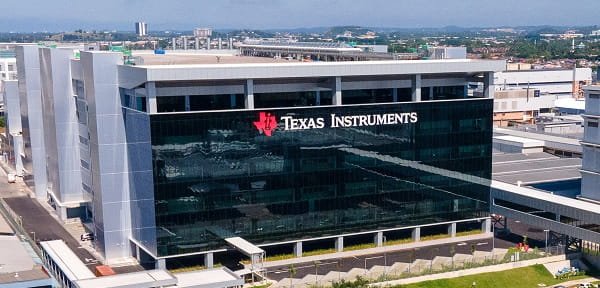
Texas Instruments is the clearest leader among semiconductor companies based in Texas. Founded in 1930 and headquartered in Dallas, TI designs and manufactures analog and embedded-processing chips used in vehicles, industrial equipment, data centres, medical devices and consumer electronics. It offers more than 80,000 products and serves over 100,000 customers worldwide.
TI’s Texas manufacturing network includes facilities in Dallas, Richardson and Sherman. Production began at the company’s new SM1 300mm wafer fabrication plant in Sherman in late 2025. The facility is designed to produce tens of millions of analog and embedded chips daily, while construction of the second Sherman fab is progressing.
Why Texas Instruments is included: Its Dallas headquarters, large Texas production base and leadership in foundational analog and embedded chips make it the state’s most influential semiconductor company.
- Headquarters: 12500 TI Boulevard, Dallas, TX 75243
- Official website: ti.com
2. Samsung Austin Semiconductor
Samsung Austin Semiconductor has operated in Central Texas for around 30 years. Its existing Austin foundry develops and produces semiconductor products for customers in industries such as computing, mobile technology, automotive systems, networking and artificial intelligence.
Samsung is also developing its major fabrication complex in Taylor, northeast of Austin. Tool installation reached an important stage in April 2026, and the company continued to target the end of 2026 for the first phase to become operational. Further testing and production adjustments will be required before the facility reaches full-scale output.
Samsung has continued investing in its established Austin campus as well. Renovation filings in 2026 included new manufacturing equipment and supporting infrastructure at the site.
Why Samsung Austin Semiconductor is included: Its existing Austin foundry and enormous Taylor expansion give Samsung one of the largest advanced semiconductor-manufacturing footprints in Texas.
- Austin facility: 12100 Samsung Boulevard, Austin, TX 78754
- Official website: semiconductor.samsung.com/sas
3. NXP Semiconductors
NXP Semiconductors maintains major design, research and manufacturing operations in Austin. The company owns and operates two wafer fabrication facilities in the city, forming half of its four-fab manufacturing network in the United States.
Its Texas facilities produce semiconductor technologies such as microcontrollers, microprocessors, power-management devices, RF transceivers, amplifiers and sensors. These products are widely used in automobiles, industrial systems, communication infrastructure and secure connected devices.
NXP’s Austin presence also carries the legacy of Motorola and Freescale Semiconductor, giving the company decades of local engineering and chip-manufacturing experience.
Why NXP Semiconductors is included: Its two Austin fabs and strong position in automotive, industrial and connected-device chips make it an essential part of the Texas semiconductor industry.
- Major Austin site: 6501 West William Cannon Drive, Austin, TX 78735
- Official website: nxp.com
4. AMD
AMD is headquartered in California, but Austin remains one of its most important engineering locations. The company develops high-performance processors, graphics products and adaptive computing technologies used in personal computers, gaming consoles, data centres, artificial intelligence systems and embedded equipment.
AMD has maintained several corporate locations in Austin and announced a $163 million expansion involving office space and testing laboratories at the MetCenter business park. The project was scheduled to expand its local engineering and product-development capacity through 2026.
Unlike Texas Instruments, Samsung and NXP, AMD is mainly a fabless semiconductor company. It designs chips while relying on specialist foundries for large-scale manufacturing. Its inclusion reflects the importance of semiconductor design, validation and engineering within Texas, not just physical wafer production.
Why AMD is included: Its global importance in computing and AI chips, combined with its substantial Austin engineering operations, gives it a major place in the state’s technology economy.
- Austin expansion site: 8000 Metropolis Drive, Austin, TX 78744
- Official website: amd.com
5. Silicon Labs
Silicon Labs is an Austin-headquartered semiconductor company specialising in wireless system-on-chip products, microcontrollers, sensors and software for the Internet of Things. Its technologies support smart homes, industrial automation, connected healthcare, smart cities and commercial buildings.
The company focuses heavily on wireless standards such as Bluetooth, Wi-Fi, Matter, Thread, Zigbee and Z-Wave. It operates as a fabless semiconductor business, concentrating on chip design, embedded software and development tools while using external manufacturing partners.
In February 2026, Texas Instruments agreed to acquire Silicon Labs for approximately $7.5 billion. The transaction is expected to close during the first half of 2027, subject to regulatory and shareholder approvals, meaning Silicon Labs continues to operate as a separate company during 2026.
Why Silicon Labs is included: Its Austin headquarters and specialist leadership in low-power wireless connectivity make it one of Texas’s most important chip-design companies.
- Headquarters: 400 West Cesar Chavez Street, Austin, TX 78701
- Official website: silabs.com
Why Texas Is Important to the Semiconductor Industry
Texas combines experienced engineers, established fabrication plants, research universities and a growing supplier network. The state’s semiconductor ecosystem includes chip manufacturers, design companies, silicon-wafer producers, equipment suppliers and advanced-packaging operations.
It is also expanding beyond Austin and Dallas. Sherman has gained major Texas Instruments and semiconductor-material investments, while Samsung’s Taylor development has attracted suppliers and supporting manufacturers to Williamson County.
Frequently Asked Questions
Q: Which is the largest Texas-headquartered semiconductor company?
A: Texas Instruments is the largest and most established semiconductor company headquartered in Texas. Its executive offices are in Dallas, and it operates several manufacturing facilities within the state.
Q: Which Texas companies manufacture chips locally?
A: Texas Instruments, Samsung Austin Semiconductor and NXP operate major wafer-fabrication facilities in Texas. AMD and Silicon Labs mainly focus on semiconductor design and use external foundries for production.
Q: Is Samsung’s Taylor semiconductor plant operational?
A: Samsung was targeting partial operation of the Taylor facility by the end of 2026. Equipment installation was progressing in April 2026, but testing and adjustment were still required before large-scale production.
Q: Has Texas Instruments already purchased Silicon Labs?
A: The companies have signed an acquisition agreement, but the transaction is not expected to close until the first half of 2027 and remains subject to required approvals.