A handgun can be lawfully owned yet unlawfully carried. In Texas, that distinction matters whenever someone leaves home, enters a business, or moves a firearm into a vehicle. The question isn’t simply whether a permit is required, but which boundaries still apply when a permit isn’t.
Understanding Texas Firearm Laws means separating eligibility from conduct and location. Public discussion often compresses those issues into the phrase “constitutional carry,” leaving important differences unexplained. Changes to licensing requirements haven’t erased possession restrictions, private-property notices, or rules governing the use of force.
That distinction remains important amid continuing Second Amendment litigation. A broad description of the right to carry doesn’t settle every person’s circumstances, and a familiar destination doesn’t necessarily permit the same conduct as the sidewalk outside.
Can You Carry Without a Permit in Texas Today?
Yes, permitless carry remains Texas law in 2026 under HB 1927, which took effect in September 2021. New York State Rifle & Pistol Association v. Bruen reshaped Second Amendment analysis; United States v. Rahimi upheld disarmament under qualifying domestic-violence restraining orders.
What HB 1927 Changed and Who Still Qualifies
HB 1927 removed the LTC requirement for qualifying adults. Its statutory framework uses an age requirement of 21, although subsequent litigation has affected restrictions involving adults ages 18 to 20.
Eligibility also depends on possession restrictions under Texas Penal Code Section 46.04 and 18 U.S.C. Section 922. A completed state restriction doesn’t necessarily remove a federal prohibition.
The related private firearm transfer requirements matter because a private sale doesn’t bypass possession restrictions.
Why a License to Carry Still Pays Off
A License to Carry (LTC), issued by the Texas Department of Public Safety (DPS), remains distinct from permitless carry. Reciprocity allows recognition in participating states, subject to the destination’s rules.
A qualifying Texas LTC also substitutes for the dealer’s NICS background check, although purchase paperwork and eligibility requirements remain. It documents completion of licensing requirements, but doesn’t immunize its holder from investigation or excuse prohibited conduct.
How to Carry Responsibly Once You Have a Handgun

Texas Penal Code Chapter 46 separates lawful possession from unlawful carrying. Section 46.02 addresses circumstances and methods of handgun carry, so ownership alone doesn’t resolve whether a particular carry arrangement is lawful.
Holsters, Concealment and the Load You Carry
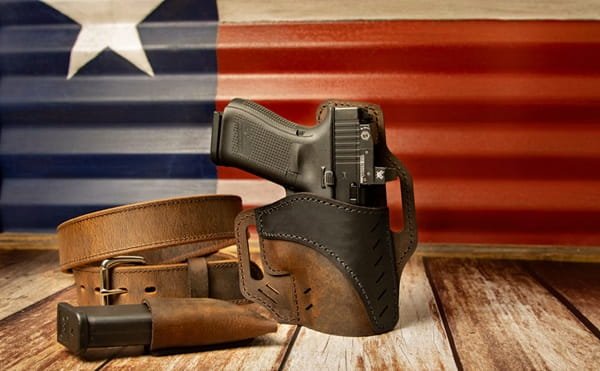
Texas generally requires a holster for openly carried handguns. Concealed carry doesn’t carry the same blanket statutory holster requirement, although a properly fitted holster protects the trigger and secures the handgun.
Open-carry rules differ across states, so Texas rules don’t travel with the carrier.
Responsibility also extends to ammunition selection. The carrier remains responsible for every round fired, including defensive hollow-point loads such as Federal HST 9mm, Speer Gold Dot, and Hornady Critical Defense, which are designed to expand and reduce pass-through risk, not eliminate it.
No ammunition choice makes a missed shot harmless.
Keeping a Handgun in Your Car or Truck
Carrying a gun in vehicles involves separate conditions. Section 46.02 addresses vehicles owned by, or under the control of, the carrier; it isn’t blanket permission to carry in any vehicle.
A handgun generally must remain out of plain view unless the carrier qualifies for the holstered-handgun exception. Prohibited possession, qualifying criminal activity beyond traffic offenses, and other statutory disqualifications still matter.
Long guns don’t fall under these handgun-specific provisions, but other possession and location restrictions remain relevant.
Alcohol, Deadly Force and Safe Storage at Home
Intoxicated handgun carry can create criminal exposure under provisions that differ for licensed and unlicensed carriers. Owning a firearm doesn’t establish permission to carry it while intoxicated.
Texas Penal Code Chapter 9 governs deadly force. Its justification standards concern specified circumstances, including reasonable belief and immediate necessity, not simply whether the carrier feels afraid.
Section 46.13 addresses criminally negligent access by children under 17 to readily dischargeable firearms, subject to statutory exceptions and defenses. Secure storage therefore matters after the handgun comes home, too.
Where Texas Law Still Says No
Permitless carry didn’t remove location restrictions. Statutory bans, alcohol-related restrictions, and private-property notices operate differently.
State preemption also limits local firearm regulation, although exceptions make conflicts between local and state laws more specific than a blanket claim that local rules never matter.
Places Off-Limits Under Section 46.03
Texas Penal Code Section 46.03 identifies prohibited places, including:
- School premises, school transportation, and locations of school-sponsored activities.
- Polling places during voting, including early voting.
- Courts and court offices.
- Secured airport areas.
- Correctional facilities.
These categories have statutory qualifications and exceptions. School restrictions, for instance, shouldn’t be reduced to a claim that every school parking lot is prohibited. Specific rules also govern licensed campus carry.
An LTC doesn’t create general permission to enter these places armed. Authorization or an applicable statutory exception must supply that permission.
The 51% Rule for Bars and Alcohol Sellers
The 51% rule concerns qualifying businesses that derive at least 51% of their income from alcoholic beverages sold for on-premises consumption. Their required red “51%” signs distinguish them from restaurants that merely serve alcohol.
Handgun carry at these premises is generally a third-degree felony, including for LTC holders, subject to applicable defenses and exceptions. A license therefore doesn’t override the restriction.
The distinction is the business’s qualifying alcohol-sales status, not whether the carrier orders a drink. Remaining sober doesn’t itself make handgun carry lawful there.
Reading the 30.05, 30.06 and 30.07 Signs
Private-property notices address different categories of carry:
- 05: Criminal-trespass notice relevant to unlicensed carry.
- 06: Notice prohibiting concealed handguns carried under an LTC.
- 07: Notice prohibiting openly carried handguns under an LTC.
Sections 30.06 and 30.07 prescribe specific sign wording, languages, contrast, and lettering requirements. Section 30.05 doesn’t simply duplicate those specifications. Oral notice can also matter.
For LTC holders, a violation based on posted 30.06 or 30.07 notice is generally a Class C misdemeanor. Remaining after personal oral notice can raise the offense level.
A property owner’s instruction to leave isn’t interchangeable with a sign that addresses only one method of carry.
Carrying in Texas Means Knowing the Line
Texas Firearm Laws distinguish permission to possess a handgun from permission to carry it in a particular manner or place. Permitless carry removed a licensing requirement for qualifying people; it didn’t remove eligibility restrictions, location bans, or conduct obligations.
An LTC retains practical value for travel and licensed-carry privileges, but it isn’t universal permission. Responsible concealed carry rests on three separate questions: whether the person qualifies, whether the method is lawful, and whether the destination permits it. All three must align.