Major League Baseball entered the 2026 World Series with a growing dispute that could shape the following season more than any result on the field. The collective bargaining agreement between club owners and the Major League Baseball Players Association expires on December 1, 2026. Owners want a new economic structure built around a salary cap and payroll floor. Players argue that a hard cap would restrict compensation and change how the sport’s expanding revenues are divided.
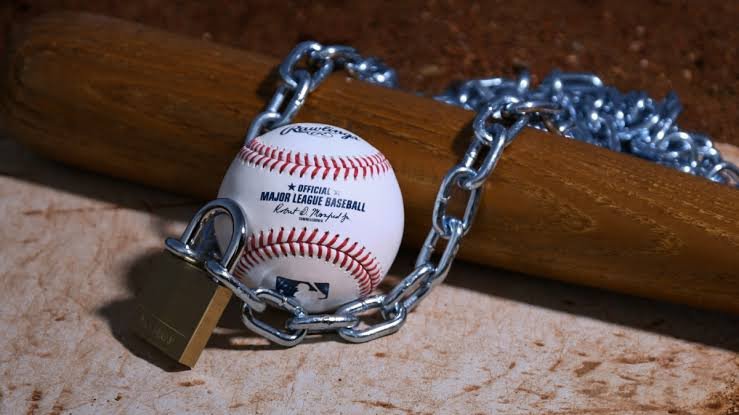
The dispute is significant because the parties have recent experience with a lockout and a much longer history of work stoppages. As of October 23, 2026, the current bargaining agreement was still in force and no new lockout had begun. A shutdown after its expiration remained a possibility, not an accomplished fact. Negotiations have also taken in schedule changes, postseason formats and the economics of free agency.
How the 2026 MLB Labor Dispute Started
The present agreement emerged after the 2021–22 owners’ lockout and runs through December 1, 2026. The underlying tension predates the current bargaining cycle: clubs differ dramatically in available revenue and player payroll, while the players’ union has long opposed limits on what individual athletes can earn on the open market.
During 2026 negotiations, owners made a hard cap and payroll floor central demands. Owners argue that limiting the largest team payrolls, combined with greater redistribution, could help lower-revenue teams compete. Union representatives and players counter that a cap would reduce free-market earnings and could shift a larger share of total revenues to club ownership.
The Proposed Salary Cap, Floor and Contract Limits
Associated Press reporting on October 23 said an ownership proposal would place 2027 payroll spending at approximately $245.3 million using luxury-tax payroll calculations. Another reported component would prevent an individual player from accounting for more than 15 percent of team payroll. Under the reported framework, the maximum for a six-year free-agent contract would be about $265 million.
Owners have also discussed a payroll floor, reported at approximately $171.2 million. These figures are bargaining proposals, not current binding rules. They could change during negotiations, be rejected altogether or be replaced by a different system. Comparisons with Juan Soto’s 15-year, $765 million Mets contract show why players regard long-term earning limits as a fundamental change.
What the Players Association Objects To
The MLBPA’s objection is not simply that individual stars might receive smaller contracts. A hard cap changes bargaining leverage across the player market, potentially limiting team competition for free agents and constraining salaries over time. The union also disputes the way owners account for expenses and calculate the share of revenue flowing to labor.
Players have pointed to other ways of addressing competitive-balance concerns, including revenue sharing and existing luxury-tax mechanisms. Whether these alternatives would achieve the owners’ stated goals is contested. The relationship between team revenue, profit, payroll and on-field success is complex; a cap is not itself a guarantee that every club will spend efficiently or win more games.
Why the 2026 World Series Became Part of the Argument
The World Series matchup between the Milwaukee Brewers and Tampa Bay Rays drew attention because both clubs ranked in the lower half of MLB payrolls. The Associated Press reported Milwaukee at 19th and Tampa Bay at 25th as of August 31, making it the first championship series since 1991 featuring two teams from that payroll group.
To some players, the matchup demonstrates that low-payroll teams can develop talent and reach the sport’s biggest stage without a salary cap. Some owners instead say the success of particular small-market clubs does not remove the disadvantages others face year after year. A single postseason cannot settle the broader economic debate, but it has furnished a vivid example for both sides.
Other Issues at the Bargaining Table
On October 8, Reuters reported that MLB proposed reducing the regular season from 162 to 154 games beginning in 2029, alongside a longer Division Series and new ways for higher-seeded teams to select playoff opponents. MLB framed the shorter season as a way to establish more regular days off and reduce player strain.
The players’ association said it would review such proposals but objected to their being made contingent on accepting a salary cap. AP also reported that owners raised the possibility of catcher-mounted cameras in broadcasts. These issues show how a labor deal can regulate working conditions, scheduling and media rights as well as salaries.
Could a Lockout Disrupt the 2027 Season?
If an agreement is not reached by the time the current contract expires, owners could lock out players beginning December 2. A lockout would be an employer-initiated work stoppage and is distinct from a strike called by players. It would not automatically mean an entire season is canceled: its effect would depend on duration and subsequent agreements.
Baseball’s history includes the 1994–95 strike, which caused cancellation of the 1994 World Series, and the 2021–22 lockout, which delayed the opening of the 2022 season but ultimately preserved a full 162-game schedule. As of October 23, there was no definitive court action or completed 2027 labor agreement resolving the present dispute.
Frequently Asked Questions
Q. Has Major League Baseball already imposed a lockout in October 2026?
No. The bargaining agreement remains in force through December 1, 2026. A lockout after expiration has been discussed as a possibility.
Q. Would the proposed $245.3 million cap apply immediately to all 2026 teams?
No. That figure has been reported as part of an ownership proposal for a future agreement, not an active 2026 salary rule.
Q. Would a lockout necessarily cancel the entire 2027 baseball season?
No. A lockout can delay roster activity or games, but the eventual impact depends on negotiations and how long any stoppage lasts.