Yes. Workplace surveillance is generally legal in Texas, but employers must comply with privacy, recording, biometric, and federal laws. Texas employers may monitor company computers, internet use, workplace video, and business telephone systems in many circumstances. However, surveillance cannot lawfully invade areas where employees have a reasonable expectation of privacy or violate laws governing communications and biometric information.
Can Employers Use Security Cameras at Work?
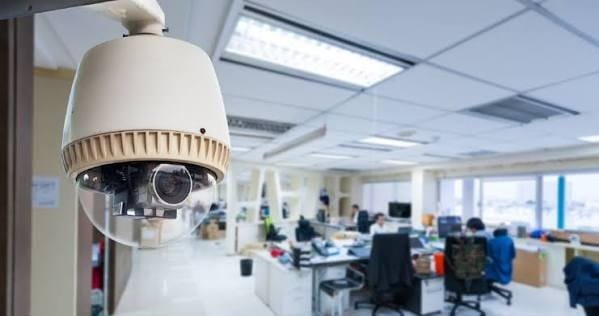
Texas generally permits employers to install video cameras in workplace areas to monitor employees, customers, and business activities. The Texas Workforce Commission explains that when surveillance captures video only, Texas law does not generally require notice or consent. Employers should not place cameras in locations such as restrooms or changing areas where employees have a clear expectation of privacy.
Is Recording Workplace Conversations Legal?
Audio recording is more legally sensitive than video-only surveillance. Texas Penal Code Chapter 16 generally permits interception when the person making the recording is a party to the communication or when one party has given prior consent, subject to statutory exceptions.
The Texas Workforce Commission advises employers to notify employees and outside callers when business telephone monitoring occurs.
Federal law can also apply. The federal Wiretap Act contains a one-party-consent rule in circumstances covered by 18 U.S.C. §2511, but interstate communications can create additional issues because another state may have stricter consent requirements.
Can Employers Monitor Company Computers and Email?
Yes. Employers can generally monitor company computers, email, internet connections, and other employer-provided electronic resources, particularly when employees receive clear notice through workplace policies. The Texas Workforce Commission recommends policies explaining that company systems may be monitored and that employees should not expect personal privacy when using those systems.
Monitoring an employer-owned system is different from secretly accessing an employee’s personal account or private device. Device ownership, company policy, and applicable federal law can affect whether monitoring is lawful.
Are Biometric Monitoring Systems Legal?
Texas has specific rules for biometric identifiers. Business & Commerce Code §503.001 generally prohibits capturing a biometric identifier for a commercial purpose unless the individual is informed beforehand and gives consent. Covered identifiers include fingerprints, retina or iris scans, voiceprints, and records of hand or face geometry.
The law also restricts disclosure and requires covered biometric identifiers to be destroyed within a reasonable period, generally no later than one year after the collection purpose expires, subject to statutory exceptions. Violations can result in civil penalties of up to $25,000 per violation.
Can Employers Put Cameras in Private Areas?
Generally, no. Texas Penal Code §21.15 addresses invasive visual recording and protects people in places where they have a reasonable expectation of privacy. The statute specifically includes bathrooms and changing rooms within its definition of such private places.
A workplace policy cannot authorize conduct that independently violates criminal law. Employers should therefore keep surveillance equipment away from areas where employees may reasonably expect privacy.
Do Employers Have to Tell Employees About Surveillance?
Texas law does not impose one universal notice requirement for every form of workplace monitoring. The answer depends on the type of surveillance. Video-only monitoring in ordinary workplace areas generally does not require individual consent, while audio recording and biometric collection can trigger additional requirements.
Even where consent is not strictly required, written notice and a clear monitoring policy can reduce disputes by explaining what is monitored, why it is monitored, and how information is handled.
What About Remote Employees?
Remote-work surveillance can create additional privacy issues because monitoring may occur on a personal computer or in a home. An employer’s authority over its own systems does not automatically eliminate privacy protections that may apply to an employee’s personal environment.
Employers should distinguish monitoring company systems from observing an employee’s private surroundings. Federal employment, communications, disability, and labor laws may also affect particular practices.
Conclusion
Workplace surveillance is generally legal in Texas, but it is not unlimited. Employers may monitor many business systems and workplace areas, especially when employees receive clear notice. However, audio recording, biometric identification, private areas, personal devices, and interstate communications can involve additional legal restrictions.
Employers should create specific surveillance policies and review them against applicable Texas and federal law. Employees who believe monitoring has unlawfully invaded their privacy should preserve relevant policies, notices, and other evidence and consider obtaining legal advice.