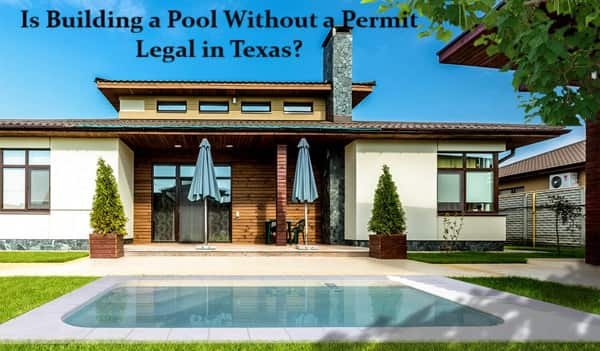
Generally, no for a permanent residential swimming pool. Texas does not impose one statewide pool-building permit procedure for every property, but local governments commonly require permits before constructing an in-ground pool or other substantial swimming pool. The exact requirements depend on the city or county, the type and depth of pool, location, electrical and plumbing work, and applicable safety rules.
Does Texas Require a Statewide Pool Permit?
Texas law gives local governments authority to adopt and enforce building and safety requirements. As a result, pool permitting is primarily a local issue rather than a single statewide permit requirement.
For example, Fort Worth states that swimming pools are among residential projects requiring a building permit and lists plans and a site plan among the submission requirements. Austin also has a specific residential pool and uncovered-deck permitting process. These rules demonstrate why homeowners should check the authority governing their particular property before construction.
Are Any Pools Permit-Exempt?
Yes. Some very small or prefabricated pools can qualify for local exemptions. Austin currently exempts certain prefabricated swimming pools that are less than 24 inches deep. For residential Group R-3 properties, its exemption also requires the pool to be no more than 5,000 gallons, entirely above ground, and outside a flood hazard area.
This does not mean every Texas city uses the same exemption. A homeowner should not assume that an inflatable, above-ground, or prefabricated pool is automatically exempt.
What About In-Ground Pools?
An in-ground swimming pool will generally require a permit because its construction involves excavation, structural work, drainage, electrical equipment, plumbing, and safety requirements. Fort Worth, for example, specifically lists swimming pools among projects requiring a residential building permit.
Depending on the project, separate trade permits or inspections may be necessary for electrical, plumbing, gas, or other systems associated with the pool.
Does a Pool Need a Safety Barrier?
Yes, pool safety requirements are a major part of Texas law. Texas Health and Safety Code Chapter 757 establishes requirements for pool-yard enclosures, including rules concerning fencing, gates, and doors leading into the pool area. Local governments can impose additional requirements.
For example, Texas law addresses pool enclosures and requires certain gates and doors to prevent young children from gaining unsupervised access. These requirements can apply even when a particular small pool is exempt from a building permit.
Can an HOA Require Pool Approval?
Yes. A homeowners’ association can regulate aspects of a pool project through its governing documents, subject to Texas law. Texas Property Code Section 202.022 protects certain qualifying swimming-pool enclosures that comply with state or local safety requirements, but it does not give homeowners a general right to build a pool without following valid HOA procedures.
A homeowner may therefore need both government approval and HOA approval before construction.
What Happens If You Build Without a Required Permit?
If a permit was required and the pool is constructed without one, the local government may take enforcement action. Depending on the applicable code and circumstances, the owner may have to obtain an after-the-fact permit, correct noncompliant construction, or potentially remove work that cannot be brought into compliance.
Unpermitted construction can also create problems during a property sale, refinancing, insurance review, or inspection. A future buyer may ask for evidence that the pool was legally permitted and inspected.
Does Location Affect Pool Permits?
Yes. Floodplains, drainage easements, utility easements, setbacks, lot coverage, and other site conditions can affect approval. Austin, for example, excludes certain pools in flood hazard areas from its residential permit exemption.
A pool also cannot simply be placed wherever the homeowner prefers. Local development rules can regulate its distance from property lines, structures, utilities, and other features.
What Should You Check Before Building?
Before construction, homeowners should identify the permitting authority, confirm whether a building permit is required, review pool and spa codes, check zoning and setback requirements, determine whether the property is in a floodplain, and identify required electrical and plumbing permits.
They should also review HOA covenants and obtain required architectural approval before work begins.
Conclusion
Building a pool without a permit can be legal in Texas only when the particular pool qualifies for an applicable local exemption. There is no universal Texas rule allowing homeowners to construct pools without permits. Permanent and in-ground pools commonly require local approval, while certain small prefabricated pools may be exempt under specific city rules.
Because permitting requirements vary by location and pool design, homeowners should verify the rules for the exact property before construction. This article provides general legal information and is not a substitute for advice from a Texas attorney or local permitting authority.