Texas pedestrian accident claims involve more than proving a driver hit someone. The outcome depends on right-of-way violations, driver negligence, medical evidence, insurance coverage, and how Texas comparative fault rules apply to the collision.
The Governors Highway Safety Association estimates that 6,732 pedestrians died in U.S. traffic crashes in 2025, based on preliminary state data. In Texas, TxDOT reported 6,095 pedestrian crashes in 2024, resulting in 772 deaths and 1,455 serious injuries. Pedestrian crashes represented approximately 1% of Texas traffic collisions but accounted for 19% of roadway fatalities.
These figures highlight the severity of pedestrian collisions, particularly when a vehicle strikes someone at a crosswalk, intersection, parking lot, or roadside. For injured pedestrians, the legal questions begin with determining who had the right of way, whether the driver was distracted or speeding, and which insurance policy covers medical expenses and lost income.
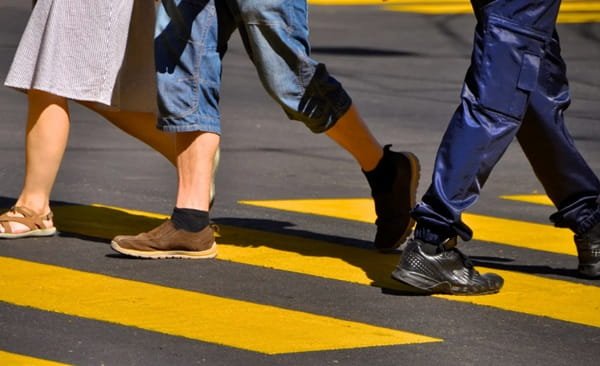
This guide answers 11 common questions about Texas pedestrian accident claims, including fault determination, hit-and-run accidents, medical bills, insurance settlements, shared liability, compensation, and the deadlines for filing a personal injury lawsuit.
1. Who Is at Fault When a Car Hits a Pedestrian?
The person who broke a safety rule is at fault. Most of the time, that is the driver.
Texas law puts clear duties on drivers. Under Chapter 552 of the Texas Transportation Code, a driver must yield to a pedestrian in a crosswalk when no traffic signal is working. Section 552.008 also requires every driver to use due care to avoid hitting a pedestrian, and to take extra care around children and anyone who looks confused or disabled.
The pedestrian has duties too. A person who walks into the road outside a crosswalk must yield to cars. That does not give drivers permission to hit them. It only means fault gets shared.
2. What If I Was Not in a Crosswalk?
You still have a claim. Texas uses a system called proportionate responsibility under Civil Practice and Remedies Code Section 33.001. A jury gives each person a percentage of the blame.
Here is how it works:
- If you are 50% or less at fault, you recover money, reduced by your share.
- If you are more than 50% at fault, you recover nothing.
So a walker who crossed mid-block but was hit by a speeding driver still recovers. The jury lowers the amount, but the claim stays alive.
3. Why Are So Many Pedestrians Hit at Night?
Darkness is the biggest risk factor. NHTSA reports that 77% of pedestrian deaths in 2023 happened in the dark. Only 19% happened in daylight.
Night crashes come from three things:
- Drivers cannot see walkers in dark clothes.
- Many streets have weak or broken lights.
- More drivers are impaired late at night.
If you walk at night, wear something bright or carry a light. If you were hit at night, the lighting at the scene becomes evidence. Photos of broken streetlights help your case.
4. What If the Driver Drove Away?
Hit-and-run crashes are common. NHTSA reports that nearly 1 in 4 pedestrians killed in 2023, or 24%, was struck by a hit-and-run driver.
If the driver fled, take these steps:
- Call 911 and give every detail you remember about the car.
- Ask nearby businesses to save their camera video right away.
- Report the crash to your own auto insurance company.
Your own uninsured motorist coverage often pays when a hit-and-run driver is never found. It covers you even when you were walking, not driving.
5. Who Pays My Medical Bills?
Several sources pay, usually in this order:
- Your personal injury protection (PIP). Texas auto policies include at least $2,500 in PIP unless you rejected it in writing. PIP covers you as a pedestrian too.
- Your health insurance. It pays for treatment while the claim is open.
- The driver’s liability insurance. It pays at settlement, not as bills arrive.
- Your uninsured or underinsured motorist coverage. It fills the gap when the driver has little or no insurance.
Texas only requires drivers to carry $30,000 per injured person. A serious pedestrian injury costs far more than that, which is why your own coverage matters.
6. What Injuries Do Pedestrians Usually Suffer?
Pedestrian injuries are almost always serious because the body takes the full hit. Common injuries include:
- Broken legs and hips from the bumper
- Head and brain injuries from hitting the hood or pavement
- Spine injuries
- Broken arms and wrists from trying to break the fall
- Deep cuts and road rash
Some injuries, like brain injuries, do not show symptoms right away. Get checked the same day, even if you walked home.
7. How Long Do I Have to File a Claim in Texas?
You have two years from the date of the crash under Civil Practice and Remedies Code Section 16.003. If a loved one died, the family has two years from the date of death.
The deadline is much shorter if a city or county vehicle hit you. A crash with a City of Houston truck or a METRO bus requires written notice to the government far sooner, often within six months or less. Do not wait.
8. Where Do Pedestrian Crashes Happen Most in Houston?
They happen most on wide, fast roads with long gaps between crosswalks. In Houston, that means streets like Westheimer, Bissonnet, and Hillcroft. These roads have many lanes, busy shopping centers, and bus stops on both sides. People cross where they need to, not where a crosswalk happens to be.
Downtown and along Main Street, walkers share space with METRORail trains and heavy lunch-hour traffic. In Montrose and Midtown, crowds leave bars and restaurants late at night, when visibility is lowest.
Neighborhoods matter for another reason too. Ben Dominguez, a Houston pedestrian accident lawyer who has served Greater Houston since 1994, works with injured walkers and their families in both English and Spanish, which matters on corridors like Bissonnet and Hillcroft in Gulfton where many families speak Spanish at home. Medical forms, insurance letters, and police reports are confusing in any language. Getting them explained in the language you think in removes one more problem from a hard week.
9. What Evidence Do I Need?
The best evidence is gathered in the first few days. Collect:
- The police crash report number
- Photos of the crosswalk, signals, and streetlights
- Photos of your injuries over several days
- Names and phone numbers of witnesses
- Business camera video from nearby stores
- Every medical bill and record
- Your damaged clothes and shoes, unwashed
Business cameras on busy Houston streets often record over old video within a few days. Ask for it fast.
10. Should I Talk to the Driver’s Insurance Company?
Give the basic facts only: your name, the date, and where it happened. Do not give a recorded statement before you understand your rights.
The adjuster’s job is to pay as little as possible. A simple sentence like “I’m okay” gets used later to argue you were not hurt. A sentence like “I didn’t see the car” gets used to argue you were not paying attention.
11. Does It Matter If I Was Hit in a Parking Lot?
Yes, but the claim still works. Parking lots are private property, so some traffic rules on public roads do not apply the same way. The basic duty stays the same: every driver must watch where they are going and avoid hitting people.
Parking lot crashes in Houston often happen at grocery stores, apartment complexes, and shopping centers along streets like Westheimer and Bellaire Boulevard. Drivers back out without looking, cut across empty rows, or rush to grab a spot.
Two extra steps help in a parking lot case:
- Report the crash to store or property management. Ask them to write it down and save their camera video.
- Photograph the layout. Show the lanes, stop signs, painted walkways, and lighting.
The property owner sometimes shares the blame too. A lot with broken lights, faded walkways, or no stop signs at busy corners creates danger that the owner had a duty to fix.
Quick Safety Tips for Houston Walkers
- Cross at marked crosswalks and signals whenever possible.
- Make eye contact with drivers before stepping off the curb.
- Wear light colors or a reflective strip at night.
- Watch for cars turning right on red. Those drivers look left and miss walkers on the right.
- Put the phone away when crossing.
Key Takeaways
- NHTSA counted 7,314 pedestrian deaths nationwide in 2023, and TxDOT counted 768 in Texas in 2024.
- Most pedestrian deaths, 77%, happen in the dark, and nearly 1 in 4 involves a hit-and-run driver.
- Drivers must use due care and yield in crosswalks under Texas Transportation Code Chapter 552.
- A walker who shares some fault still recovers, as long as their share is 50% or less.
- Texas gives injured walkers two years to file, with much shorter deadlines for crashes involving city vehicles.
A pedestrian crash changes life in a second. Knowing these answers helps you protect your health, your evidence, and your claim from the first day.