In general, no. Under the Supreme Court’s 1989 decision in Texas v. Johnson, burning the American flag as political protest is protected by the First Amendment. But that doesn’t mean a person can burn a flag anywhere, any time, without legal consequences. Fire laws, public safety rules, and other content-neutral laws still apply, and a 2025 executive order has renewed the debate over where the limits lie.
What the Supreme Court Has Held
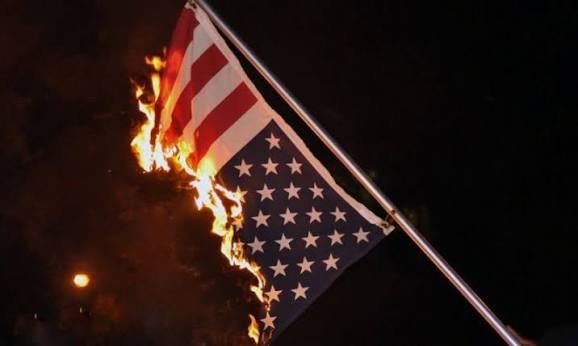
In Texas v. Johnson, the Court ruled 5-4 that flag burning as a form of protest is protected First Amendment speech. Gregory Lee Johnson had burned a flag outside the 1984 Republican National Convention in Dallas and was convicted under a Texas law against desecrating a venerated object. The Texas Court of Criminal Appeals ruled that the state could not punish flag burning in general and could only criminalize acts that actually fueled violence. The Supreme Court agreed that the government may not punish expression simply because it finds the message offensive.
A year later, in United States v. Eichman (1990), the Court struck down Congress’s response, the federal Flag Protection Act, on the same grounds. Since then, laws that target flag burning because of its expressive message have not survived constitutional review.
The 2025 Executive Order
On August 25, 2025, President Trump signed Executive Order 14341, “Prosecuting Burning of the American Flag.” The order does not create a new federal crime. It argues that the Supreme Court has never held that flag desecration likely to incite imminent lawless action, or that amounts to “fighting words,” is constitutionally protected. It directs the Attorney General to prioritize enforcement of applicable, content-neutral laws against flag desecration that cause harm unrelated to expression, and to refer possible violations of state or local laws, such as open burning restrictions, disorderly conduct laws, or property destruction laws, to the appropriate authorities. It also instructs the Attorney General to consider litigation that would clarify the scope of First Amendment exceptions in this area. For noncitizens, the order says foreign nationals could face revocation of visas or other immigration benefits.
The order has been read in two ways. Its supporters, including administration officials, argue it is consistent with Johnson because it targets only conduct that even the majority did not defend, such as incitement and fighting words. Critics say it is an attempt to chip away at settled law. Bob Corn-Revere of the Foundation for Individual Rights and Expression said that people can be prosecuted for burning anything where they aren’t allowed to set fires, but the government can’t prosecute protected expressive activity.
What Happened When the Order Was Tested
The first well-known test came the day the order was signed. Jan “Jay” Carey, an Army veteran, burned a flag near the White House and was charged with igniting a fire in an undesignated area and lighting a fire causing damage to property or park resources. He was not charged with flag burning itself. His lawyers argued he was targeted because of his protest, and a judge allowed his vindictive prosecution defense to proceed. Later, federal prosecutors moved to drop the charges. As of this writing, Texas v. Johnson remains the controlling precedent, and I’m not aware of a Supreme Court case that has reconsidered it. Check for updates, since this area could change.
Ways a Flag Burning Can Still Break the Law
Even where the act of burning a flag is protected, how and where you do it can create legal problems:
- Fire and burning laws: Many cities and states restrict open burning, require permits, or ban fires during dry conditions. Public parks, sidewalks, and federal property often have their own fire rules.
- Public safety: Reckless burning near people, buildings, or vehicles can lead to charges for reckless endangerment, arson-related offenses, or disorderly conduct.
- Property laws: Burning a flag that belongs to someone else, or stealing one to burn, can be theft or vandalism.
- Incitement and fighting words: These are narrow exceptions to free speech. Courts have generally limited them to speech directed at inciting imminent lawless action that is likely to do so, or at provoking a violent response from a specific person.
- Other conduct: Resisting arrest, blocking traffic, or trespassing during a protest can lead to charges unrelated to the flag.
What About Disposing of a Worn Flag?
Retiring a damaged flag is a different matter. Nothing in this context changes the fact that the federal Flag Code, which is guidance, not a criminal statute, says a worn flag should be destroyed in a dignified way, and burning is the traditional method. Many veterans’ groups and scouting organizations hold flag-retirement ceremonies. The Flag Code does not carry penalties, but local fire rules still apply.
If You’re Considering a Protest or Ceremony
- Check local fire and burn rules and get any required permits.
- Choose a safe, legal location, away from people, vehicles, and buildings.
- Use your own flag.
- Keep fire safety equipment nearby.
- Talk to an attorney in advance if you expect a confrontation or a test case.
The Bottom Line
Burning the American flag as political expression is protected by the First Amendment under current Supreme Court precedent, but the act is not immune from fire codes, safety laws, or property laws. The 2025 executive order has not changed that precedent, and it remains to be seen whether any case will bring the question back to the Supreme Court.