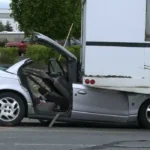
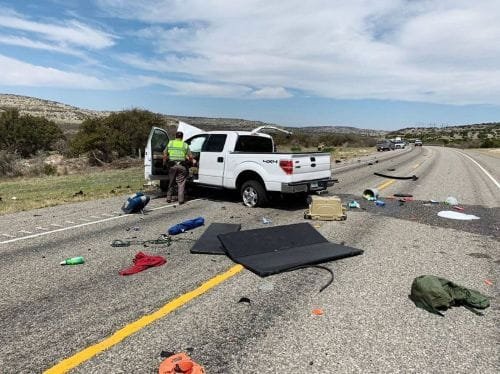
A commercial truck traveling along a Texas highway loses part of its cargo, forcing another driver to swerve into a guardrail. The truck continues down the road, leaving the injured motorist without clear information about who caused the accident. Under Texas law, determining liability for road debris accidents requires examining cargo securement regulations, the source of the hazardous material, and whether negligent conduct caused the collision.
These cases present distinct legal challenges because the responsible vehicle might never make physical contact with the injured driver’s car.
Texas Law Requires Drivers to Secure Loose Materials
Texas Transportation Code Section 725.021 establishes specific requirements for transporting loose materials, including gravel, sand, dirt, refuse, and wood chips. Vehicles covered by the statute must have properly maintained cargo compartments that prevent materials from escaping.
Commercial vehicles transporting qualifying loose materials generally must use securely fastened coverings or completely enclosed cargo compartments.
The requirement is not limited to preventing large objects from falling onto highways. Smaller materials escaping from truck beds also present safety hazards, particularly when drivers encounter debris at highway speeds.
Federal Regulations Establish Additional Cargo Standards
49 CFR Section 393.100 requires commercial vehicles to secure cargo against leaking, spilling, blowing, or falling onto public roads. The regulation also addresses cargo movement that adversely affects vehicle stability.
Under Section 393.106, qualifying cargo must be properly immobilized or secured using adequate structures, tie-downs, or other restraint systems.
A Texas personal injury law firm investigating accidents involving falling cargo examines whether drivers and trucking companies complied with these requirements. Stephens Law Firm handles serious commercial truck accidents and other personal injury claims throughout Texas.
A cargo securement violation provides important evidence, but legal liability still requires establishing causation and resulting damages.
Truck Drivers Have Specific Inspection Responsibilities
49 CFR Section 392.9 requires qualifying commercial truck drivers to inspect cargo and securement devices before beginning transportation. Drivers generally must conduct another inspection within the first 50 miles.
Additional inspections are required when changing duty status or after three hours or 150 miles of driving, whichever occurs first, subject to specified exceptions.
A truck leaving a loading facility with secured cargo does not automatically establish compliance throughout the journey. Inspection records, delivery schedules, and damaged restraints help determine whether the driver fulfilled these responsibilities.
Cargo Loading Companies Might Share Responsibility
Commercial shipments frequently involve multiple businesses responsible for loading, transporting, and securing freight. A loading contractor might improperly position heavy equipment, while the trucking company might fail to identify the problem before departure.
Legal Texas’s discussion of commercial truck accident liability explains why several companies sometimes face claims arising from the same collision.
Identifying who loaded the cargo does not automatically establish who negligently secured it. Loading agreements, inspection reports, and employment records help determine each company’s responsibilities.
Proving Where the Road Debris Came From
A damaged tire, metal component, or piece of furniture found on a highway does not necessarily establish which vehicle deposited it. Investigators need evidence connecting the object to an identifiable driver or business.
Dashcam recordings, nearby surveillance cameras, witness statements, and recovered cargo materials help establish that connection. A recording showing an object falling directly from a trailer provides different evidence from photographs showing debris already lying on the roadway.
Legal Texas’s article on Texas trucking corridors also discusses how physical evidence and cargo documentation affect collision investigations.
Proving that road debris caused an accident is different from proving who negligently placed it there.
Comparative Fault Can Affect Compensation
Texas Civil Practice and Remedies Code Section 33.001 generally prevents injured claimants from recovering compensation when their responsibility exceeds 50%.
Under Section 33.012, smaller fault percentages reduce recoverable damages proportionately. For example, a claimant assigned 25% responsibility for $100,000 in damages would generally recover $75,000 before other adjustments.
An insurance company might argue that the injured driver was speeding or reacted unreasonably to the obstruction. Those allegations require evidence connecting the driver’s conduct to the collision, rather than assumptions about how motorists normally respond to unexpected hazards.
Physical Evidence and Filing Deadlines Matter
Cargo manifests, photographs, damaged restraints, and truck inspection records help reconstruct how material escaped from a vehicle. Preserving these records becomes particularly important when the trucking company controls the equipment involved.
Under Section 16.003, Texas personal injury lawsuits generally face a two-year filing deadline, subject to exceptions. However, roadway debris and damaged cargo equipment might disappear considerably earlier.
The decisive issue is not simply whether an object caused a dangerous roadway condition. A successful Texas road debris claim requires evidence identifying the responsible party, establishing a legally actionable failure to secure or transport cargo safely, and connecting that failure to the injuries suffered.
This article provides general legal information and is not individualized legal advice.