Two neighbors have a heated argument outside a house. Their voices carry across the street.
One points a finger, the other walks away, and a witness later tells police that both appeared
Furious. Hours later, one of them is found dead.
The argument immediately becomes part of the investigation. Detectives want to know what
was said, whether either person made threats, and where they went afterward. The witness can
describe the confrontation, but cannot say what happened later.
That distinction matters more than it might initially appear. In a homicide investigation, evidence of an earlier conflict may help explain a possible motive. It does not, by itself, establish who caused the death, how it occurred, or whether a criminal
offense was committed.
The following scenario is hypothetical, but it illustrates a recurring challenge in criminal cases:
determining how much the available evidence actually establishes when nobody witnessed the
fatal incident.
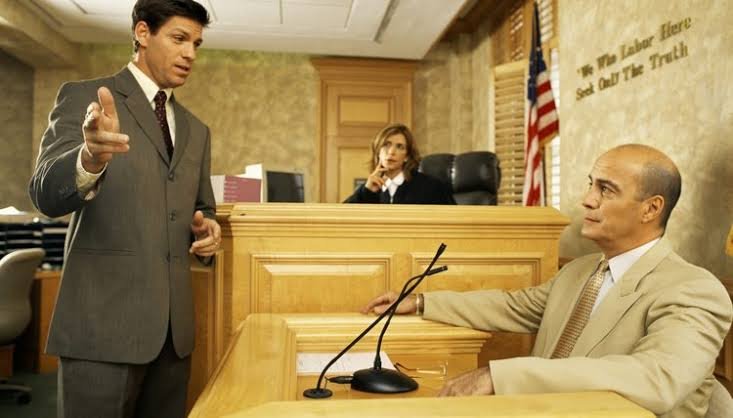
An Argument Can Be Important Without Telling the Whole Story
What the Witness Saw Versus What the Witness Assumed
Suppose the witness tells investigators that one neighbor threatened the other during the
Confrontation. That statement could matter because it may show hostility, intent, or a possible motive. But investigators still must distinguish what the witness directly observed from conclusions drawn from those observations.
Did the witness hear the complete conversation? Could the statement have been
misunderstood? Did the witness see either person carrying a weapon? Was there any further
contact between the two?
A witness who accurately reports an argument may still know nothing about the events that
caused the death. The issue is not necessarily whether the witness is truthful, but whether the
witness had enough information to describe what happened later.
Why Eyewitness Memory Deserves Careful Examination
Memory is not a recording that investigators can replay without uncertainty. Lighting, distance, stress, distractions, and the passage of time can affect what people notice and later recall. Information encountered after an event may also complicate memory.
The National Institute of Justice’s Eyewitness Evidence: A Guide for Law Enforcement
recommends careful procedures for interviewing witnesses, recording recollections, and
preserving eyewitness evidence.
These limitations do not make eyewitness testimony unreliable in every case. A witness’s
observations may be accurate and persuasive. The point is to evaluate testimony carefully
rather than accept or reject it merely because human memory has limitations.
When Nobody Witnessed the Death, the Timeline Becomes Critical
How Investigators Reconstruct Events After the Argument
In the hypothetical neighborhood case, detectives might investigate what happened between
the public confrontation and the discovery of the body. They could examine surveillance recordings, telephone records obtained through lawful procedures, statements from other witnesses, or electronic information showing when certain devices were active.
A camera may establish that someone entered a building at a particular time. A phone record
may show communication between two people. A medical examination may help estimate the
circumstances or possible timing of death, although such estimates have limits.
These details become more meaningful when considered together. A surveillance image
placing someone near a location is not automatically proof that the person committed a crime
there. Likewise, a phone’s location does not always establish its owner’s exact movements.
Investigators must consider the accuracy, context, and limitations of each source before
combining separate facts into a chronology.
Circumstantial Evidence Can Be Powerful, but Inferences Must Be Reasonable
A homicide conviction does not necessarily require someone to have witnessed the killing. Circumstantial evidence permits conclusions to be drawn from established facts. A series of
connected observations, records, and physical findings may support a criminal charge even
without direct eyewitness testimony.
For instance, evidence showing a defendant’s movements, relevant communications,
possession of a weapon, and forensic connections may become significant when the facts
reasonably support the inference being offered.
California’s Judicial Council Criminal Jury Instructions, including CALCRIM No. 224, direct jurors
to reject unreasonable inferences from circumstantial evidence. Under the instruction’s
framework, if two or more reasonable conclusions can be drawn from circumstantial evidence
and one points to innocence while another points to guilt, jurors must accept the reasonable
conclusion pointing to innocence.
That does not mean every theoretical alternative defeats a prosecution. The prosecution still
must prove the charged offense beyond a reasonable doubt.
Physical Evidence May Clarify What Testimony Cannot
What Medical and Forensic Findings Can Establish
Witnesses often provide investigators with a starting point. Physical evidence may then confirm,
contradict, or complicate the initial account. An autopsy may identify injuries, help determine the cause of death, and provide information relevant to how those injuries occurred.
Other examinations may involve fingerprints, biological material, firearms evidence, or trace
evidence recovered from clothing and objects.
Consider a witness who describes a confrontation as involving only shouting. If investigators
later discover physical evidence suggesting another encounter, they may need to determine
when that encounter occurred and who participated.
Scientific findings do not always answer those questions. The presence of biological material
on an object, for example, may establish an association without showing when, why, or during
what activity the material was deposited.
Why Forensic Conclusions Need Context
Modern forensic methods can detect extremely small amounts of biological material. That
sensitivity can help investigators, but it also creates interpretive challenges.
In its December 2024 report, DNA Mixture Interpretation: A NIST Scientific Foundation Review,
the National Institute of Standards and Technology discusses DNA mixtures, contamination,
and the difficulty of deciding whether detected DNA is relevant to the alleged crime.
The important question is not merely whether a laboratory produced a result, but what that
result can reasonably establish. Expert review may help evaluate the methods used, the limits
of the conclusions, and whether a proposed interpretation fits the other evidence. Such review
does not automatically discredit laboratory findings.
A Fatal Encounter Does Not Always Lead to the Same Criminal Charge
How California Distinguishes Murder From Manslaughter
Even when investigators establish that one person caused another’s death, the legal analysis is not finished; for additional information about homicide defense, visit website, which provides further context on how these cases may be evaluated.
Under California Penal Code Sections 187 and 188, murder generally involves an unlawful
killing committed with malice aforethought. Malice may be express or implied under the
statutory rules.
California Penal Code Section 192 defines manslaughter as an unlawful killing without malice
and recognizes voluntary, involuntary, and vehicular manslaughter.
An earlier argument may be relevant to a heat-of-passion theory, but an argument alone does
not establish voluntary manslaughter. CALCRIM No. 570 explains that the defendant must have
acted under intense emotion caused by legally sufficient provocation, and the killing must have
occurred before enough time passed for a person of average disposition to cool off.
Likewise, lack of advance planning does not necessarily eliminate murder liability. California
law distinguishes first- and second-degree murder, and second-degree murder does not require
proof that the killing was willful, deliberate, and premeditated in the manner required for a
premeditated first-degree murder theory.
Why Texas Applies Different Homicide Rules
Texas law uses a different statutory structure. Under Texas Penal Code Chapter 19, murder includes intentionally or knowingly causing a person’s death, as well as other specified conduct causing death. Texas Penal Code Section 19.04 provides that a person commits manslaughter by recklessly causing another person’s
death.
Texas also treats sudden passion differently from California heat of passion. Under Texas Penal Code Section 19.02(d), after a murder conviction, a defendant may raise sudden passion arising from adequate cause at the punishment stage. The defendant must prove the issue by a preponderance of the evidence, and a successful showing reduces the offense for punishment purposes as provided by the statute.
That differs from California’s treatment of qualifying heat-of-passion circumstances, which may
reduce an otherwise murder-level killing to voluntary manslaughter. The two states therefore
should not be treated as though they use identical homicide classifications.
When Self-Defense Becomes Part of the Analysis
What happened after an argument may also matter if evidence raises a question of self-
Defense. An encounter that initially appeared to involve aggression by one person could later develop into a situation involving an imminent threat. Conversely, an earlier argument does not establish that the use of deadly force was justified.
Texas Penal Code Sections 9.31 and 9.32 govern the justified use of force and deadly force,
including circumstances in which a person reasonably believes force or deadly force is
immediately necessary. Under Texas Penal Code Section 2.03, once evidence supports a
defense and the issue is submitted to the jury, a reasonable doubt about the defense requires
acquittal.
California follows its own rules. California Penal Code Section 197 recognizes specified forms
of justifiable homicide, and CALCRIM No. 505 explains self-defense in a homicide case in terms
of a reasonable belief in imminent danger, a reasonable belief that immediate deadly force was
necessary, and use of no more force than reasonably necessary. When the instruction applies,
the prosecution must prove beyond a reasonable doubt that the killing was not justified.
Neither state’s law gives someone an unrestricted right to use deadly force merely because a
confrontation becomes heated. The controlling jurisdiction’s rules and the surrounding facts
determine whether self-defense is legally available.
How Defense Attorneys Test an Incomplete Account
Examining the Evidence Behind the Initial Theory
Investigators often begin with the information available in the hours immediately following a
death. Their understanding of the case may change as additional evidence emerges.
A defense attorney reviewing a homicide prosecution may examine original witness statements,
interview recordings, forensic reports, electronic records, and the procedures used to obtain
evidence.
That review might reveal differences between an initial statement and later testimony, an
unsupported assumption about when someone arrived at a location, or a gap between a
scientific finding and the interpretation offered for it.
Those issues are not necessarily proof of investigative misconduct or innocence. Their
significance depends on the surrounding evidence, and a responsible defense review must
consider evidence unfavorable to the accused as well as evidence that challenges the
prosecution’s position.
Why the Defense Does Not Have to Prove an Alternative Story
There is a meaningful difference between investigating an alternative explanation and being
legally required to prove one. Under the U.S. Supreme Court’s decision in In re Winship, due process requires proof beyond a reasonable doubt of every fact necessary to constitute the charged crime. As a general rule, the defendant therefore does not have to prove innocence merely to require the prosecution to meet its burden.
Particular defenses or statutory issues can operate differently. For example, California’s
self-defense instruction places the ultimate burden on the prosecution to prove an unjustified
killing beyond a reasonable doubt when self-defense is properly at issue, while Texas Section
19.02(d) places a preponderance burden on a defendant who raises sudden passion at the
punishment stage.
For the hypothetical case, the defense might explore whether someone else encountered the
deceased after the argument, whether the proposed timeline is accurate, or whether the cause
of death supports the prosecution’s theory.
The defense does not necessarily have to establish precisely what happened instead in order to
argue that the prosecution has failed to prove the charged offense. At the same time, an
unanswered question does not automatically create reasonable doubt.
The Witness’s Account Matters, but So Does Everything It Leaves Unanswered
Return to the neighborhood argument. The witness may have seen two people arguing. Investigators may have obtained recordings, electronic records, physical evidence, and medical findings concerning the death.
A witness who never saw the fatal incident does not automatically make a prosecution weak.
Circumstantial evidence can support a conviction when the evidence establishes the required
elements beyond a reasonable doubt. But evidence of an earlier dispute cannot substitute for
proof of criminal responsibility.
The essential task is to separate what is known from what is inferred, test whether those
inferences are reasonable, and apply the law governing the alleged offense. The argument may have been the first event that attracted attention. Whether it establishes anything more depends on what the rest of the evidence can prove.