Yes, converting a garage into living space can be legal in Texas, but the conversion generally must comply with applicable building, zoning, parking, electrical, plumbing, fire-safety, and occupancy requirements. Texas does not have one statewide permit that automatically authorizes every garage conversion. Municipalities administer residential building codes, so requirements can vary considerably by location.
Does Texas Require a Permit for a Garage Conversion?
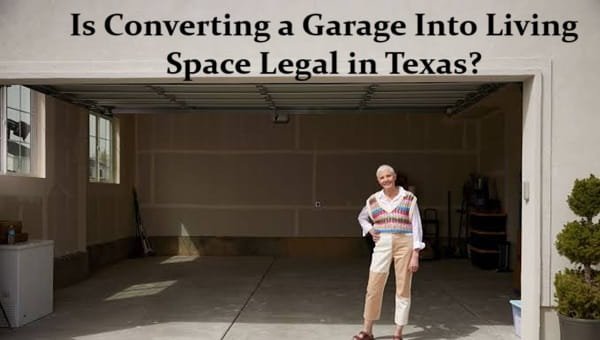
Texas Local Government Code Section 214.212 adopts the International Residential Code as a municipal residential building code and applies it to construction, alteration, remodeling, enlargement, and repair of residential structures in municipalities. Cities can establish procedures for administering and enforcing the code and may adopt certain local amendments.
Consequently, converting a garage into habitable space is generally treated as regulated remodeling rather than simply changing the room’s use.
Is a Garage Conversion Considered Living Space?
Generally, yes, when the converted area is intended for human habitation. A garage may not satisfy all requirements applicable to habitable rooms. Converting it into a bedroom, living room, or other residential space can trigger requirements involving insulation, ventilation, natural light, emergency escape openings, ceiling height, electrical systems, heating, cooling, and other building-code standards.
The exact requirements depend on the city and the scope of the proposed work.
Can You Convert a Garage Into a Bedroom?
Potentially, yes. A garage can be converted into a bedroom if the resulting space satisfies applicable residential building and safety codes. Emergency escape and rescue requirements can be particularly important when the room will be used for sleeping.
The project may also require modifications to walls, ceilings, windows, insulation, electrical wiring, HVAC systems, or the garage floor. Adding a bathroom or kitchen can create additional plumbing and electrical requirements.
What About Removing the Garage Door?
Replacing or removing the garage door is often a significant part of a conversion. The new wall, windows, exterior door, insulation, weatherproofing, and structural components may need to meet local code requirements.
Austin, for example, specifically lists garage conversions as a residential permit category and provides a dedicated application for converting legally established garages, carports, and porches. Its residential plan-review process evaluates these projects under applicable residential and local codes.
Can a Garage Conversion Create a Parking Problem?
Yes. Parking requirements can be one of the most important issues. Some local zoning rules require a residence to maintain a certain amount of off-street parking. Converting a garage can eliminate required parking and potentially create a zoning violation.
Fort Worth, for example, states that enclosing a garage for a use other than a garage requires a building permit and notes that a zoning variance may be required because of the removal of required parking spaces.
Therefore, obtaining a building permit does not necessarily resolve every zoning issue.
What If You Convert the Garage Without a Permit?
If a permit was required but the homeowner completes the conversion without obtaining one, the local government may take enforcement action. Depending on the circumstances, the owner may have to obtain an after-the-fact permit, expose completed work for inspection, correct violations, or potentially restore the space.
Unpermitted work can also create problems when selling or refinancing a property. Buyers, lenders, insurers, and inspectors may question whether the additional living area was legally created.
Can a Garage Become a Separate Apartment?
Possibly, but converting a garage into an independent dwelling unit can involve requirements beyond an ordinary room conversion. A separate apartment may implicate zoning, accessory-dwelling-unit rules, utilities, fire separation, parking, entrances, addressing, and other local requirements.
Adding a kitchen, bathroom, and separate entrance does not automatically make the space a legally recognized independent dwelling.
Do HOA Rules Matter?
Yes. Homeowners’ associations and deed restrictions can impose additional requirements concerning exterior changes, garage use, architectural modifications, parking, and construction procedures.
HOA approval is separate from a government building permit. A homeowner may therefore need to satisfy both the local government and applicable private restrictions before beginning the project.
What Should Homeowners Check Before Converting?
Before construction, homeowners should contact the local building department, determine whether a garage-conversion permit is required, review zoning and parking requirements, identify electrical and plumbing permits, check applicable floodplain or site restrictions, and review HOA or deed restrictions.
It is also important to determine whether the proposed space will remain part of the existing home or become a separate dwelling unit.
Conclusion
Converting a garage into living space can be legal in Texas, but it should not normally be treated as a permit-free remodeling project. Texas establishes a residential building-code framework, while individual municipalities administer the code and can impose local requirements. Building permits, zoning approval, parking rules, trade permits, and private restrictions may all matter.
Homeowners should verify the requirements for their exact property and obtain necessary approvals before construction begins.