If you’ve ever traveled through Texas especially in the Panhandle, West Texas, or parts of East Texas you might notice something unique: the red-colored soil. This distinctive reddish dirt has become a recognizable part of Texas landscapes, from ranch fields to roadside scenery. But what causes this unusual color? The answer lies beneath the surface in the soil’s minerals and chemistry.
The Science Behind the Red Color
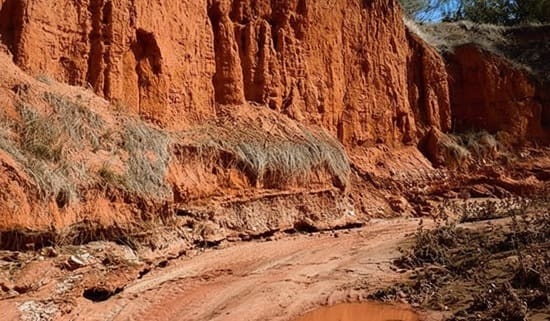
The red color in Texas dirt comes from iron oxide, commonly known as rust.
- Texas soil contains a high amount of iron minerals
- When these minerals are exposed to oxygen and moisture, a chemical reaction takes place
- The iron oxidizes and turns reddish-brown, just like a piece of iron that rusts
So essentially, Texas dirt is “rusted” soil and that rust gives it a bright red appearance.
Where in Texas Is the Dirt Red?
You’ll mainly find the red soil in:
✔ North Texas / Texas Panhandle
✔ West Texas
✔ East Texas Piney Woods
These regions have geological formations rich in iron deposits that date back millions of years.
Some famous locations where red dirt is most noticeable:
- Palo Duro Canyon
- Amarillo area
- Lubbock and surrounding plains
- Red River region (named for the same reason!)
Why These Areas Have More Iron
Millions of years ago, much of Texas was underwater or part of ancient river systems. As sediments settled and rocks formed, iron-rich minerals became a major component of the land. Over time:
- The climate became hot and dry
- Soil was exposed to air and sunlight
- Oxidation increased, deepening the red color
Texas weather — especially in the High Plains — speeds up the oxidation process, making the dirt an even brighter shade of red.
Environmental and Agricultural Importance
Red soil isn’t just a pretty color — it has practical characteristics:
Good for Farming: Iron-rich soil helps plants grow, especially crops like cotton and wheat in West Texas.
Drainage Benefits: These sandy-clay soils drain water well but still hold enough moisture for vegetation.
Erosion and Canyon Formation: The softer red soil erodes easily, creating dramatic landscapes like Palo Duro Canyon.
Is All Texas Soil Red?
No — Texas is huge and diverse. Soil colors vary from:
- Dark clay in Central Texas (Blackland Prairie)
- Sandy light soil near the Gulf Coast
- Rocky desert soil in Far West Texas
The red soil is just one of the state’s many natural features.
Final Thoughts
Texas dirt is red mainly because of iron oxide, a natural result of the state’s mineral-rich geology and climate. This striking reddish soil isn’t just part of Texas scenery — it symbolizes the region’s history, agriculture, and rugged beauty.
Next time you see that rusty red earth, you’ll know: it’s Texas showing off its true natural colors.