The call comes in on a Tuesday. A new industrial generator has arrived at the vendor yard, standing 14 feet tall and 12 feet wide on a concrete pad, prompting someone to realize a standard flatbed will not work. The delivery date is circled on a calendar while the site crew is already scheduled to unload it.
Now, a project manager is on the phone trying to understand over-dimensional transport requirements while the clock runs. That exact moment is where costly logistical errors become visible, since field failures are always set in motion weeks earlier. Here is what the planning phase misses.
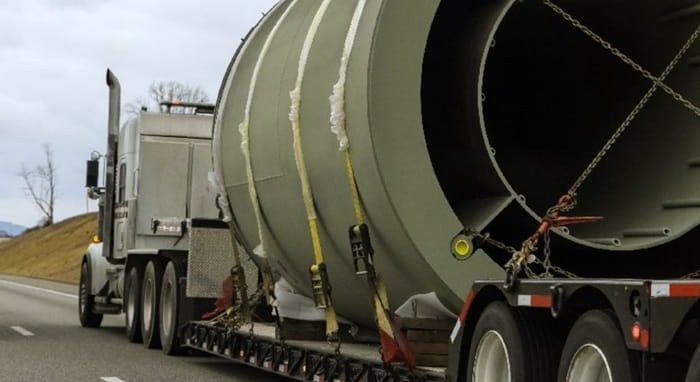
1. Treating Dimensions as Secondary to Weight
The first question most business owners ask is about the total weight of the machinery. Stopping at that number is where the trouble starts, because height and width dictate the specific roads a load can travel. A machine sitting at 14 feet tall changes the available route options in Texas in ways that a weight threshold alone never triggers.
Operations such as Titan Worldwide Logistics’ heavy haul trucking across Texas structure their transport plans around these exact physical dimensions first. Bridge clearances block shipments by inches even when every axle rating clears cleanly.
Utility lines strung lower than expected along a rural county road represent a height obstacle rather than a weight problem. Exceeding the legal width limit of 8 feet 6 inches triggers pilot car requirements and lane restrictions immediately.
Large excavators and industrial generators require specialized trailers that accommodate both the total mass and the physical footprint. That equipment determination has to happen before any route discussion begins.
2. Trusting the Map Instead of the Road
A basic route survey is not the same thing as a navigation app. Satellite views can make a farm-to-market road across West Texas look passable right up until a loaded lowboy reaches a soft shoulder. A bridge with a posted weight rating can instantly rule out an entire corridor that looked perfect on a screen.
The map simply failed to tell the complete operational story. A proper clearance survey walks the route segment by segment to check tight intersections and low-hanging utility lines. It also accounts for construction detours that did not exist six weeks ago when the job was originally quoted.
Rural county roads vary enormously in surface condition and structural capacity, which rarely shows up on a standard digital map. Verifying these physical details before the truck rolls prevents drivers from sitting at an underpass at midnight waiting for a solution.
| Key Insight: The gap between a navigation app and a true route survey is where cost surprises live. Satellite views hide soft shoulders, low clearances, and bridge weight limits that decide if a 120,000-pound lowboy can legally pass. |
3. Underestimating the Permit and Escort Layer
Most business owners know oversized equipment requires government authorization. The primary mistake involves failing to account for what the escort layer adds to the front end of the schedule. Securing a single-trip permit for a non-divisible load weighing up to 254,300 pounds introduces additional parties to coordinate.
This layer brings in pilot car drivers and law enforcement escorts depending on the exact corridor. Application timelines vary widely by jurisdiction and specific route choices.
Move windows might be legally restricted to specific hours or certain days of the week. A load ready on a Friday afternoon cannot legally move until Monday morning. While the transport operator handles compliance, the business owner carries the schedule risk if coordination time was never built into the project plan.
4. Booking a Move That Was Already Late
A heavy haul move gets booked in weeks rather than days. Calling a carrier on a Monday for a Friday pickup fails for over-dimensional freight. Every step in the planning chain depends entirely on the step before it.
The route depends on the trailer, the permits rely on that specific route, and the required escorts depend on those approved permits. Compressing that chain does not make it faster.
Specialist operators build the move backward from the delivery date so the route and equipment are confirmed together. General carriers booked at the last minute lack the lead time to run that sequential process correctly. Late notice guarantees a rushed process with elevated risk.
| Pro Tip: Book heavy haul moves in weeks, not days. Specialist operators plan backward from the delivery date, coordinating route and equipment in parallel because every step depends on the one before it. |
5. Forgetting That the Lift Is a Separate Job
The highway drive represents just the visible part of an industrial transport project. Rigging and crane work to load the machine at the origin point is where unexpected costs actually appear. A large transformer does not self-load onto a step deck trailer.
It requires rigging expertise and heavy lift equipment at both ends, which must be scheduled and costed as a separate scope of work. Assuming the trucking company automatically handles the crane work leads to severe budget overruns.
If the destination crane is not actively booked when the truck arrives, the driver simply sits while detention fees accumulate by the hour.
6. Arriving at a Site That Was Not Ready
A piece of machinery can travel 400 miles without incident and then get stuck 50 feet from the final drop point. Soft ground, unpaved access roads, and recently rained-on job sites make it physically impossible for a loaded lowboy to reach the destination.
None of these environmental hazards show up on the delivery manifest. Ground conditions at the destination need strict confirmation in advance rather than optimistic assumptions. Physical access width is the second variable that consistently gets overlooked.
The truck needs adequate room to position the trailer, swing the cab, and exit the facility safely. A parked equipment line on the wrong side of the yard creates real delays once the truck arrives. Furthermore, someone with authority needs to be standing at that site to receive the freight, because drivers cannot hold position while a project manager finishes a call elsewhere.
The Bottom Line
Businesses avoid logistical failures by starting early and providing exact physical dimensions instead of rough estimates. Confirming ground conditions in advance and booking the crane lift alongside the main transport removes the most common friction points. Building the move backward from the delivery date separates a clean operation from a delayed one.
| Author Profile: Titan Worldwide Logistics is the leading third-party logistics provider of heavy haul trucking and heavy equipment transport solutions for vital industries across North America. |