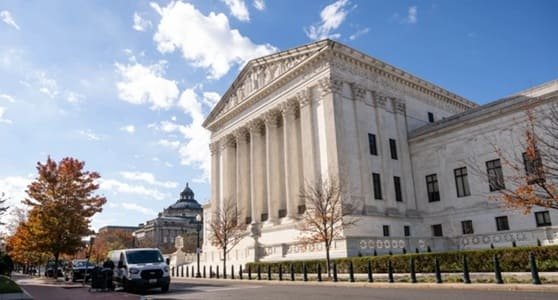
On December 4, 2025, the Supreme Court ruled that Texas may use its newly drawn congressional district map in the 2026 midterm elections reversing a recent lower-court order that had struck the map down.
The decision temporarily pauses a ruling by a three-judge federal panel (from November 18) that had found the 2025 map likely constituted an unlawful racial gerrymander.
Justice Samuel Alito, writing for the majority, concluded that the lower court improperly intervened — “in an active primary campaign,” and upended the federal–state balance in election administration.
What the 2025 Map Does — And What’s at Stake
The contested map, approved by the state legislature in August 2025 and signed into law by Greg Abbott, was engineered to give Republicans control of 30 out of Texas’s 38 U.S. House districts — up from the 25 the GOP held under the 2021 map.
Supporters argue the map aligns congressional representation with the state’s political leanings and demographic growth. Critics counter that it dismantles so-called “coalition districts,” where minority voters (especially Black and Latino communities) could influence outcomes, thereby weakening minority electoral power.
By temporarily reinstating the map, the Supreme Court has made it likely that the 2026 U.S. House races in Texas will be run under those new district boundaries — unless future rulings alter that outcome.
Reaction: GOP Victory, Civil-Rights Alarm
State Republicans hailed the court’s move as a “win for Texas voters” and a vindication of their redistricting rights. Texas Attorney General Ken Paxton lauded the decision, calling it a defense of the state’s prerogative to redraw electoral boundaries.
Conversely, Democratic lawmakers and civil-rights groups reacted with alarm. They warned the decision undermines protections against racial vote dilution and criticized what they view as a harmful precedent for minority communities.
Supreme Court Justice Elena Kagan — joined by the more liberal justices — dissented, arguing the lower court’s extensive record justified its finding of racial bias. She called the majority’s order a “hasty reversal” that ignores the detailed factual work done below.
What Happens Next: Ongoing Litigation & High Stakes
The legal challenge to Texas’s 2025 map continues. Though the Supreme Court’s order allows the map’s use for now, eventual full adjudication on the merits will determine its longer-term fate.
With candidate-filing deadlines approaching for the 2026 midterms, many Republicans running in the newly drawn districts will likely move forward under the existing map.
For voting-rights advocates and minority-community leaders, the next months will be critical — as courts weigh whether the 2025 map crosses constitutional and statutory boundaries on fair representation.
Bigger Picture: Redistricting, Judicial Intervention & Future Elections
The Texas case underscores broader national debates over mid-decade redistricting, partisan advantage, and the role of courts in policing electoral maps. Similar battles are underway (or anticipated) in other states, reflecting intensifying partisan competition over House representation.
It also highlights the fragile balance between state legislative authority over districting and federal protections — under the Constitution and the Voting Rights Act — designed to prevent racial discrimination.
Conclusion
The Supreme Court’s December 4 ruling marks a dramatic turn in the redistricting saga in Texas. For now, the Republican-drawn map stands, likely shaping the 2026 midterm elections. But with litigation ongoing and strong opposition from civil-rights advocates, the final resolution — and its implications for electoral justice — remain uncertain.