Wrongful death litigation has changed significantly over the last decade as technology continues to influence every aspect of daily life. Medical records are stored electronically, communication happens through mobile devices, and surveillance systems monitor public and private spaces.
Cloud platforms preserve large amounts of information that may later become evidence in court. As a result, attorneys handling wrongful death claims increasingly rely on computer forensics to uncover facts and preserve critical digital evidence.
Computer forensics has become especially valuable in complex litigation involving hospitals, transportation companies, employers, insurance providers, and large corporations.
Traditional investigative methods still matter, but digital evidence often provides the missing details that determine liability and damages. From deleted text messages to metadata hidden inside medical files, forensic specialists now play a central role in litigation.
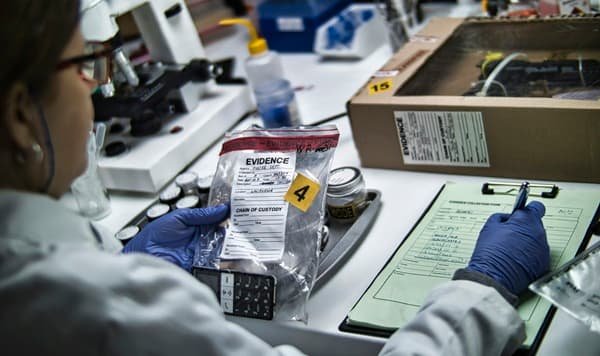
What Computer Forensics Actually Does in These Cases
Computer forensics is not just about recovering deleted files, though that matters. It also involves validating the authenticity of digital evidence, reconstructing timelines, and exposing gaps or inconsistencies in the record.
Scientists working in the field have spent years addressing forensic failures that can distort case outcomes. In wrongful death civil litigation, the stakes of that distortion are enormous. A family pursuing justice may have only one chance to present their case. Bad forensic analysis, or the absence of any forensic analysis, can mean they never get it.
Digital forensics experts perform a range of functions in these cases. They extract data from computers, smartphones, and vehicle systems. They analyze metadata to verify when files were created or modified. They reconstruct communication chains that reveal what a defendant knew, and when they knew it. Each of these tasks demands specialized training and rigorous methodology.
The key is to present this data in a way that is easily understandable by the jury. “A computer forensic examiner should not testify to sound technical. The examiner should testify to help the jury make sense of technical evidence,” Eric Waldrep, a digital forensic consultant, wrote on LinkedIn.
Medical Records, AI, and New Evidence Frontiers
Wrongful death cases arising from medical negligence present a different forensic landscape. Here, the relevant data lives inside electronic health records, and increasingly, inside AI-assisted diagnostic systems.
Texas recognized this shift directly. Governor Greg Abbott signed S.B. 1188 into law. The law required that electronic health records of Texas residents be stored within the United States. It also sets rules for when healthcare practitioners may use AI for diagnostic purposes. Under the law, if a practitioner uses AI in diagnosis or treatment, they must disclose that use to the patient.
This matters for wrongful death litigation. If a death follows from a missed diagnosis, attorneys can now ask whether an AI tool was used. Similarly, they can consider whether AI use was disclosed and if records were handled in compliance with the law. The existence of those disclosure requirements creates a paper trail where none existed before.
It also means that forensic review in medical wrongful death cases increasingly requires expertise in both clinical records and AI systems. That combination of skills is still rare, but its value in litigation is growing fast.
State Law Shapes What Justice Is Available
Computer forensics can identify liability with precision. But what families can actually recover depends heavily on where they file. State laws vary dramatically in how they define who may bring a wrongful death claim and what damages they may seek.
For instance, Florida has a controversial Free Kill law. According to Lesser, Landy, Smith & Siegel, PLLC, the law restricts certain people from getting compensated for non-economic damages for wrongful death caused by medical negligence.
- Adult children who are 25 or older cannot file a wrongful death lawsuit for a parent’s death.
- Parents are barred from pursuing a wrongful death claim for an adult child aged 25 or older who didn’t have a spouse or minor child.
The people of Florida tried to repeal the law, but Governor Ron DeSantis vetoed it. He cited concerns about damage caps and physician recruitment.
The result is that forensic evidence proving clear negligence may not translate into compensation for certain families in Florida. However, Texas doesn’t have a Free Kill law like Florida.
Texas has its own ongoing legal debates around wrongful death damages. The Texas House passed Senate Bill 30, which would limit recoverable damages in wrongful death cases. The decision was made in an effort to curtail so-called “nuclear verdicts.”
The Black Box in the Room
Modern vehicles are rolling data centers. Every significant maneuver, a hard brake, a sudden acceleration, a lane departure, is recorded. In wrongful death cases that involve cars, this vehicle data is often the most objective evidence available. It cannot lie about what the car was doing. The question is always who can retrieve it and whether it was preserved.
The Karen Read retrial in Massachusetts put vehicle forensics at the center of national attention. A digital forensics expert testified that data was missed during the initial investigation of her vehicle. This was data that could more clearly pinpoint her movements on the morning her boyfriend was killed.
The expert returned for a second day of testimony. That time, he acknowledged that data from her car did not necessarily confirm that it was involved in a collision.
This moment illustrated something important about computer forensics in litigation. The defense accused the expert of confirmation bias. He had used the word “collision” in a report, but that language came from State Police records, not from the data itself. The lesson for attorneys is clear. Forensic conclusions must be grounded in what the data actually shows, not in what investigators assumed going in.
When the Manufacturer Holds the Evidence
In cases against large companies, digital evidence does not always come willingly. One of the starkest recent examples came from the Tesla Autopilot wrongful death trial in Florida.
A Tesla driver using Autopilot struck a young Florida couple in 2019. However, key electronic data explaining how the deadly crash occurred was unavailable. That information was considered critical to the wrongful death case filed by the survivor and the victim’s family against Tesla. Still, Tesla stated that it did not possess the data.
Then a hacker found it, and it was revealed that the data had existed all along. The case was particularly significant because it was the first wrongful death case involving Tesla’s Autopilot.
The jury ultimately found Tesla partially liable and had to pay $243 million in damages. The case stands as a warning that in high-stakes wrongful death litigation, corporate defendants may contest the very existence of digital evidence. Families and their attorneys need forensic professionals who know how to compel production and independently verify what was retained.
Frequently Asked Questions
How long should digital evidence be preserved in a wrongful death case?
Digital evidence should be preserved as early as possible after a wrongful death incident occurs. Many organizations automatically delete emails, surveillance footage, and server logs after a set period, sometimes within days or weeks. Attorneys often send preservation notices immediately to prevent accidental destruction of potentially important evidence.
Can social media activity become evidence in wrongful death litigation?
Social media content frequently becomes relevant in wrongful death investigations and civil litigation. Public posts, private messages, photographs, location check-ins, and uploaded videos may help establish timelines or reveal communication between involved parties. Courts may also review deleted social media content if forensic specialists can recover it from devices or backups. This type of evidence can support or challenge claims made during litigation.
Are computer forensic investigations expensive in civil litigation?
The cost of computer forensic investigations varies depending on the complexity of the case. Cases involving multiple servers, cloud systems, or encrypted devices generally require more time and technical resources. Although forensic analysis can increase litigation expenses, attorneys often consider it worthwhile when digital evidence may significantly influence liability or settlement outcomes.
Key Facts and Legal Developments in Computer Forensics Cases
| Electronic evidence | Wrongful death cases now commonly involve emails, GPS records, surveillance footage, metadata, and cloud backups. |
| Texas healthcare law | Texas S.B. 1188 requires electronic health records of Texas residents to remain stored within the United States. |
| Florida Free Kill law | Florida limits certain non-economic damages in medical negligence wrongful death claims. |
| Tesla Autopilot case | A Florida jury awarded $243 million in a wrongful death case involving Tesla Autopilot. |
| Cloud storage challenges | Wrongful death evidence may now exist across remote servers and multiple cloud platforms. |
Computer forensics has become an essential component of modern wrongful death litigation. Digital evidence now shapes how attorneys investigate claims, establish timelines, and demonstrate liability in court. From electronic medical records to mobile device analysis, forensic technology helps uncover details that traditional investigations may overlook.
As technology continues to evolve, the importance of digital evidence in civil litigation will likely continue to expand. For victims, attorneys, and forensic analysts, understanding the intersection of technology and wrongful death law is no longer optional.