Mifepristone remains legal only in narrow medical emergencies, and even those cases face real-world delays due to fear of litigation or prosecution. While the medication itself is not federally banned, Texas law blocks access for elective medication abortion and sharply limits who can prescribe or ship it.
Texas has not outlawed the drug itself; instead, it has outlawed nearly all uses of mifepristone for abortion, except for emergencies threatening a patient’s life or major bodily function. The remaining legal uses are limited to hospital-based treatment of miscarriages, ectopic pregnancies (only when medically safe), and life-threatening pregnancy complications.
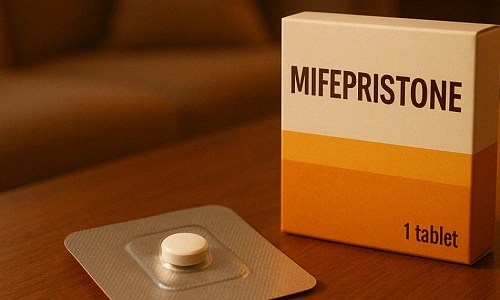
What Is Mifepristone?
Mifepristone is a medication used with misoprostol to end early pregnancies. The FDA approves it for medical abortions up to 10 weeks of gestation. Although federally approved, states like Texas regulate access and usage. Texas has chosen to restrict how and when it can be used, not because the drug is unsafe, but as a form of abortion regulation.
Where Mifepristone Is Legal in Texas
Doctors may use mifepristone in Texas only under strict emergency exceptions, including:
- Miscarriage management, where fetal cardiac activity is absent
- Treatment of life-threatening pregnancy complications, such as hemorrhage, sepsis, severe preeclampsia, or organ-threatening conditions
- When delaying treatment significantly increases risk to life or a major bodily function
Texas’s Life of the Mother Act (SB 31), effective June 20, 2025, clarifies that doctors do not need to wait until death is imminent. The law states that “life-threatening” means a condition capable of causing death, not one that is currently killing the patient. It allows doctors to use “reasonable medical judgment” to intervene earlier.
What Is Not Allowed
Texas law does not allow mifepristone for elective abortion, even in cases of severe fetal anomaly where the fetus will not survive outside the womb.
- If a fetus has a heartbeat, fetal anomaly alone is not grounds for medicated abortion.
- This rule was reaffirmed in Zurawski v. Texas, and SB 31 did not change it.
The Real Target of 2025 Law: Mail-Order Pills
Texas already banned local providers from prescribing abortion pills. So in 2025, lawmakers focused on shutting down the mail-order loophole.
House Bill 7 (Effective December 4, 2025)
HB 7 allows private citizens to sue:
- Out-of-state telehealth doctors
- Pharmacies/manufacturers
- Shipping companies delivering pills into Texas
The law does not create criminal penalties for patients. Instead, it aims to bankrupt providers, a strategy designed to scare off telehealth services like Aid Access.
The Shield-Law Battle Coming
Several states — like New York, California, and Massachusetts — have “shield laws” protecting telehealth doctors who prescribe abortion pills remotely. These laws ordinarily prevent other states from punishing them.
However, HB 7 tries to bypass shield laws using civil lawsuits, a tactic that Texas hopes federal courts will allow. A major interstate legal battle is expected over whether Texas can enforce financial judgments against doctors who have never stepped foot in Texas.
Practical Reality in Texas Hospitals
Even when mifepristone is legal to use, patients may experience delays. Hospitals fear:
- 99-year prison sentences for doctors under Texas abortion statutes
- Loss of medical license
- Private lawsuits filed by citizens
- Lawsuits under HB 7 if telehealth is suspected
Therefore, even emergency care allowed by law may not be offered until a patient becomes dangerously ill, despite SB 31 clarifying that doctors should not have to wait.
Final Note
Mifepristone is not banned federally, but it is functionally unavailable for elective abortion in Texas. It is legal only for narrow, hospital-based emergency uses, such as miscarriage care or life-threatening pregnancy complications.
- HB 7 (Dec 2025) targets the mail-order supply chain by enabling lawsuits against out-of-state prescribers and suppliers.
- A major legal clash is emerging between Texas lawsuits and blue-state shield laws.