Yes. Bowfishing is legal in Texas, but it is subject to specific rules concerning the type of fish, equipment, fishing license, location, and applicable local restrictions. Texas Parks and Wildlife Department (TPWD) permits the use of longbows, recurved bows, compound bows, and crossbows to take eligible nongame fish. However, bows generally cannot be used to take game fish or endangered and threatened fish species.
What Is Bowfishing?
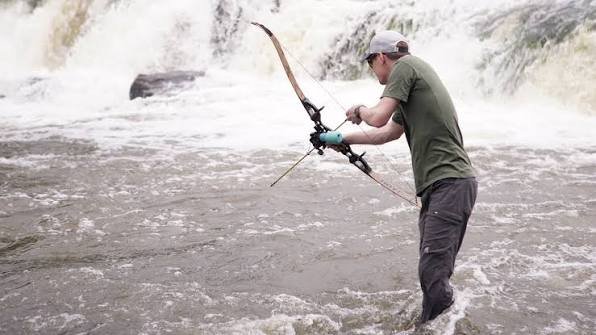
Bowfishing is a method of fishing in which an angler uses archery equipment to shoot fish, usually with a specialized arrow or bolt connected to a line. Unlike conventional fishing with a rod and hook, the equipment is designed to strike fish visible near the water’s surface.
Texas recognizes bowfishing as a lawful fishing method when used according to TPWD regulations. The state specifically identifies longbows, recurved bows, compound bows, and crossbows as lawful equipment for taking eligible nongame fish.
Do You Need a Fishing License for Bowfishing?
Generally, yes. A person bowfishing in Texas public waters must have the appropriate freshwater, saltwater, or all-water fishing license package, depending on where the fishing occurs. TPWD states that no additional bowfishing stamp or license is required.
There are exceptions to the ordinary license requirement. For example, people under 17 and Texas residents born before January 1, 1931, do not need a fishing license under the stated regulations.
A hunting license is required instead when taking turtles and frogs. Therefore, anglers should determine whether the animal they intend to take is regulated as fish or wildlife before beginning a bowfishing trip.
What Fish Can You Catch With a Bow?
Bowfishing is primarily permitted for nongame fish. TPWD lists species such as gar, buffalo, mullet, and sheepshead among fish that may be taken using a bow. A bow may generally be used for fish that are not classified as game fish and are not endangered or threatened species.
Game fish, such as bass, crappie, catfish, and several other regulated species, generally cannot be taken with archery equipment because Texas regulations specify that game fish may be taken only by pole and line unless an exception applies.
Before shooting a fish, an angler should therefore identify the species and verify its classification under the current TPWD regulations.
Are There Limits on Bowfishing?
Yes. Although many nongame fish have no statewide minimum length or daily bag limits in freshwater, important exceptions exist.
For example, Texas generally limits the harvest of alligator gar to one per day, although special regulations can apply to particular waters. TPWD also identifies special rules for common carp at Lady Bird Lake in Austin. Saltwater nongame fish can have additional species-specific limits.
Hunters should check the rules for the specific lake, river, or coastal area because local or water-body-specific regulations can modify the general statewide rules.
Where Is Bowfishing Legal in Texas?
Texas permits bowfishing in coastal waters and most rivers and large lakes. However, it is not allowed in community fishing lakes or in lakes located entirely within Texas state parks or elsewhere on state park property.
Additional restrictions may be imposed by cities, river authorities, counties, lake managers, or other government entities. TPWD specifically advises anglers to check with local authorities when bowfishing within city limits or at lakeside parks.
For example, the Lower Colorado River Authority has additional restrictions concerning bowfishing on certain Central Texas reservoirs. Other local restrictions may also exist.
Can You Use a Crossbow for Bowfishing?
Yes. Texas’s fishing regulations expressly recognize a crossbow as lawful archery equipment for bowfishing. The same basic species and location restrictions still apply.
The fact that a crossbow is lawful equipment does not authorize its use against game fish or protected species. The species being taken and the body of water where the activity occurs remain important.
Can You Release Fish After Bowfishing?
Not always. Texas regulations provide that fish that are edible or can be used as bait—including gar species, common carp, and buffalo—may not be released after being taken with lawful archery equipment.
This means bowfishers should be prepared to retain legally harvested fish when the regulations require it. Leaving edible fish or bait fish to die without an intent to retain them can violate Texas fishing regulations.
Does Private Property Change the Rules?
Private property can affect access and permission requirements, but it does not automatically eliminate applicable wildlife regulations. Public-water bowfishing remains subject to Texas fishing laws, while local property owners or managing authorities may impose additional restrictions where legally permitted.
Anyone fishing on private property should also make sure they have permission to access the property and determine whether the water is classified as public or private under applicable law.
Conclusion
Bowfishing is legal in Texas, but it is primarily authorized for eligible nongame fish and is subject to licensing, species, location, and equipment restrictions. Longbows, recurved bows, compound bows, and crossbows are recognized as lawful equipment for bowfishing.
Before bowfishing, anglers should verify the current TPWD regulations for the specific water body and species. Local authorities may impose additional restrictions, and protected or game fish cannot generally be taken with archery equipment. Following the applicable rules is essential because an otherwise lawful bowfishing activity can become unlawful if it involves a prohibited species, restricted location, or unauthorized method.