Yes, 25 % tint is legal for front side windows in Texas, because Texas law mandates a minimum of 25 % Visible Light Transmission (VLT) for the front side windows (driver and passenger front doors). That means the tint must allow at least 25 % of outside light to pass through the glass plus film. So if you have a film that leaves the visible light transmission at 25 % or more (i.e., letting in at least 1/4 of visible light), you are compliant with the law for those windows. You still must check additional rules—for the windshield, rear windows, mirrors, and local variations—but for the front side windows 25 % works under state law.
Because Texas deals in VLT (Visible Light Transmission) rather than “percent darkness,” a 25 % VLT means that 25 % of light passes through (and 75 % is blocked). Often people think of “25 % tint” as “very dark,” but in Texas legal terms 25 % VLT is the minimum allowed for those front side windows. Many tint shops and legal-tint guides confirm that anything under 25 % VLT (i.e., 20% or 5%) for the front side windows would be illegal and risk a ticket. What’s more, the law allows much darker on rear windows and rear windshield, provided your car has dual side mirrors.
Let’s walk through exactly how the law works, what “25%” means in practical terms, what you need to check, and what happens if you choose a tint darker than that.
What Texas Law Actually Requires
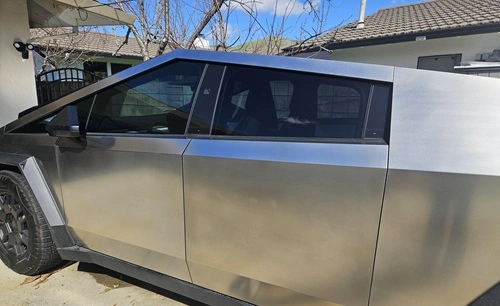
According to the Texas Department of Public Safety (DPS) window tint standards, the state mandates:
- For the front side windows, the film + glass combination must allow at least 25 % VLT.
- For the windshield, the tint may only be applied above the manufacturer’s AS-1 line or the top 5 inches, and the VLT for that strip must also be 25 % or more.
- For the rear side windows and rear window, Texas law allows “any darkness” (i.e., no specific lower limit on VLT) so long as the vehicle has dual side mirrors.
- Reflectivity is also regulated: front side windows must not be overly reflective (not more than 25% reflective).
So putting a film which results in front side windows that let exactly 25% of light in is entirely within state law. Films that allow more light (e.g., 30 %, 35 %, 50 % VLT) are also legal.
What “25 % Tint” Means in Practice
When a tint installer says “25% tint” they usually mean the film allows about 25% of light through. In actual practice:
- After applying the film to the glass, the measured VLT must be 25% or higher.
- If you apply a film that yields 20% VLT, you’re under the legal minimum for front side windows. That would be considered “too dark” in Texas.
- For rear windows, you could legally go much darker (5%, 10% VLT), because Texas has no lower limit there (assuming dual side mirrors).
- If you have 25% VLT on the front and a darker rear, you’re balanced legally and practically (privacy/heat reduction vs visibility/safety).
What Happens If You Do Tint Darker Than 25% on Front Side Windows?
If your front side windows are tinted so that they transmit less than 25% of visible light (e.g., 20% VLT or 5% VLT):
- You risk being stopped by law enforcement who can check with a VLT meter.
- You may receive a citation or a “fix-it” ticket requiring removal of the excessive tint.
- During vehicle inspections the tint may fail if front side window VLT is under 25%.
- Insurance or liability issues: in an accident, overly dark tint reducing driver visibility may affect outcomes.
Tips for Compliance and Practical Use
- Always keep your installation receipt and the tint certification sticker (if provided) in the vehicle.
- Ask the installer for the film’s VLT rating, and double-check that front side windows measure 25% VLT or higher.
- If you want very dark rear windows, you can do that legally, but just make sure your front side windows are compliant.
- If you are using the vehicle for ride-share, or transporting passengers, aggressive tint might be risky—even if legal on rear windows, local ordinances or clients may impose restrictions.
- If you have medical reasons (e.g., photosensitivity), Texas allows exceptions—but you’ll need documented proof and the regular rules still apply for front side windows unless an exemption applies.
Overall, Yes, tint that allows 25% VLT (i.e., front side windows letting in at least 25% of visible light) is legal in Texas. It meets the state’s minimum requirement for the front side windows. But if you apply a film that blocks more light (resulting in VLT under 25%) on those front windows, you would be out of compliance and subject to citation. Meanwhile, rear side windows have far more freedom. The key is to check VLT, keep documentation, and ensure you’re meeting the requirement for the front windows.