Getting married in Texas is both a meaningful personal event and a legal process governed by state law. Whether you plan a big celebration or a simple courthouse ceremony, understanding the legal requirements ensures that your marriage is recognized and enforceable. Texas keeps the marriage process straightforward, but there are specific rules on eligibility, documentation, waiting periods, officiants, and filing deadlines. This updated guide reflects the 2026 changes to Texas marriage law, including the new minimum age requirement.
Step 1: Meet Eligibility Requirements
Before applying for a marriage license, both individuals must meet state qualifications. In 2025, the most important update involves age.
Minimum Age Requirement
As of September 1, 2025, Texas law provides that:
- You must be 18 years of age or older to legally marry.
- There are no exceptions for parental consent, emancipation, guardianship approval, or judicial waivers.
- Any attempted marriage involving someone under 18 is void and without legal effect, even if paperwork was previously submitted.
Texas now treats marriage strictly as a legal adult contract, available only to individuals who are 18 or older.
Prohibited Relationships
Texas prohibits marriage between:
- Parents and children
- Siblings (whole or half)
- Grandparents and grandchildren
- Aunts/uncles with their nieces/nephews
- Current or former stepparents and stepchildren in some family circumstances
No Existing Marriage
You must be legally unmarried. If previously married, your divorce must be finalized before applying for a new marriage license.
Step 2: Apply for a Marriage License
Marriage licenses are issued by any Texas county clerk’s office. You do not have to apply in the same county where the ceremony will occur.
Documents Required
You will need:
- A valid government-issued photo ID (driver’s license, passport, state ID, or military ID)
- Full legal name and Social Security number (if applicable)
- A divorce decree if divorced within the last 30 days, unless waived
Both applicants must appear together to sign the application. If one person cannot appear due to active military duty or other justified reasons, an affidavit may substitute with specific requirements.
License Fee
The price ranges from $60 to $100, depending on the county. A substantial discount is available if you complete the Twogether in Texas premarital program.
Step 3: Complete the Waiting Period
Texas imposes a mandatory 72-hour waiting period after receiving the license, before you can legally marry. The waiting period is waived if:
- You complete the Twogether in Texas premarital course
- One party is active-duty military
- A judge signs a waiver under limited circumstances
Twogether in Texas Program
- Optional 8-hour premarital education
- Reduces the marriage license fee by up to $60
- Waives the 72-hour waiting period
- Offers relationship, conflict, and financial training
It is highly recommended, especially for couples seeking a discount and faster ceremony scheduling.
Step 4: Choose a Legal Officiant
A ceremony is only valid if performed by a legally recognized officiant. Texas accepts:
- Judges, magistrates, and justices of the peace
- Licensed or ordained ministers, priests, rabbis, or imams
- Clergy authorized through religious organizations (including online ordination)
Texas does not require officiants to register with the state.
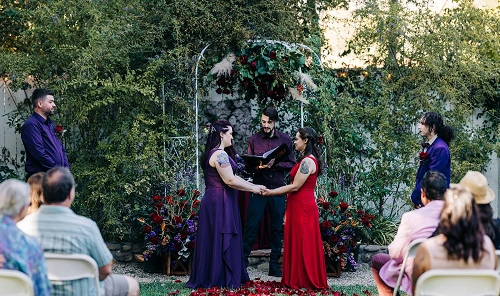
Step 5: Hold the Ceremony
Your ceremony can be religious or civil, formal or simple. Requirements are minimal:
- Both individuals must consent to marry
- The officiant must pronounce the marriage as valid under Texas law
While witnesses are customary, Texas does not require witnesses for a wedding to be valid.
Step 6: File the Marriage License
After the wedding, the officiant must sign the license and return it to the county clerk within 30 days. Once processed, you may request a certified marriage certificate, which serves as legal proof of marriage. You will need this for:
- Name changes on identification documents
- Financial accounts, insurance, and benefits
- Tax filing status updates
- Immigration applications
- Social Security records
Failure to return the signed license within 30 days may invalidate the marriage.
Special Notes
| Issue | Texas Rule |
| Common-law marriage | Legal; only for adults 18+ |
| Same-sex marriage | Fully recognized statewide |
| Name change | Optional; occurs through the marriage certificate |
| Immigration status | Does not prevent marriage if proper ID is provided |
Final Summary
To legally marry in Texas in 2026, you must:
- Be 18 or older with no exceptions
- Obtain a county marriage license
- Wait 72 hours unless waived
- Use a legally recognized officiant
- Hold a ceremony with consent
- File the license within 30 days
Following these steps ensures your marriage is valid and enforceable under Texas law.