Motorcyclists face risks on California roads that drivers of passenger vehicles simply don’t, and the causes behind most motorcycle accidents follow recognizable patterns. Understanding what actually causes these crashes, rather than relying on general assumptions about rider behavior, matters both for prevention and for understanding how fault gets determined after a collision.
This guide covers:
- Why left-turn collisions are the single most common cause of fatal motorcycle crashes
- What California’s lane splitting law actually permits, and what it doesn’t
- How speed, impairment, and road hazards factor into motorcycle accidents
- Why fault in these cases isn’t always straightforward
At a Glance
| Cause | Why It’s Dangerous |
| Left-turn collisions | Drivers turning left often fail to see an oncoming motorcycle going straight or passing |
| Improper lane splitting | Legal in California, but unsafe at high speed differentials or in poor conditions |
| Speeding | Reduces reaction time and increases the severity of injuries in a crash |
| Impaired driving | Affects judgment and reaction time for both motorcyclists and other drivers |
| Poor road conditions | Potholes, debris, and uneven pavement affect motorcycles more than cars |
| Driver inattention | Motorcycles are smaller and easier for distracted drivers to miss |
Left-Turn Collisions Are the Single Biggest Cause
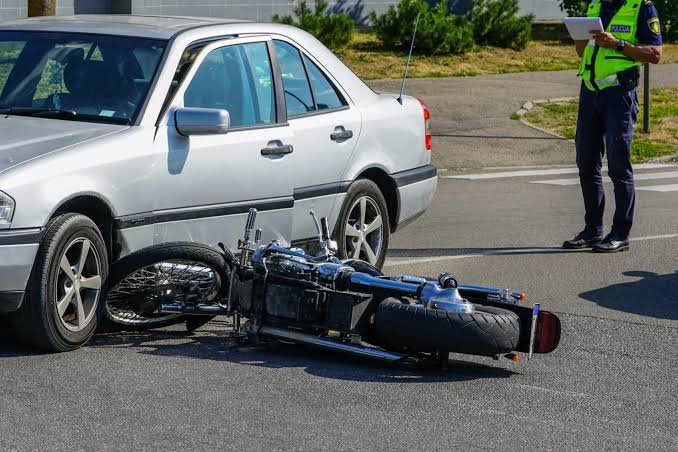
Among fatal motorcycle crashes involving two vehicles, left-turn collisions stand out as the most common pattern. In roughly 41 percent of these crashes, the other vehicle was turning left while the motorcycle was going straight, passing, or overtaking. This typically happens at intersections, where a driver misjudges a motorcycle’s speed and distance, or simply fails to see it at all before turning across its path.
This pattern reflects a real visibility problem rather than pure driver carelessness in every case. A motorcycle’s narrow profile makes it harder to spot than a car, particularly against a busy background or in a driver’s peripheral vision, and a driver’s brain is often primed to look for the shape and size of another car rather than a motorcycle. This doesn’t excuse a driver who fails to yield, but it does explain why this specific type of collision recurs so consistently across the state’s crash data rather than being an unusual or unpredictable event.
These collisions tend to happen at a specific moment: a driver waiting to turn left sees a gap in traffic, glances at a motorcycle further down the road, and misjudges either its speed or its distance before committing to the turn. Motorcycles can appear to be traveling slower than they actually are because there is less visual reference for a driver’s brain to calculate speed against, unlike a car where size and shape provide more cues. This misjudgment, more than outright failure to look at all, accounts for a meaningful share of these intersection collisions, which is part of why proving fault in a left-turn case often benefits from a careful reconstruction of exactly what each driver could see and when.
Lane Splitting Is Legal, But Frequently Misunderstood
California is the only state that explicitly permits lane splitting, defined under Vehicle Code section 21658.1 as riding a motorcycle between rows of stopped or moving vehicles in the same lane. This statute, added by Assembly Bill 51 and effective since January 1, 2017, formally authorized the California Highway Patrol to publish safety guidelines for the practice, resolving what had previously been a legal gray area.
Being legal is not the same as being safe under every condition, and CHP’s guidance reflects that distinction. The agency has suggested that a motorcyclist should not travel more than about 10 miles per hour faster than surrounding traffic when splitting lanes, and that lane splitting becomes considerably riskier once overall traffic speed exceeds around 30 miles per hour. Splitting at a high speed differential, in poor weather, or near freeway exits and on-ramps where vehicles are more likely to make sudden lane changes significantly increases the danger involved. A motorcyclist splitting lanes responsibly at a low speed differential in slow traffic is in a meaningfully different risk category than one weaving through fast-moving traffic at a large speed gap, even though both are technically engaging in the same legal activity.
It’s also worth noting that being legal does not exempt a motorcyclist from every other traffic law while splitting lanes. Speeding is still speeding whether a rider is in a single lane or moving between two, and reckless driving remains reckless driving regardless of the lane-splitting context. This distinction matters after a crash, since an insurer may attempt to argue that lane splitting itself was the cause of an accident when the actual cause was a specific unsafe maneuver, such as an abrupt lane change by a passenger vehicle that failed to check its mirrors before merging into the space a motorcyclist was occupying.
Speed, Impairment, and Road Conditions Compound the Risk
Beyond left-turn collisions and lane splitting, several more familiar factors continue to drive motorcycle accident rates across California. Speeding reduces the time a rider or another driver has to react to a developing hazard, and it increases the force involved in any resulting collision, which matters more for a motorcyclist with no surrounding vehicle structure to absorb the impact. Impaired driving, whether by the motorcyclist or another driver, remains a significant factor as well, since alcohol and drugs slow reaction time and impair the judgment needed to navigate traffic safely.
Road conditions affect motorcycles disproportionately compared to passenger vehicles. A pothole, a patch of gravel, uneven pavement, or debris in the road that a car’s four tires and heavier frame might absorb without incident can be enough to destabilize a motorcycle entirely. Weather adds another layer of risk, since a motorcycle’s two-wheel design already offers less stability than a car, and wet or slick roads reduce traction further. When a crash results from a hazard the responsible party knew about or should have addressed, whether that’s a negligent driver, a government entity responsible for road maintenance, or another party, working with a personal injury attorney in Bellflower or another California-based firm can help identify exactly who bears responsibility.
Determining fault after a motorcycle accident often involves more nuance than a typical car accident case, partly because of the persistent bias some insurers and juries hold against riders, assuming a motorcyclist was speeding or splitting lanes unsafely without actual evidence supporting that assumption. A firm such as ER Lawyers generally treats overcoming that bias as a central part of building a motorcycle accident case, since a fair evaluation of fault depends on the actual facts of the crash rather than assumptions about how motorcyclists typically ride.
Summary
Left-turn collisions account for a disproportionate share of fatal motorcycle crashes in California, largely due to visibility issues at intersections. Lane splitting, while legal under Vehicle Code section 21658.1, carries real risk when practiced at high speed differentials or in poor conditions. Speeding, impairment, and road hazards continue to compound the danger motorcyclists already face on the road.
Key Takeaways
- Left-turn collisions, where another vehicle turns across a motorcycle’s path, account for roughly 41 percent of fatal two-vehicle motorcycle crashes.
- Lane splitting is legal in California under Vehicle Code section 21658.1, but CHP guidance suggests limiting the speed differential to around 10 mph and avoiding it above 30 mph overall traffic speed.
- Speeding, impaired driving, and road hazards like potholes or debris affect motorcyclists more severely than passenger vehicle occupants, given the lack of surrounding structure.
Recognizing these patterns doesn’t just help with prevention. It also helps explain why fault in a motorcycle accident case often requires more careful investigation than assuming the rider was inherently at greater risk of causing the crash.
Frequently Asked Questions
What is the most common cause of motorcycle accidents in California?
Left-turn collisions, where another vehicle turns left across a motorcycle’s path, account for roughly 41 percent of fatal two-vehicle motorcycle crashes, making it the single most common pattern.
Is lane splitting legal in California?
Yes. California Vehicle Code section 21658.1, added by Assembly Bill 51 and effective since January 1, 2017, formally permits lane splitting and authorizes the California Highway Patrol to publish related safety guidelines.
What does CHP recommend for safe lane splitting?
CHP guidance suggests riders avoid exceeding about 10 miles per hour faster than surrounding traffic when splitting lanes, and avoid splitting altogether once overall traffic speed exceeds roughly 30 miles per hour.
Why are motorcyclists harder for other drivers to see?
A motorcycle’s narrow profile is harder to spot than a car, especially against a busy background or in a driver’s peripheral vision, which contributes significantly to left-turn and lane-change collisions.
Do road conditions affect motorcycles more than cars?
Yes. Potholes, debris, gravel, and uneven pavement that a car’s tires and frame might absorb without issue can be enough to destabilize a two-wheeled motorcycle entirely.
Are motorcyclists automatically assumed to be at fault in a crash?
No, though bias against riders does exist among some insurers and juries, who may assume speeding or unsafe lane splitting without evidence. Fault should be determined by the actual facts of the crash, not general assumptions about motorcyclist behavior.