A reporter’s question at the United Nations turned into a confrontation over who is permitted to cover the American president. In September 2026, Donald Trump’s public exchanges with CNN correspondent Kaitlan Collins coincided with a broader White House decision to exclude CNN, MS NOW and Politico from its press facilities. The disagreement quickly moved beyond an argument with one journalist: the three news organizations went to federal court, alleging unconstitutional retaliation. A judge restored their credentials and, on October 13, granted a preliminary injunction as the lawsuit continued. The dispute is a concrete fight over press access, not a personal lawsuit brought by Collins alone.
How the Kaitlan Collins–Trump Dispute Started
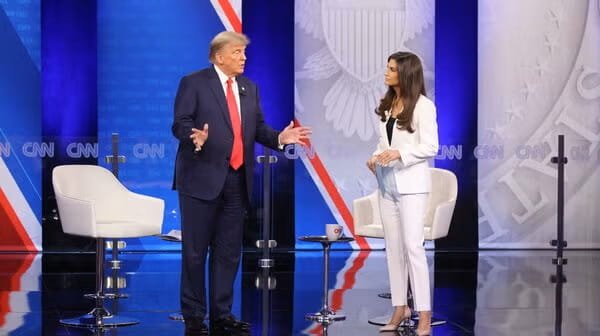
The president and Collins had already exchanged sharp words at earlier public events, particularly when she questioned him about controversial subjects. The immediate September controversy began when Trump announced on September 18 that CNN, MS NOW and Politico would be barred from the White House, describing their coverage as untrustworthy. Reporters with credentials known as hard passes then faced denied entry. Those credentials normally allow ongoing access to the White House complex and provide the practical foundation for daily reporting, interviews and participation in press operations.
The UN Exchange That Drew National Attention
On September 22, Collins questioned Trump while he was at the United Nations in New York, including about public attitudes toward the war in Iran. Trump objected to CNN’s presence and questioned why its journalist was covering him. Collins responded that the United Nations, not the White House, had credentialed her for that event. The distinction mattered: the White House can manage its own security and access systems, but it does not automatically control a reporter’s accreditation at an international venue. Video of the encounter circulated widely, making Collins a recognizable face of a broader access dispute.
CNN and Two Other Outlets File Suit
On September 21, CNN, MS NOW, Politico and individual journalists filed a federal lawsuit in Washington, D.C., against Trump and administration officials. The case, Cable News Network, Inc. v. Trump, challenged the ban under the First and Fifth Amendments. The news organizations argued that their access was revoked because the administration disliked their coverage and that viewpoint-based punishment for reporting violates press freedom and due process. The administration contested those claims and argued that the president and White House officials retain substantial authority over who gains access to sensitive premises.
Temporary Court Order Restores Credentials
U.S. District Judge Timothy J. Kelly issued a temporary restraining order on September 24 requiring officials, other than the president personally, to restore the affected hard passes. The court viewed the legal challenge as sufficiently serious and urgent to preserve access while the case was heard. Disagreements remained over whether the order covered only physical White House entry or also the limited television press-pool opportunities and presidential travel assignments journalists had previously performed. Lawyers for the news outlets said partial reinstatement failed to restore their original ability to report.
The October 13 Ruling and Its Legal Reasoning
After further filings and an October 8 hearing, Judge Kelly granted the plaintiffs’ motion for a preliminary injunction on October 13. His opinion found that the plaintiffs were likely to succeed on the argument that the White House had excluded them because of disapproval of their viewpoints. A preliminary injunction is an interim remedy that preserves rights while a case proceeds, not a final decision awarding damages or closing the lawsuit. The court ordered the protection of press credentials to continue, while the administration pursued an appeal. Trump’s criticism of the networks remains protected political expression; using government access decisions to punish viewpoints is the separate constitutional issue.
Press Credentials, Security and the First Amendment
The White House has real security responsibilities, and no journalist can demand unrestricted access to every presidential event. But courts distinguish neutral access rules from decisions that penalize unfavorable coverage. Hard passes, television pool rotations and travel assignments are different forms of access with different operational purposes. That distinction helps explain why the press organizations contested not only the cancellation of credentials but also the consequences for shared television coverage. The suit asks where executive discretion ends and unconstitutional viewpoint discrimination begins.
Latest Status of the CNN–Trump Dispute
As of October 23, 2026, the October 13 preliminary injunction remains the key published district-court ruling, and the case has not been resolved by a final trial judgment. The administration has challenged the order on appeal, according to reporting after the ruling. Collins’s UN exchange is a vivid part of the story, but the legally important questions involve the treatment of multiple organizations and whether their White House access can be withdrawn for editorial reasons.
FAQ
Q. Did Kaitlan Collins personally sue Donald Trump?
The September 2026 lawsuit was brought by news organizations and named journalists; it was a wider press-access case, not simply a personal defamation claim by Collins.
Q. Did the court rule that reporters can enter any White House event?
No. The injunction addressed the outlets’ exclusion and press credentials. Security rules and specific event arrangements remain distinct issues.
Q. Was the October court order a final verdict?
No. A preliminary injunction protects the parties while litigation continues and can be reviewed on appeal.