Yes, Savannah cats can be legal in Texas, but the permission is not statewide or automatic. Texas does not give one single law that applies to the entire state. Instead, every county and even some cities decide their own rules about owning hybrid cats. So, a Savannah cat might be perfectly legal in one part of Texas, while in the next town it could be restricted or banned.
Because these cats are part African serval and part domestic cat, they are not treated like normal pets. Their wild nature makes Texas place them under more careful and local rules. That is why anyone who wants to own a Savannah cat must check their local laws first before bringing one home.
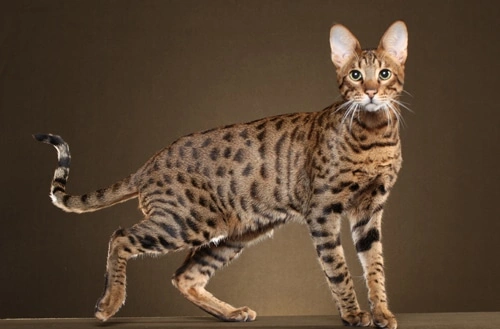
What Makes Savannah Cats Complicated to Own in Texas?
Savannah cats aren’t your typical house pets. They are hybrids created by breeding a domestic cat with an African serval. Because of this wild ancestry, Texas doesn’t treat them the same as regular pets. The state classifies servals under “dangerous wild animals,” but hybrid rules are left to each county.
This means the government in Austin doesn’t give you a single easy answer. Instead, you have to check the local government where you live. One county may allow all Savannah cats, another may allow only certain generations like F4 or lower, and a third might ban them outright.
Which Counties in Texas Allow Savannah Cats?
Some counties in Texas have no restrictions, while others require permits. A few examples of counties where Savannah cats are generally allowed with fewer restrictions include:
- Harris County (Houston Area)
- Lubbock County
- Aransas County
- Bell County
- Ector County
- Guadalupe County
- Mason County
- Ward County
- Kaufman County
- Coryell County
Even in these counties, it’s wise to double-check city laws. A county may allow them but a city within it might not.
Where Savannah Cats May Be Banned in Texas
Some counties and cities view Savannah cats as unpredictable due to their wild traits. In such places, hybrid cats with high serval content may be banned to protect wildlife, pets, or neighbors. The restrictions are usually stricter for F1 to F3 generations, which are closest to the serval.
If you see a low price online and think the seller will handle legal matters, think again. If the cat isn’t legal where you live, you could face fines and even lose the animal to authorities.
Why the “Generation” of the Cat Matters (F1, F2, F3, F4)
A Savannah cat’s legality often depends on how close it is to its wild ancestor. These are called generations:
| Generation | How Wild? | Often Legal Status |
| F1 | Highest serval percentage | Most restricted |
| F2 | Slightly less wild | Still heavily regulated |
| F3 | Lower serval content | Sometimes restricted |
| F4 & F5 | Mostly domestic | More commonly permitted |
Many counties allow F4 and below without special permits, while F1 to F3 may require permits, larger enclosures, or may be banned.
What Permits or Rules Might Owners Face?
If your county requires a permit, you may be asked to provide:
- Secure housing and fencing
- Vaccination and health records
- Liability insurance
- A clean record with no animal violations
Some areas may even inspect your home. Savannah cats jump high and move quickly, so secure spaces are important.
Penalties for Illegal Ownership
Owning a Savannah cat illegally can lead to:
- Seizure of the animal
- Heavy fines
- Being banned from ownership in the future
- Possible legal action for endangerment
Even if a breeder says it’s “legal,” the responsibility is on you, not on them.
Final Note
Yes, Savannah cats are legal in Texas, but only if your county or city allows them, and sometimes only for certain generations. Before getting one, it’s important to:
- Check your county rules
- Check your city laws
- Confirm which generation (F1–F5) is allowed