Texas does not prohibit radar detectors in standard passenger vehicles. Drivers are allowed to mount and use them to detect police radar signals while on the road. But the rules aren’t the same for every type of vehicle or every situation. There are limits, federal regulations for commercial trucks, and a few things drivers should know before relying on one.
What Texas Law Allows Right Now
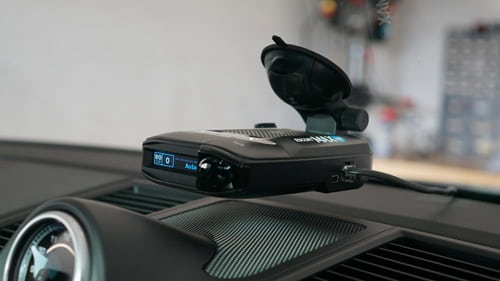
Texas is one of the states where radar detectors are perfectly legal for everyday drivers. You can install one on your dashboard, windshield, or visor, and the state doesn’t treat it as a forbidden device. There’s no state wide ban and no special permit required. Police cannot ticket you simply for having a radar detector in your car.
Texas also has no law against radar detectors for motorcycles or sports cars. As long as the vehicle is a non-commercial passenger car, SUV, or similar, you’re allowed to use one.
But that doesn’t mean everything radar-related is legal. The type of device matters, and the type of vehicle matters even more.
Important Distinction: Detectors vs. Jammers
- Texas law makes a clear difference between radar detectors and radar jammers.
- Radar detectors: Legal for private vehicles.
- Radar jammers: Illegal under federal law.
- Laser jammers: Illegal in Texas under state law.
A radar detector is passive — it receives signals only. A jammer, on the other hand, attempts to interfere with law-enforcement equipment. Texas does not allow any device that interferes with police radar or laser systems. If you’re caught with a jammer, you can face hefty fines and federal penalties.
So the key point is this: detectors are fine, jammers are not.
Commercial Vehicles: Different Rules Apply
- This is where the laws tighten significantly.
- Under federal law (49 CFR § 392.71), radar detectors are illegal in any commercial motor vehicle over 10,000 pounds. That includes:
- 18-wheelers
- Semi-trucks
- Heavy work trucks
- Commercial buses
- DOT-regulated vehicles
- Even if a commercial driver is operating entirely inside Texas, the federal ban still applies. Law enforcement in Texas actively enforces the rule, and commercial drivers caught using a radar detector can face:
- Fines
- CDL consequences
- Company penalties
- Potential inspection violations
For private vehicle drivers, radar detectors are fine. For commercial operators, they’re a risk.
Windshield-Mount Rules in Texas
Unlike some states, Texas does not ban windshield-mounted radar detectors. A few states treat devices on the windshield as an “obstruction,” but Texas law focuses on major visual obstructions — not small devices.
As long as your radar detector doesn’t block your view in a dangerous way, Texas won’t ticket you for mounting it on the glass.
Still, it’s smart to place it high and out of the way, where it doesn’t interfere with your line of sight.
Does Having a Radar Detector Attract Police Attention?
Legally, having a radar detector doesn’t give police a reason to pull you over. But practically, officers know that people with detectors tend to push the speed limit. If you’re using one, it’s wise to drive responsibly. A radar detector won’t save you from instant-on radar, pacing, aircraft enforcement, or laser speed guns.
In short: it’s a tool, not a shield.
Why Texas Allows Radar Detectors
- There are a few reasons Texas has kept them legal for regular drivers:
- Texas emphasizes enforcement against dangerous speeders rather than banning equipment.
- The state typically leans toward allowing driver autonomy.
- Radar detectors are seen as passive devices that don’t interfere with law enforcement tools.
- Texas has shown no sign of moving toward a state wide ban in the near future.
What Texas Drivers Should Keep in Mind
Even though radar detectors are legal for private cars, here are a few things you should remember:
- A detector won’t stop a ticket if you’re speeding recklessly.
- Laser enforcement is becoming more common, and most detectors offer only limited protection from laser guns.
- Police can still see a radar detector if they use radar-detector-detector technology (RDD), though these are rare in Texas.
- Driving behavior matters more than the device you use — most citations come from pacing or visual speed estimation.
Radar detectors give early warning, not immunity.
Final Take
In Texas, radar detectors are legal for everyday drivers in non-commercial vehicles. You can buy one, install it, and use it without violating state law. But commercial vehicle drivers are prohibited from using them under federal rules, and both radar jammers and laser jammers remain illegal for everyone. If you choose to use a radar detector, treat it as an extra layer of awareness not a license to speed.