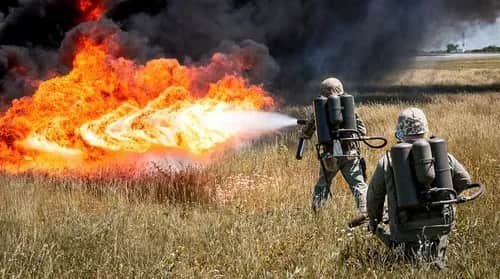
Yes, flamethrowers are legal to own in Texas. There is no state law banning everyday civilians from purchasing, keeping, or transporting a handheld flamethrower. Federal law also does not classify them as firearms or destructive weapons, which means you don’t need a license or special paperwork before buying one. However, how and where you use a flamethrower can still bring legal consequences, especially if your actions violate fire safety rules, open-burning laws, or create danger to people or property.
What Federal Law Says (or Doesn’t Say)
At the federal level, the Bureau of Alcohol, Tobacco, Firearms and Explosives (ATF) and other agencies do not classify flamethrowers as firearms or “destructive devices” under the National Firearms Act (NFA). That means there is no federal license, permit, tax stamp or registration required specifically for a civilian flamethrower in the U.S.
Because they are not regulated at the federal level in this way, ownership is primarily subject to state and local laws.
What Texas Law & Local Practice Say
In Texas, news reports and state-level reviews indicate that there is no statewide law banning the ownership or sale of portable flamethrowers. For example, a news article noted: “There are no state or Austin city laws on the books in Texas regulating who can own a flamethrower or who can sell them.”
Another resource lists Texas as a state where flamethrower ownership is legal without special licensing.
Important Caveats: Use, Local Ordinances, and Safety
Just because ownership is legal doesn’t mean you can use one without any restrictions. Here are important points to keep in mind:
- Local ordinances matter: While state law may not prohibit possession, cities or counties may have fire codes, burning ordinances, or other rules that restrict open flames, devices that emit flame, or “fire-throwing” tools. You’ll want to check your city’s municipal code or county regulations before you purchase or use a flamethrower.
- Intended use and location: Using a flamethrower in a residential neighborhood, near flammable materials, or in violation of local fire laws could lead to citations, civil liability, or even criminal charges (for reckless burning, arson, etc.).
- Fuel/storage and safety regulations: The device itself may not be regulated, but the fuel, pressurized tanks, and safe storage of combustible materials might fall under other regulations (state fire marshal codes, hazardous materials rules).
- Transportation/shipping issues: Some carriers or states impose restrictions on shipping flame-throwing devices or fuel containers. Even though Texas allows ownership, shipping one to your home may have complications if handled across state lines.
- Misuse consequences: If you use a flamethrower to commit a crime, endanger others, or create a public hazard, the type of device won’t protect you; you’ll still face legal consequences.
Why They Are Legal Here (While Banned Elsewhere)
A few reasons explain why Texas allows them:
- Lack of firearm classification: Since the federal government doesn’t treat flamethrowers as firearms or major weapons, states aren’t automatically required to regulate them the way they regulate guns.
- Historical use for agricultural/industrial tasks: Some flamethrower-style tools are used in land management, brush clearing, controlled burns, etc., which may make states more comfortable allowing them with fewer restrictions.
- State law silence: Texas hasn’t enacted a statute explicitly banning flamethrowers, which means they default to no specific prohibition unless local laws say otherwise.
Final Answer: Are Flamethrowers Legal in Texas in 2025?
Yes, in Texas you can legally own a flamethrower under state law. There is no statewide ban or licensing requirement specific to civilian ownership of flamethrowers.
That said, given the risks and the possibility of local regulation, you should still:
- Check your city/county fire and open-burning codes before use.
- Use the device safely and away from flammables or public hazards.
- Ensure any fuel storage, transport, and usage are compliant with general safety and hazardous-materials rules.