No, DUI checkpoints are not legal in Texas. Texas is one of the few states that completely rejects the idea of random sobriety roadblocks. Even though you might see news stories or social posts about police “setting up checkpoints,” those usually refer to increased patrols or traffic-safety operations not true DUI checkpoints the way other states do them. In Texas, officers cannot stop every car coming through a roadblock and check drivers for alcohol without any reason. That kind of random stop violates the Texas Constitution, and state courts have been clear about that for years.
Many people get confused because DUI checkpoints are common in other states, especially during holidays like New Year’s Eve, the Fourth of July, or big football weekends. In those states, police can legally stop drivers without suspicion, speak to them briefly, and check for signs of impairment. Texas takes a different approach. Here, a police officer must have specific, reasonable suspicion to pull you over such as swerving, speeding, drifting across lanes, or committing a traffic violation. Without that, they can’t legally stop your car just to see if you’re intoxicated.
So even though DUI enforcement is taken very seriously in Texas, the state still protects drivers from random checkpoints. Law enforcement uses other methods, like “no-refusal weekends,” saturation patrols, and regular traffic stops. But the classic, lined-up checkpoint you see in movies or in other states? Those are not allowed under Texas law.
What the law and courts say
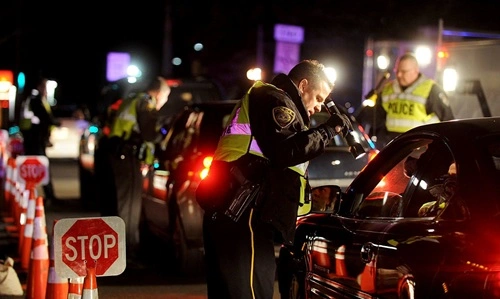
- In Texas, law enforcement must have a valid reason to stop a vehicle. A stop based solely on a vehicle passing through a roadblock checkpoint designed to catch drunk drivers has been ruled unconstitutional under Texas law.
- Some law-firm guides state explicitly: “Police checkpoints set up specifically to catch drunk drivers are illegal in Texas.”
- Sources reiterate that Texas does not use DWI checkpoints because state courts have found them to violate drivers’ rights under the Texas Constitution.
How enforcement still happens
Even though formal checkpoints are not permitted, Texas law enforcement uses other strategies:
- They may set up “no-refusal” weekends, where they increase patrols and get warrants for blood tests if needed.
- They can use targeted traffic stops based on suspicious driving behavior (swerving, weaving, speeding, etc.).
- They can conduct license/registration enforcement “checkpoints” (to check for driver’s license status etc.), but those are not meant to be a front for intoxication checks.
What this means for you as a driver in Texas
- If you encounter what looks like a DUI checkpoint—lots of cars being directed into a roadblock with alcohol-screening as the primary purpose—you can challenge its legality. Stops from such operations are often considered unconstitutional in Texas.
- If you’re pulled over without probable cause or reasonable suspicion, evidence gathered might be suppressed (depending on the facts of the case).
- Always remember: even though checkpoints are not legal, you can be stopped for suspected impaired driving if there’s a lawful basis (such as a traffic violation or erratic driving).
Key things to keep in mind
- Random stops of all vehicles with the primary goal of sobriety checks are not allowed.
- Lawful traffic stop: Officer sees a violation or has suspicion—then checks for DUI.
- Your rights: You’re protected from unreasonable searches and seizures under both the U.S. and Texas Constitutions.
- Local enforcement tactics may vary. Some agencies will set up visible patrols or increase DUI patrols during holidays, but they must have legal grounds for each stop.
Final word
No, sobriety/DUI checkpoints as typically conceived are illegal in Texas. The state does not allow random, vehicle-by-vehicle stops solely for impairment checks. But that doesn’t mean law enforcement can’t catch impaired drivers—they just must rely on lawful traffic stops with a valid reason.