No, duels are not legal in Texas. You cannot legally challenge someone to fight with deadly weapons, even if both people agree. Texas law does not recognize consent as a defense when the conduct involves serious injury, deadly weapons, or risk of death. That means you can’t go out to a ranch, shake hands, and have a “gentleman’s duel” with pistols or knives. If you do, you are potentially committing aggravated assault, attempted murder, or even murder.
Texas may be known for a tough, old-school frontier culture, but today’s law treats dueling as criminal violence. Mutual agreements do not take away the state’s power to prosecute dangerous conduct. Understanding why requires looking both at modern legal standards and at Texas’s violent dueling history.
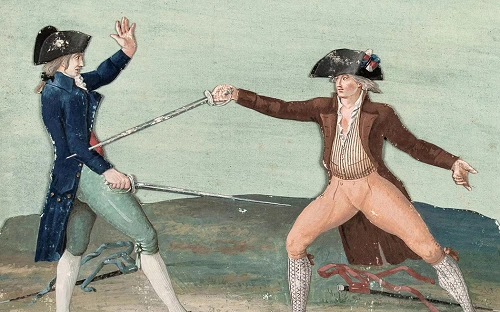
Dueling in Texas: A Brief History
In the 1800s, dueling was common across Texas and the American South. Disputes involving honor, business conflicts, and political disagreements sometimes ended with pistols at dawn. Many local officials participated in these “affairs of honor,” including judges and politicians.
Yet, even back then, as Texas matured, duels became a public nuisance and source of needless violence. By the late 1800s, the state began criminalizing dueling, recognizing that private violence destabilized society. The idea that two people could settle disputes with weapons slowly faded as courts began enforcing the rule of law, not personal honor.
Today, dueling is a historical curiosity. But the cultural memory survives in storytelling, Western films, and gun culture. Modern Texas law leaves no doubt: legal dueling is gone, permanently.
Why Consent Doesn’t Make Duels Legal
People sometimes argue that because both duelists “agree,” the act should be legal. But the Texas Penal Code rejects that reasoning. Under Texas Penal Code §22.06, consent is only a defense for minor physical harm, not serious violence or deadly weapons. You can legally agree to rough play in sports, competitions, or mild fistfighting, but you cannot agree to being shot or stabbed.
Consent is NOT a Defense When:
- A deadly weapon is involved (like a gun or knife)
- Serious bodily injury is likely
- The act risks death
- It violates public safety
So even if two adults enthusiastically shake hands and sign a contract agreeing to a duel, the state can still prosecute them both. The contract itself would be void because no one can legally agree to serious harm.
What About Mutual Combat?
Texas allows limited mutual combat, but it is nothing like dueling.
Mutual Combat is Legal ONLY if:
- There is no deadly weapon
- Injuries are not serious
- Both parties consent
- The fight does not disturb public order or place others at risk
This applies to small fistfights, like two adults pushing and throwing hands outside a bar. It does not apply to duels, bat fights, knife fights, or shooting contests.
If a fight escalates to serious injury or weapons, mutual combat no longer protects the participants. At that point, it becomes felony assault or worse.
Are Private Gun Duels on Private Property Legal?
No. Many people assume that if they duel on private land, the government won’t care. But Texas law applies everywhere — ranches, public parks, homes, or backroads.
A Private Gun Duel Can Lead To:
- Aggravated Assault with a Deadly Weapon
- Deadly Conduct
- Attempted Murder
- Murder (if someone dies)
Even if both duelists survive, police can still arrest and charge them. If bystanders are endangered, additional charges apply.
What About Fake or Staged Duels?
Reenactments and staged performances are legal if they use:
- replicas
- prop guns
- non-functional weapons
- controlled blanks
These are considered theatrical performances, not violent acts. Historical reenactment groups, renaissance fairs, and Western stage shows operate legally because they do not cause real harm.
What If Police Learn About a Duel?
Officers can intervene before shots are fired. Planning a lethal duel can be treated as:
- Conspiracy to Commit Assault
- Attempted Deadly Conduct
- Terroristic Threat (if threats were made publicly)
Someone could be arrested even if no one is hurt.
Final Note
Texas law does not allow deadly fights, even with consent. Mutual combat only protects minor fistfights, not knife or gun battles. A duel with deadly weapons is criminal conduct and can result in prison time for assault, attempted murder, or homicide.