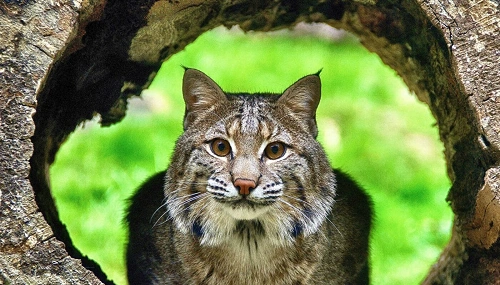
Yes, it is legal to own a bobcat in Texas, but only with a government permit. Texas law classifies bobcats as “Dangerous Wild Animals” under the Texas Health & Safety Code § 822.101(4). Because of this classification, owning, keeping, breeding, selling, or having custody of a bobcat requires a Certificate of Registration (COR) issued by the local animal control authority.
This means that you cannot legally just buy a bobcat and keep it as a pet without registration. To legally own one, you must meet insurance, enclosure, documentation, and inspection requirements enforced at both the state and local level.
Why Bobcats Require a Permit
Many Texans assume bobcats are treated like raccoons, foxes, or other small wildlife, but Texas law groups them with big cats. Under § 822.101(4), bobcats are listed along with lions, tigers, cougars, ocelots, leopards, cheetahs, and bears as animals that require stronger regulation for public safety.
Result: A Certificate of Registration (COR) is legally required to possess a bobcat in Texas.
What You Need to Own a Bobcat Legally
To obtain a COR, the owner must:
- Apply with the county/municipal animal control authority
- Provide proof of ownership or legal acquisition
- Maintain a secure enclosure meeting safety standards
- Carry at least $100,000 liability insurance per Texas Health & Safety Code § 822.107
- Allow inspections by the local animal authority
- Prove the bobcat was not illegally trapped from the wild
Failure to meet these rules can lead to:
- Seizure of the animal
- Civil penalties
- Criminal charges
- Liability for injuries or property damage
Local Laws Still Matter — and Can Ban Ownership Completely
Even if you legally obtain a COR, your city or county can still prohibit wild animal ownership entirely.
| City | Bobcats Allowed? |
| Houston | ❌ Banned |
| Dallas | ❌ Banned |
| San Antonio | ❌ Banned |
| Austin | ✔ Allowed with COR |
| Rural Counties | ✔ Allowed with COR |
If your city bans bobcats, no permit can override the ban.
Illegal Ways to Get a Bobcat
Even if you plan to register it, you cannot legally acquire a bobcat by:
- Trapping a wild bobcat on public land
- Buying one transported illegally without paperwork
- Importing across state lines without USDA compliance
Possession without proper documentation can lead to State and Federal violations.
Enclosure & Care Requirements
Texas does not specify an enclosure size for bobcats like it does for lions or tigers, but the enclosure must:
- Prevent escape
- Protect the public
- Provide humane conditions (Texas Penal Code § 42.092)
- Withstand claws, jumping, digging, and chewing
Most counties follow enclosure guidelines similar to USDA standards. Inadequate housing can be prosecuted as animal neglect or endangerment.
Insurance & Financial Responsibility
Texas requires bobcat owners to maintain minimum $100,000 liability insurance covering injury, damage, and escape liability. Some owners choose to carry $300,000–$1,000,000 due to potential lawsuits.
If the bobcat injures a person or damages property, the owner is personally liable, and the animal may be permanently confiscated.
Are Bobcats Good Pets? (Practical Reality)
Legality does not mean practicality. Bobcats:
- Are territorial and unpredictable
- Can injure humans and pets
- Spray strongly and dig constantly
- Need raw diet and constant enrichment
- Are expensive to secure and insure
Veterinarian options are limited and costly.
Final Note
Bobcat ownership is legal in Texas, but it requires a state-regulated Certificate of Registration, at least $100,000 liability insurance, proper enclosure standards, and compliance with local ordinances that may ban bobcats outright. Bobcats are classified as “Dangerous Wild Animals,” and owning one without a permit can lead to penalties and animal seizure.