Slavery is prohibited throughout the United States. No state may lawfully authorize the ordinary ownership of one person by another, and the Thirteenth Amendment protects against slavery and involuntary servitude across the country. Yet its text includes an exception for punishment following a criminal conviction. That exception has renewed public scrutiny of compulsory prison work, compensation, discipline for refusing work assignments, and the relationship between federal and state constitutional protections.
The title of this subject can therefore give a misleading impression unless the legal distinction is explained immediately. A state constitution retaining a punishment exception is not a general permission to enslave people. Conversely, removing that wording from a state constitution does not automatically answer every question about correctional labor or create a federal minimum-wage entitlement for incarcerated workers. Several states have removed their own exceptions, while the federal clause remains unchanged. This guide explains what the Constitution actually says, which states have adopted stronger text, and why prison-labor rules remain legally contested.
Federal Law: The Thirteenth Amendment
The Thirteenth Amendment bans slavery and involuntary servitude, except as punishment for a crime following due conviction. Its protections extend beyond government conduct to private forms of slavery and forced labor. Federal laws also criminalize trafficking and other forms of coercive forced labor.
The exception relates to punishment imposed through the criminal justice system, not to ordinary employment, private debt collection, or private ownership of persons. Whether a specific prison work arrangement is constitutionally permitted can depend on the legal basis for the work, the person’s status, and applicable state protections.
States That Removed the Punishment Exception
Eight states have removed punishment-exception wording from their constitutions through voter-approved changes. Rhode Island’s constitution has historically prohibited slavery without using the same punishment exception, although its text and treatment of involuntary servitude differ.
| State | Constitutional development |
| Colorado | Removed the exception in 2018. |
| Nebraska, Utah | Removed the exception in 2020. |
| Alabama, Oregon, Tennessee, Vermont | Approved changes in 2022 removing or tightening punishment-exception language. |
| Nevada | Removed its explicit exception in 2024. |
| Rhode Island | Its constitution has long prohibited slavery without writing the familiar punishment exception. |
These amendments can support challenges to compulsory prison labor. Their practical effect depends on their wording and subsequent judicial interpretation. They do not erase the distinct federal constitutional provision.
States With Remaining Prison-Labor Exceptions
Other state constitutions continue to permit punishment-related involuntary servitude, or expressly allow both slavery and involuntary servitude as criminal punishment in older wording. Examples of states retaining such language include Arkansas, Kentucky, Minnesota, and Wisconsin. California, Georgia, Iowa, Louisiana, Michigan, North Carolina, and Ohio have provisions addressing involuntary servitude in the punishment context.
A state that is silent on a punishment exception is not necessarily the same as a state that expressly removed it. Some states rely primarily on the federal Thirteenth Amendment framework. For that reason, a simplistic map labeling every state “slavery legal” or “slavery illegal” misstates the law.
Prison Work, Pay, and Constitutional Challenges
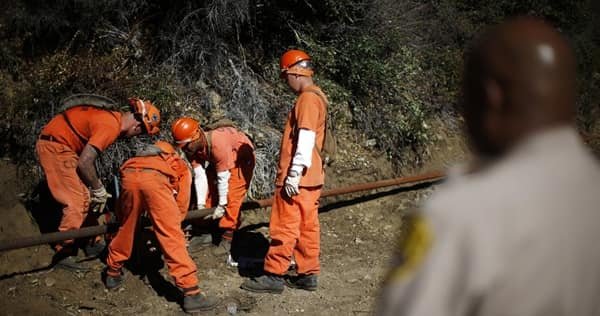
Prison work can include food service, maintenance, manufacturing, agriculture, and other tasks. The relevant legal questions concern compulsion, working conditions, disciplinary consequences, and compensation. State statutes, correctional regulations, federal labor laws, and court decisions may provide different answers.
Some constitutional amendments were promoted specifically to end compulsory prison labor. Courts have continued to address what those provisions require in practice. A ban on involuntary servitude does not automatically settle every wage claim, but neither should prison labor be presumed lawful merely because incarceration is involved.
Why Constitutional Language Does Not End the Legal Analysis
The effect of a state constitutional amendment is ultimately tested through statutes, correctional policies, and court decisions. Judges may need to decide whether a work requirement is compulsory, whether discipline for refusal makes the assignment involuntary, and whether the work is part of an authorized sentence. The answer may differ from the question of whether workers must receive minimum wage under a separate statute. Likewise, a court ruling about one correctional program does not necessarily govern every facility or assignment in the state. Clear legal writing should keep these issues separate rather than treat the constitutional amendment as either symbolic or automatically comprehensive.
Conclusion
Slavery is illegal in every US state. The unresolved state-by-state issue is the legal treatment of involuntary labor as criminal punishment, particularly after constitutional amendments that narrow or remove the traditional exception.
Frequently Asked Questions
Q. Does the Thirteenth Amendment allow private slavery?
No. Its punishment exception does not grant private individuals permission to own, sell, or forcibly control other people. Federal anti-trafficking and forced-labor laws remain enforceable.
Q. Does a criminal conviction automatically authorize any forced labor?
No. The punishment exception is not a universal exemption from all constitutional and statutory protections. The work arrangement, sentence, state law, and other legal safeguards matter.
Q. Do states without the exception require prison wages?
Not automatically. Constitutional language about involuntary servitude and statutory rules governing minimum wages address related but distinct legal issues.
Q. Why does the issue remain controversial after abolition?
Disagreement concerns whether compulsory prison work and penalties for refusal resemble involuntary servitude, and what changes constitutional reforms should require in correctional institutions.
Q. Can Congress remove the federal punishment exception?
Yes, through the constitutional amendment process, which requires congressional proposal and ratification by the necessary number of states. Ordinary legislation cannot simply rewrite the Thirteenth Amendment.