No, laser jammers are not legal in Texas. Texas law makes it a crime to use any device that interferes with police speed-measuring technology, including laser jammers (LIDAR jammers) and radar jammers. These devices actively block or distort the signals that law enforcement uses to measure speed. While radar detectors remain legal because they only receive signals, any device that transmits interference is banned. If you install or use a jammer in Texas, you risk being fined and even having the device confiscated.
The confusion comes from the fact that many states allow radar detectors and some people assume laser jammers are the same thing. They are not. Detectors simply alert drivers, while jammers actively disrupt police equipment. Texas law draws a strict line between observing police signals and tampering with them. Understanding how this works is important if you want to avoid breaking traffic law without realizing it.
Why Laser Jammers Are Illegal
Texas Transportation Code §547.616 makes it illegal to sell, possess, or use any device meant to interfere with police radar or laser equipment. This law covers jammers that target:
- Radar guns (older police units)
- LIDAR speed guns (modern laser units)
Laser jammers send pulses of light back to the LIDAR gun to confuse it and prevent a speed reading. Legally, this is considered interference with police equipment, just like blocking a breathalyzer or tampering with a dashcam.
What’s Legal vs. What’s Illegal
| Device | Legal in Texas? | Reason |
| Radar Detectors | ✔ Yes | Only receive signals, no interference |
| Laser Jammers | ❌ Illegal | Interfere with speed detection |
| Radar Jammers | ❌ Illegal | Emit signals that block radar |
| “Parking Sensors” With Jamming Ability | ❌ Illegal | If capable of jamming, they count as jammers |
If a device can jam even if marketed as something else, it’s illegal.
Penalties for Laser Jammers in Texas
Using or selling a laser jammer is generally a Class C misdemeanor, which can include:
- A fine (often between $50 and $500 depending on county)
- Possible confiscation of the jammer
However, if police believe the device was used to evade law enforcement, the situation can escalate. You could face additional charges such as:
- Evading in a motor vehicle
- Obstruction of justice
- Reckless driving
So even though the basic violation is minor, it can turn into something serious if you misuse the device while speeding or trying to avoid being stopped.
How Officers Handle Suspected Jammers
Texas officers are increasingly trained to recognize when they are being jammed. If a laser gun repeatedly fails to log your speed, that is a red flag. Officers can:
- Pull you over based on suspicion of interference
- Inspect the vehicle for jammers
- Seize the device under the Transportation Code
Police do not need to prove you were speeding. The act of attempting to interfere is enough for a violation.
What About “Parking Assist” Devices?
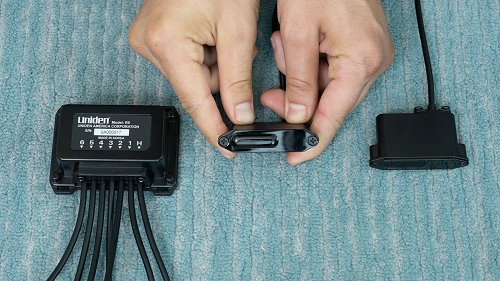
Some companies market laser jammers as “parking assist systems” because they can detect objects in close range. But if the device has any mode that can jam LIDAR, it is treated as illegal in Texas, even if you claim you only use it for parking.
Legal Test: If the device can jam police equipment, it is illegal even when turned off.
Why Radar Detectors Are Still Allowed
Texas does not view detectors as interference because they are passive receivers, not transmitters. They work like a radio: listening, not broadcasting. Police may dislike radar detectors, but drivers are legally allowed to know when they are being monitored.
However, if someone modifies a detector to emit jamming signals, that modification makes it illegal.
Final Note
Texas law bans any device that interferes with police radar or laser speed guns, even if marketed as something else. Radar detectors are still legal because they only receive signals. A jammer, on the other hand, actively disrupts law enforcement and can result in fines, seizure of equipment, and more serious charges if used to evade police.