Millions of Americans who paid withdrawal fees at independently operated ATMs may qualify for compensation under a proposed $167.5 million class action settlement involving Visa and Mastercard. The agreement resolves allegations that the payment networks maintained rules that prevented independent ATM operators from offering lower withdrawal fees through competing networks.
The settlement covers qualifying ATM transactions made between October 24, 2007, and August 14, 2026. Consumers who paid surcharges at eligible non-bank ATMs, including machines commonly found in convenience stores, gas stations and hotels, may be entitled to a share of the settlement fund.
The claim deadline is February 10, 2027. Eligible consumers must submit a valid claim to receive compensation. No receipts or bank statements are required when initially filing, although supporting documents may be requested later.
The proposed settlement received preliminary court approval on August 14, 2026. However, payments cannot begin until final approval and the resolution of any appeals. Visa and Mastercard deny violating antitrust laws or engaging in wrongdoing.
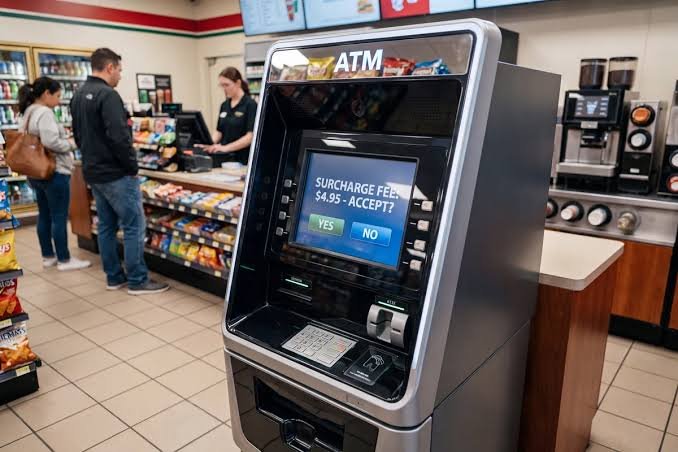
What Is the Non-Bank ATM Surcharge Settlement About?
The settlement arises from Burke v. Visa Inc., Case No. 1:11-cv-01882, a federal antitrust lawsuit filed in the U.S. District Court for the District of Columbia.
The plaintiffs allege that Visa and Mastercard imposed network operating rules that restricted competition among ATM transaction networks. When customers withdraw cash from an ATM outside their bank’s network, they may pay an additional surcharge. Independent ATM operators can route transactions through networks with different processing costs.
According to the lawsuit, Visa and Mastercard’s rules prevented operators from offering a lower surcharge when a transaction could be processed through a less expensive competing network. The plaintiffs argue that these restrictions reduced price competition and caused consumers to pay more for cash withdrawals than they otherwise would have paid.
The lawsuit invokes the federal Sherman Antitrust Act and certain state antitrust laws. Visa and Mastercard dispute the allegations, and the court has not found that the companies violated the law.
Who Is Eligible for the $167.5 Million ATM Settlement?
The nationwide settlement generally includes people who made cash withdrawals from a deposit account using an ATM or PIN-debit card at an independently operated ATM in the United States or its territories from October 24, 2007, through August 14, 2026. They must have paid a surcharge or access fee that their bank did not fully reimburse.
An independent ATM is not owned by a bank or other financial institution, Visa or Mastercard. These machines can be found in places such as convenience stores, hotels and gas stations, although a machine’s location alone does not prove who owns it.
The agreement also includes statewide classes for California, Illinois, Massachusetts and Michigan. Credit-card cash advances, transactions involving prepaid cards and withdrawals from bank-owned ATMs do not satisfy this settlement’s qualifying transaction definition. Certain corporate, governmental and court-related parties are also excluded.
How Much Money Will Each Person Receive?
No fixed payment amount has been announced. Visa will contribute $88,775,000 and Mastercard will contribute $78,725,000, bringing the proposed fund to $167.5 million. The amount available to eligible consumers will be lower after court-approved fees and settlement expenses.
Lawyers may request fees of up to 30% of the fund, plus reimbursement of costs. The proposed agreement also permits up to $3 million for notice and administration costs, applicable taxes, and service awards of up to $17,500 for each class representative, subject to court approval.
Approved claimants will share the remaining fund proportionally based on their number of qualifying surcharged withdrawals. The administrator cannot determine the payment per transaction until valid claims have been reviewed and the total number of approved transactions is known.
A claimant reporting five eligible transactions, for example, would not necessarily receive the same amount as someone with fifty. Neither would automatically receive the full amount of the ATM fees originally charged. Published estimates of guaranteed $50, $100 or $500 checks are not supported by the official notice.
How to File a Non-Bank ATM Surcharge Settlement Claim
Eligible consumers can submit the claim form through the official settlement website, www.NonBankATMSurchargeSettlement.com. The claim portal requests contact information, confirmation that the applicant paid eligible unreimbursed fees, and an estimate of the number of qualifying withdrawals during the settlement period.
Claimants must provide a current email address and mobile phone number and certify their answers under penalty of perjury. Those who received an email notice may enter the notice identification number, but the published claim form does not make that number mandatory for everyone.
Paper claims can be sent to Non-Bank ATM Surcharge Fee Settlement, c/o A.B. Data, Ltd., P.O. Box 173053, Milwaukee, WI 53217. An online claim must be filed, or a mailed claim postmarked, no later than February 10, 2027. Filing a standard claim is free.
Do You Need ATM Receipts or Bank Statements?
The court-approved claim form says that supporting documentation is not required when submitting the initial claim. It asks consumers to estimate the number of qualifying transactions as accurately as possible.
That does not mean applicants may guess arbitrarily or inflate their totals. Every claimant must certify that the information is accurate and complete to the best of their knowledge. The administrator may request bank statements or other supporting records to verify a submission.
Older bank records, account statements and ATM fee entries may help consumers prepare a reasonable estimate. They should exclude fees that were fully reimbursed and transactions outside the approved dates.
Important Deadlines and Final Approval Hearing
The deadline to exclude yourself from the settlement is December 11, 2026. An exclusion request must be received by that date. Class members who wish to object must have their objections postmarked by December 11, 2026.
The final deadline for filing claims is February 10, 2027. The court has scheduled a fairness hearing for February 17, 2027, at 4 p.m. Eastern Time, before U.S. District Judge Richard J. Leon in Washington, D.C. The hearing date or format may change, so claimants should check the administrator’s website for updates.
Objecting allows a class member to challenge the agreement while remaining in the settlement. Excluding oneself is different: it preserves the ability to pursue certain released claims separately but eliminates eligibility for payment from this agreement.
When Will Non-Bank ATM Settlement Payments Arrive?
No settlement payout date has been confirmed as of October 10, 2026. The court must first grant final approval and any appeals must be resolved before the administrator can distribute money.
The official notice states that, if the agreement receives approval without appeals, the administrator anticipates sending payments within six months. This is an estimate, not a guaranteed arrival date.
Payments are expected to be offered through digital options such as PayPal or a virtual debit card after the administrator sends an email notification. Claimants will also be able to request a paper check. Keeping email, phone and postal address information current is important.
Is This Different From the Earlier ATM Surcharge Settlement?
Yes. The $167.5 million Burke agreement concerns independently operated ATMs. It should not be confused with Mackmin v. Visa Inc., a related case concerning bank-operated machines.
The Mackmin litigation produced earlier settlements totaling $67 million with certain banks and a separate $197.5 million agreement with Visa and Mastercard. Those are distinct funds with different class definitions and claims procedures. A person who previously filed a Mackmin claim should not assume that the older submission automatically counts as a Burke claim.
A third related action, National ATM Council v. Visa Inc., concerns businesses that own or operate independent ATMs. The consumer settlement addressed here is specifically for people charged qualifying unreimbursed cash-withdrawal fees.
What Happens if You Do Not File a Claim?
An eligible person who does not file a claim will not receive settlement money. Unless that person properly excludes themselves, they will generally remain bound by the final judgment and release the claims covered by this settlement if the court approves it.
Anyone uncertain about receiving an email or postcard may still check the official class definition. The administrator lists 1-866-893-1052 and info@NonBankATMSurchargeSettlement.com for questions. Consumers should use the official website and avoid third-party services that promise a fixed payout or charge unnecessary claim-filing fees.