If you’ve encountered THCA (tetrahydrocannabinolic acid) in Texas, you may have wondered whether it’s legal to buy, possess or use. The short answer: it’s a legal grey area in Texas. While hemp-derived cannabinoids have been permitted under certain conditions, the regulatory and enforcement landscape is unsettled. Below is a breakdown of where things currently stand, what to watch out for, and what you should know if you’re considering THCA products in Texas.
What is THCA & why its legal status matters
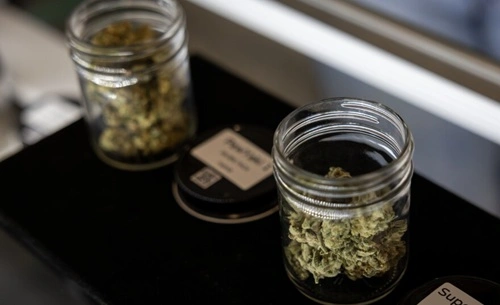
THCA is a naturally occurring cannabinoid found in raw cannabis plant material. Unlike THC (tetrahydrocannabinol), THCA is non-intoxicating in its raw form. When THCA is heated (e.g., by smoking, vaping, or cooking), it can convert into THC and produce psychoactive effects.
Because of this conversion potential, state regulators and law enforcement in Texas have raised concerns that THCA products could be used to evade laws against marijuana/THC. As one commentary puts it: “Texas hemp law isn’t black and white when it comes to THCA … the same flower can be considered fully legal or a legal risk.”
Federal and Texas hemp laws relevant to THCA
Federal level
At the federal level, the Agriculture Improvement Act of 2018 (often called the Farm Bill) removed hemp (defined as cannabis sativa L. with 0.3% or less THC (delta-9) on a dry weight basis) from the list of controlled substances. So hemp and its derivatives can be legal if they meet certain thresholds.
Texas level
In Texas:
- In 2019, Texas passed House Bill 1325 to legalise industrial hemp cultivation under state regulation (cannabis with 0.3% or less delta-9 THC).
- Texas also has the Texas Compassionate Use Act, which permits low-THC cannabis (for medical patients) under strict conditions — typically defined as products containing no more than 10 mg THC per dose unit.
However, Texas law does not explicitly define THCA in statutes in a way that clears up its status for consumer products. That leaves THCA in a grey zone: potentially lawful if from hemp and within delta-9 limits, but subject to enforcement concerns.
Current enforcement, regulation & rule-making in Texas
In 2025 Texas is actively moving toward tighter regulation of hemp-derived THC products — including those with THCA. Some key recent developments:
- On September 10, 2025, Governor Greg Abbott issued Executive Order GA-56 directing state agencies (TABC, DSHS, DPS) to revise rules governing consumable hemp THC products — specifically to revise testing/labeling requirements so that THCA conversion to delta-9 THC is accounted for.
- One law-maker, Senator Charles Perry, has pushed to clarify that THCA flower should be prohibited because it can convert to THC and is being sold under loopholes.
- A bill (Senate Bill 3) that would have banned consumable hemp THC products (including potentially THCA) passed the legislature but was vetoed by Governor Abbott on June 22 2025.
So while complete prohibition has been avoided so far, Texas is clearly signalling that THCA and similar products are under close regulatory scrutiny and may face restrictions.
What does this mean practically for THCA in Texas?
If you are in Texas and considering THCA products, here are things to keep in mind:
- Is the material truly hemp-derived? The product should come from hemp (cannabis with ≤ 0.3% delta-9 THC by dry weight) under federal/texas standard.
- Check testing and labeling: Because THCA can convert to THC, look for lab results that measure “total THC” (i.e., post-decarboxylation THCA × 0.877 + delta-9 THC) — Texas regulators are pushing for this standard.
- Consider form and use: If you are heating or vaping the THCA flower, you may effectively be producing THC — that may draw enforcement even if technically derived from hemp.
- Retail sale vs possession: Texas law is focusing on regulating sale to minors, age-verification, labeling and testing. The risk of enforcement is higher in the commercial context.
- State is evolving: Because Texas legislative sessions are only in odd-numbered years, and because regulation is pending, what is allowed today may change.
In summary:
THCA is not clearly legal in the sense of being affirmatively approved; rather it occupies a legal grey zone. If the THCA product is hemp-derived, meets the ≤ 0.3% delta-9 THC threshold, is tested properly, and is not used/heated in a way that converts to THC, the risk may be lower.
However, due to conversion risk and regulatory focus, THCA products may be subject to enforcement — especially sales to minors or improper labeling.
If you are selling, buying or using THCA in Texas, exercise caution — keep documentation of compliance, check lab reports, and monitor developments in state rule-making.