Brussels is a compact European capital where historic architecture, museums, public squares, cafés, and modern neighborhoods come together within a relatively small area. Its central districts are easy to explore on foot, while buses, trams, and the metro make it practical to reach attractions farther away.
For travelers arriving by train or leaving the city after checking out of their accommodation, dealing with bags can be one of the less enjoyable parts of a short city break. Arranging Luggage Storage in Brussels can make it easier to explore without carrying a suitcase through crowded streets, museums, restaurants, and public transport. Brussels has official luggage lockers at several railway stations, including Brussels-Central, Brussels-North, and Brussels-South. Services such as Radical Storage can also be considered when a storage location fits better with your planned walking route.
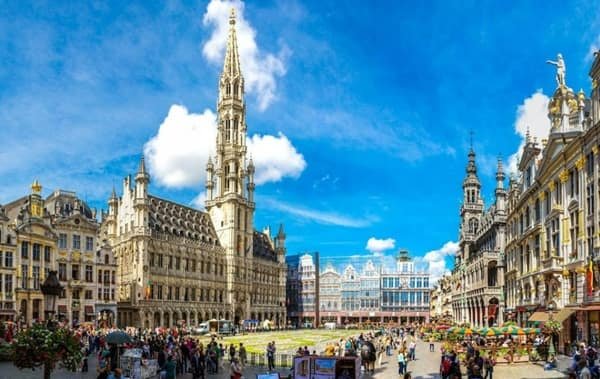
Begin at the Grand-Place
A visit to Brussels is hardly complete without spending some time at the Grand-Place. Surrounded by historic buildings, the square has been at the center of Brussels life for centuries and is recognized as a UNESCO World Heritage Site. The surrounding architecture makes it an excellent place to begin a walking tour.
Rather than rushing through the square for photographs, take some time to look at the details of the surrounding façades. The City Hall and historic guild buildings give the area a distinctive appearance, while the nearby streets lead toward shops, cafés, chocolate stores, and other attractions.
Walk Through the Royal Quarter
From the Grand-Place, continue toward the Royal Quarter. This part of Brussels combines historic buildings, museums, parks, and elegant streets. The route also includes Mont des Arts, an area connecting the lower and upper parts of the historic center.
Mont des Arts is particularly enjoyable when you want to pause during a busy sightseeing day. Its gardens and elevated position provide a different perspective of the city, while nearby cultural institutions make the area useful for travelers interested in art and history.
Explore Brussels’ Art and Architecture
One of the city’s most interesting features is its mixture of architectural styles. Brussels is well known for Art Nouveau, but visitors can also find Art Deco, neoclassical buildings, contemporary structures, and historic landmarks throughout different neighborhoods. The official tourism organization notes that the city has almost a thousand Art Nouveau buildings.
If architecture interests you, consider setting aside part of your weekend for a slower neighborhood walk. Instead of visiting only major attractions, look upward at balconies, doors, windows, and decorative façades. Some of the most memorable discoveries can happen away from the busiest tourist routes.
Make Time for the Atomium
The Atomium is one of Brussels’ most recognizable landmarks. Originally created for the 1958 World’s Fair, the unusual structure represents an enlarged iron crystal and has become a symbol of the city. Visitors can go inside the structure and enjoy views across Brussels from its upper areas.
Because the Atomium is outside the historic center, it is sensible to plan it as a separate part of the day. Public transportation can help you move between the central districts and attractions farther away.
Leave Room for Food and Local Streets
Brussels is also a destination for travelers who enjoy spending time in cafés and discovering local food. Belgian chocolate, waffles, fries, and a wide variety of international cuisines can be found throughout the city.
Instead of planning every hour, leave some space for spontaneous stops. A quiet café, a small bakery, or an interesting street can easily become one of the highlights of a weekend.
Use Public Transport When Necessary
Although many central attractions can be reached on foot, public transport is useful when visiting different parts of Brussels. The city offers buses, trams, and metro services, while the Brussels Card can also be combined with public transport access for visitors who choose that option.
If you’re traveling with luggage, consider your route before setting off. Carrying a large suitcase up stairs or through busy stations can make a sightseeing day unnecessarily tiring. Storing your bags at a convenient location first can make the journey more comfortable.
Plan Your Final Hours Carefully
One of the easiest ways to improve a short Brussels trip is to plan around your departure time. If your train or flight leaves in the evening, you may still have several hours available after checking out of your accommodation.
Radical Storage is one possible luggage-storage solution to consider when its location and conditions suit your itinerary. Alternatively, official station lockers may be convenient for travelers who plan to return to a railway station before leaving Brussels. SNCB-NMBS currently lists luggage lockers at several Brussels stations, with different locker sizes available.
With your bags safely stored, you can use those final hours for another museum visit, a relaxed meal, or one last walk through the historic center.
Enjoy Brussels Without Rushing
Brussels works particularly well for a weekend because its central attractions are relatively close together, while its public transportation network makes longer journeys manageable. The key is not to treat the city as a checklist of landmarks. Choose a few major sights, leave time for neighborhoods and cafés, and organize practical details such as luggage storage before you begin exploring.
A little preparation can turn a short stop in Brussels into a relaxed city experience rather than a race from one attraction to another.