Yes. A transfer on death deed (TODD) is legal in Texas and allows an owner of real property to designate beneficiaries who will receive the property when the owner dies. Texas Estates Code Chapter 114 expressly authorizes these deeds. A TODD can help property pass without probate administration, but it must satisfy statutory requirements to be effective.
What Is a Transfer on Death Deed?
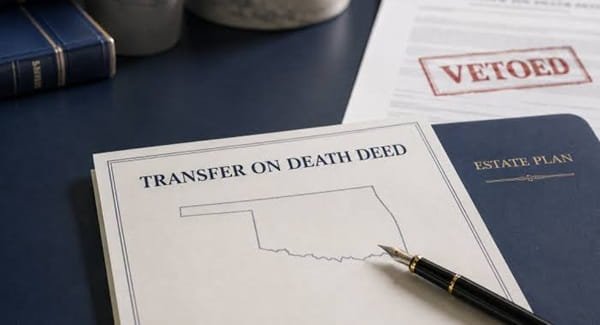
A transfer on death deed allows an individual to transfer an interest in real property to one or more beneficiaries effective at the transferor’s death. Unlike an ordinary deed, it does not transfer ownership immediately. Texas law classifies a TODD as a nontestamentary instrument and makes it revocable.
A TODD therefore provides a direct beneficiary designation for the covered property.
What Are the Requirements for a Texas TODD?
Texas Estates Code §114.055 establishes requirements for an effective transfer on death deed. Generally, the deed must contain the essential elements and formalities of a recordable deed. It must state that the transfer to the beneficiary occurs at the transferor’s death and must be properly signed and acknowledged.
The deed must also be recorded in the deed records of the county where the property is located before the transferor’s death. A document that is only prepared or signed but never properly recorded may not accomplish the intended transfer.
Can the Owner Revoke a TODD?
Yes. Section 114.052 provides that a transfer on death deed is revocable. An owner can change beneficiaries or revoke the deed during life.
When multiple deeds or estate-planning documents exist, however, professional review can help prevent conflicting instructions.
Does the Beneficiary Own the Property Immediately?
No. A TODD is intended to take effect at the transferor’s death. Naming someone as a beneficiary does not give that person present ownership of the property during the owner’s lifetime.
The owner can continue using and dealing with the property during life, subject to existing liens and other legal rights.
Does a TODD Avoid Probate?
A TODD can allow qualifying real property to pass outside the probate process. However, avoiding probate does not mean the property becomes free from debts, liens, or other legal obligations.
Texas law specifically addresses creditor claims and liabilities involving property transferred by a TODD. The beneficiary may receive the property subject to encumbrances and statutory claims.
A TODD should therefore not be treated as a method for eliminating legitimate debts or defeating existing liens.
Can a TODD Conflict With a Will?
Yes. A will generally controls property that remains in the probate estate, while a TODD governs the property covered by the deed. If the documents name different beneficiaries for the same property, a conflict can arise. Estate-planning documents should therefore be coordinated.
Can a Power of Attorney Create a TODD?
Texas law specifically states that a transfer on death deed may not be created through use of a power of attorney. Estates Code §114.054 also provides that the capacity required to make or revoke a TODD is the same as the capacity required to make a contract.
An agent acting under a power of attorney therefore cannot simply create a TODD on behalf of the principal.
What Happens After the Owner Dies?
After death, the beneficiary may need documentation establishing the transfer and may have to address title, liens, taxes, debts, or other property obligations.
A TODD does not automatically eliminate issues involving surviving spouses, community property, homestead rights, creditors, or competing ownership interests.
Conclusion
A transfer on death deed is legal in Texas and can transfer real property at death. Chapter 114 of the Texas Estates Code establishes rules governing TODDs, including execution, recording, revocation, and creditor-related matters.
Because statutory formalities are important, a property owner should not assume that an informal beneficiary designation or unrecorded document will produce the same result. A TODD should also be reviewed alongside the owner’s will and other estate-planning documents.