Yes, shooting on private property can be legal in Texas, but owning the property does not create an unrestricted right to discharge a firearm. The answer depends on local discharge rules, safe shooting practices, and whether a projectile crosses a property line or public road. Texas also imposes special rules on hunting and target shooting in certain counties and locations.
Does Texas Law Allow Shooting on Private Property?
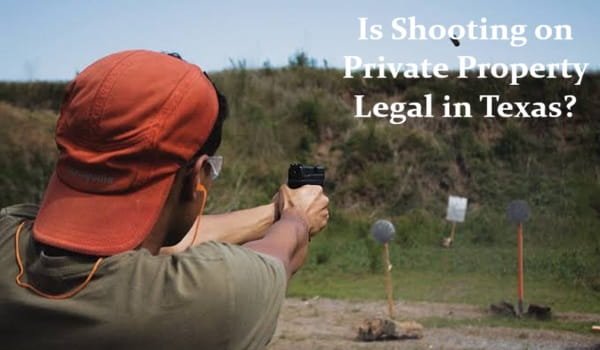
Texas law does not impose a blanket statewide ban on firing a firearm on private property.
However, local rules can be important. Texas Penal Code §42.12 makes it an offense to recklessly discharge a firearm inside the corporate limits of a municipality with a population of 100,000 or more. The statute also expressly preserves a municipality’s authority to enact an ordinance prohibiting firearm discharge. Thus, whether target shooting is lawful can depend heavily on the city or area where the property is located.
Does Property Size Matter?
Yes. Texas Local Government Code §229.002 limits certain municipal regulations concerning firearm discharge in particular areas. For example, certain restrictions cannot apply to a shotgun, air rifle, pistol, BB gun, or bow and arrow discharged on a tract of at least 10 acres, more than 150 feet from a residence or occupied building on another property, when the projectile is not reasonably expected to cross the tract boundary.
For a center-fire or rim-fire rifle or pistol, the statute provides a 50-acre threshold and a 300-foot distance requirement under specified circumstances. Other state laws, local rules, and safety requirements may still apply.
Can a Bullet Cross the Property Line?
This is an important restriction. Texas Parks and Wildlife Department regulations state that it is unlawful to knowingly discharge a firearm in a manner that causes a projectile to cross a property line unless the shooter owns both sides of the property line or has written permission from the owner of the land crossed by the projectile.
A large parcel does not make every direction of fire lawful; a safe backstop and controlled shooting area remain important.
Is Shooting Across a Public Road Legal?
Generally, no. Texas Penal Code §42.01 makes intentionally or knowingly discharging a firearm on or across a public road an offense. Texas Parks and Wildlife Department also specifically identifies shooting on or across a public road as unlawful hunting conduct.
The fact that the shooter is standing on private property does not eliminate this restriction.
What About Target Shooting?
Target shooting can be lawful on private property when the applicable requirements are satisfied. The location, firearm, property size, nearby structures, local ordinances, and direction of fire can all matter.
Certain counties have additional rules. For example, Texas Parks and Wildlife Department identifies a special restriction in Harris County requiring written landowner consent for hunting or target shooting on land owned by another person, subject to stated exceptions.
Before establishing a private shooting range, owners should check county and municipal requirements.
What About Hunting on Private Property?
Private ownership does not eliminate Texas hunting laws. Texas Parks and Wildlife Department explains that wildlife in the state belongs to the people of Texas and that hunting generally requires the appropriate license. Landowner permission is also required for hunting on private land.
Other rules can govern seasons, bag limits, permitted weapons, species, and methods of take. Therefore, shooting a firearm for lawful target practice is legally different from hunting wildlife.
Can Reckless Shooting Be Illegal?
Yes. Even when shooting is otherwise permitted, reckless conduct can create criminal liability. Discharging a firearm toward a home, vehicle, occupied structure, or person can create serious legal consequences depending on the circumstances. Texas law also contains separate offenses involving firearm discharge and assaultive conduct.
The absence of a specific local prohibition does not provide a defense to criminal conduct arising from the manner in which a firearm is used.
Conclusion
Shooting on private property is not automatically illegal in Texas, but it is not automatically legal either. State law, municipal ordinances, property size, the type of firearm, nearby structures, public roads, property boundaries, and hunting regulations can all affect the answer.
Before shooting on private land, property owners should verify the rules applicable to the specific location and ensure that projectiles cannot endanger people, property, or public areas. Local restrictions can be particularly important in or near incorporated cities.