Generally, a Texas landlord can place reasonable guest restrictions in a residential lease, including limits on how long a guest may stay overnight. Whether a landlord can completely ban overnight guests depends largely on the lease, the circumstances, and whether another law applies. Texas does not have a general statewide statute giving every tenant an unlimited right to have overnight guests.
What Does the Lease Say?
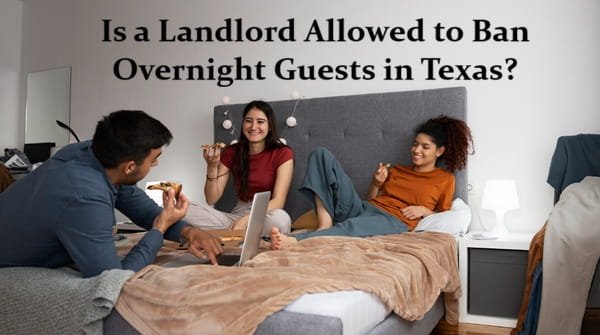
The lease is the starting point. Texas Property Code Chapter 92 broadly defines a lease as a written or oral agreement establishing or modifying the terms, conditions, rules, or other provisions governing the use and occupancy of a dwelling.
A lease may require approval for guests staying beyond a specified number of nights or limit consecutive overnight stays. If a tenant agreed to such a restriction, violating it can potentially become a lease violation.
Can a Landlord Ban All Overnight Guests?
A complete prohibition is more complicated. A landlord may attempt to include a no-overnight-guest provision in a lease, but enforceability depends on the exact language and circumstances. A landlord cannot use a guest rule as a pretext for discrimination, retaliation, or other unlawful conduct.
TexasLawHelp’s tenant-rights materials explain that landlords generally cannot limit visitors as long as they do not disturb other residents or violate provisions of the lease. The same guidance warns that frequent overnight stays can create disputes about whether a visitor has effectively become an unauthorized occupant.
When Does a Guest Become an Unauthorized Occupant?
There is no single number of nights that automatically turns every guest into a tenant. The facts matter.
TexasLawHelp explains that a guest is generally someone who is not on the lease, is not entitled to occupy the dwelling continuously, and does not have responsibility for rent. However, a guest can sometimes become a tenant or sublessee even without a formal written lease, particularly when the person lives there continuously, contributes financially, or uses the address as a mailing address.
This is why leases often contain guest limits: they help distinguish temporary visitors from additional occupants who were never approved.
Can Guest Rules Address Noise or Safety?
Yes. A landlord can generally enforce lease provisions addressing excessive noise, property damage, illegal activity, or conduct that disturbs other residents. A guest’s behavior can create consequences for the tenant when the lease makes the tenant responsible for complying with property rules.
What About Occupancy Limits?
Texas law includes a statutory occupancy provision. Property Code Section 92.010 generally limits a landlord to allowing three adult occupants per bedroom, subject to exceptions, including requirements imposed by state or federal fair-housing law.
This does not mean every guest can stay indefinitely. Local housing, fire, zoning, or building rules may also impose additional requirements.
Can a Landlord Change the Guest Rules Mid-Lease?
Generally, a landlord cannot simply rewrite a fixed-term lease whenever desired. A lease is a contract, and changes normally depend on the agreement and applicable law. If the existing lease permits certain guests and does not authorize unilateral changes, a landlord may have difficulty enforcing a completely new restriction during the current term.
What If the Landlord Threatens Eviction?
A landlord cannot simply declare that a tenant is evicted because an overnight guest allegedly violated a disputed rule. In Texas, an eviction is a court proceeding, and TexasLawHelp states that landlords cannot evict tenants without filing a case in Justice Court.
If a tenant receives an eviction notice because of a guest, the tenant should review the lease and preserve messages and notices.
What Should Tenants Do?
Tenants should read the guest section of their lease before allowing someone to stay overnight regularly. If permission is required, getting approval in writing can reduce disputes.
If the lease contains no clear guest restriction, a tenant who receives a new prohibition should ask the landlord to identify its contractual or legal basis.
Conclusion
Texas landlords can generally establish reasonable guest rules through a residential lease, and tenants may be required to follow valid restrictions concerning overnight visitors. However, there is no universal Texas rule saying every landlord can ban all overnight guests regardless of the lease or circumstances.
The key issues are the lease language, the length and nature of the guest’s stay, occupancy limits, disturbances, and applicable legal protections. An occasional overnight visitor is not automatically the same as an unauthorized occupant, but repeated or extended stays can create a lease dispute.